Inconsistent water pressure is more than an inconvenience. When your shower drops to a trickle then surges without warning, or your kitchen faucet feels strong in the morning but weak by midday, something in your plumbing system is out of balance.
Daily water pressure fluctuations happen for a range of reasons — some within your home, others controlled by your municipality. Identifying the source matters because the fix is different depending on where the problem originates.
This article covers the seven most common causes of fluctuating water pressure in homes, how to diagnose each one, and what steps actually resolve the issue.
How to Tell If Your Pressure Is Truly Fluctuating
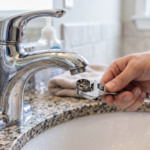
Before assuming the worst, confirm that the pressure change is real and not isolated to one fixture. A single weak faucet often points to a clogged aerator or partially closed valve — not a system-wide problem. (If it’s just one faucet, cleaning a clogged faucet aerator often solves it in minutes.)
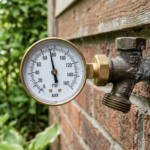
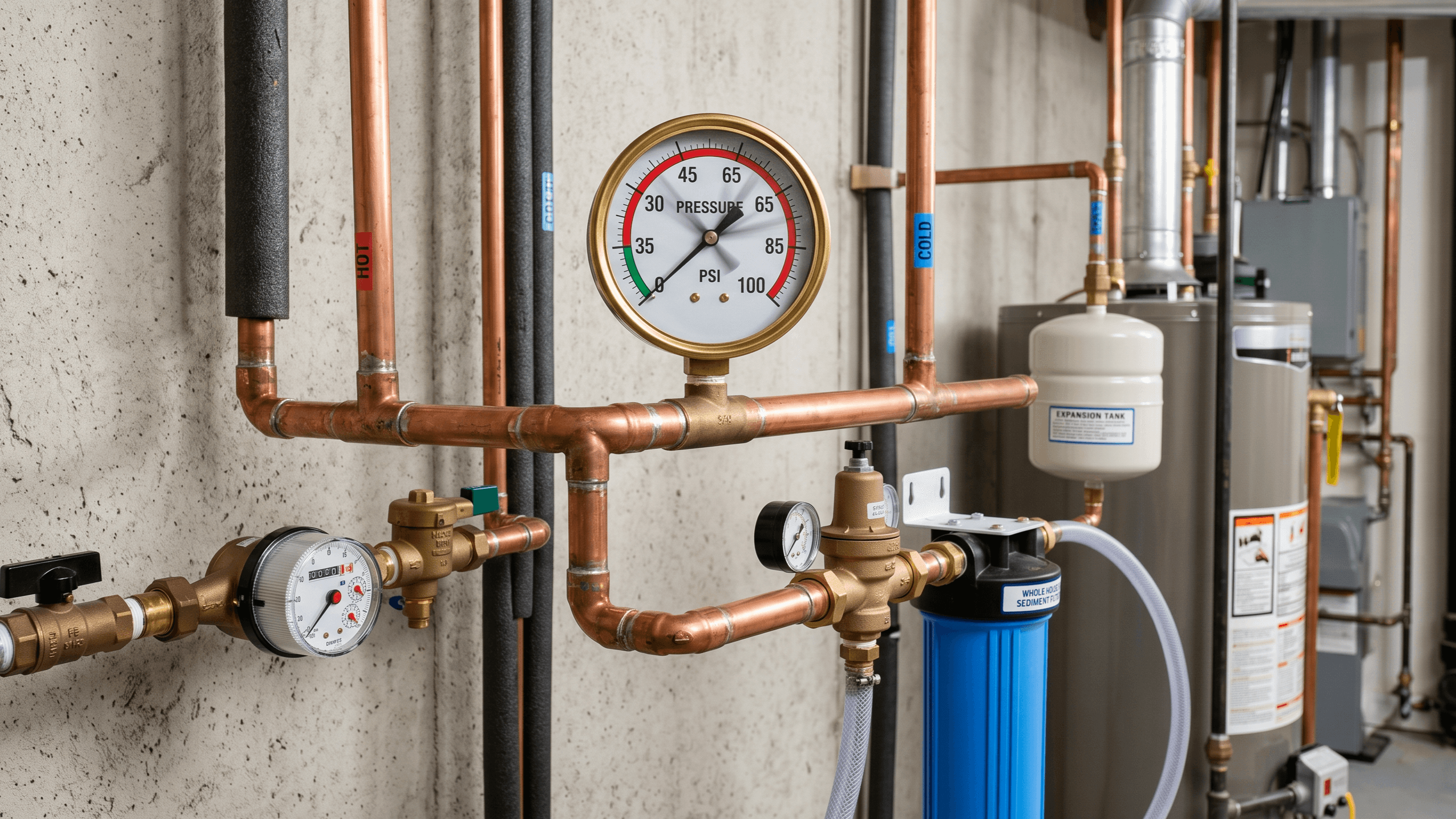
True system-wide fluctuation shows up across multiple fixtures at different times of day. A pressure gauge attached to an outdoor hose bib or laundry hookup will give you exact numbers. Normal residential pressure ranges from 40–80 PSI. If readings vary significantly throughout the day, the issue is systemic.
1. Municipal Supply Pressure Changes
City water systems don’t maintain perfectly constant pressure. Pressure at the street level rises and drops based on overall demand across the distribution network. Usage peaks — typically early morning and early evening when households run showers, dishwashers, and irrigation simultaneously — pull pressure down. Overnight and midday lows allow pressure to recover.
Homes at the end of long distribution lines or in areas with aging municipal infrastructure tend to feel these swings more sharply.
Fix: Check with your water utility to see if supply pressure is the confirmed cause. If it is, a pressure-reducing valve (PRV) combined with a pressure tank can buffer incoming fluctuations before they reach your fixtures.
2. Failing or Incorrectly Set Pressure Regulator
Most homes built after the 1980s include a pressure-reducing valve — a bell-shaped device installed where the main water line enters the house. Its job is to regulate incoming municipal pressure down to a safe, consistent range (typically 50–60 PSI).
When a PRV wears out or its internal diaphragm fails, pressure regulation becomes erratic. The result is inconsistent pressure that changes throughout the day even when the incoming supply remains stable. A PRV typically lasts 10–15 years before requiring replacement.
Fix: Locate your PRV (usually near the main shutoff), check the setting with a gauge upstream and downstream of it, and adjust the screw on top to increase or decrease regulated pressure. If adjustment doesn’t stabilize readings, replacement is the next step. A licensed plumber can replace a standard PRV in 1–2 hours.
3. Partially Closed Main Shutoff or Zone Valves
A shutoff valve left partially closed — even slightly — restricts flow and creates pressure inconsistency, especially when demand increases. This happens after plumbing repairs when valves aren’t fully reopened, or when older gate valves corrode into a partially open position.
Fix: Locate your main water shutoff and any secondary zone valves (under sinks, near appliances, at water heater connections) and confirm each is fully open. Gate valves (round handle) require multiple full counterclockwise turns. Ball valves (lever handle) should align parallel with the pipe.
4. Waterlogged or Failing Pressure Tank (Well Systems)
Homes on private well systems rely on a pressure tank to maintain consistent pressure between pump cycles. The tank contains an air bladder or internal air charge that keeps pressure steady as water is drawn.
When the bladder fails or the tank becomes waterlogged (fully saturated with water), the pump short-cycles — turning on and off rapidly — causing pressure to spike and drop with every pump cycle. This creates noticeable fluctuations every few seconds rather than gradual daily changes.
For a broader look at well-specific pressure issues, the well water and off-grid systems resource covers maintenance considerations in detail.
Fix: Check the tank’s air charge using a tire pressure gauge at the Schrader valve (with pump off and system depressurized). Charge should be 2 PSI below the cut-in pressure setting. A waterlogged tank typically needs replacement. Well pressure tanks cost $150–$400 for the tank itself, plus installation.
5. Pipe Corrosion, Scale Buildup, or Partial Blockages
Over time, galvanized steel pipes develop internal rust and corrosion that progressively narrows the interior diameter. Similarly, hard water deposits (calcium and magnesium scale) accumulate inside copper and galvanized lines, restricting flow.
The resulting pressure loss tends to worsen gradually but can feel more pronounced at peak demand periods — when multiple fixtures run simultaneously and the restriction is most apparent. Homes with hard water are particularly susceptible to scale buildup affecting pressure over time.
Fix: Have a plumber perform a video inspection of main supply lines. Isolated scale buildup can sometimes be treated chemically or mechanically. Galvanized pipes with severe corrosion generally require repiping with copper or PEX, which eliminates both the restriction and future scaling risk.
6. High Demand from Appliances or Simultaneous Fixture Use
Some pressure fluctuations aren’t caused by a malfunction — they’re caused by demand exceeding what the supply line can comfortably deliver. Running a dishwasher, washing machine, and two showers simultaneously draws more water than the supply pipe and pressure system can maintain at full pressure.
This is normal in some older homes where 1/2-inch supply lines were used throughout, or in homes where the main line entering the house is undersized for current usage.
Fix: Stagger high-demand appliance use where possible. For a longer-term solution, a plumber can evaluate whether upgrading the main supply line diameter or adding a pressurized storage tank improves consistency under peak load.
7. Water Heater Issues Causing Hot-Side Pressure Drops
If pressure fluctuations happen primarily with hot water while cold water remains steady, the water heater is likely involved. A clogged inlet filter screen, partially closed supply valve, sediment buildup inside the tank, or a failing pressure-balancing valve can all restrict hot water flow independently of cold.
This is a distinct pattern worth identifying early. Diagnosing why hot water pressure is low while cold is fine covers this scenario in detail, including how to differentiate heater-side blockages from plumbing issues.
Fix: Check that the cold-water supply valve to the water heater is fully open. Flush sediment from the tank if it hasn’t been done in over a year. If the inlet filter screen is present, clean or replace it. For tankless heaters, check the filter screens at the inlet connections.
How to Diagnose the Source Systematically
Working through causes randomly wastes time. A structured approach narrows the source faster:
- Check multiple fixtures — If only one is affected, start with the aerator or valve closest to that fixture.
- Test at different times of day — Record pressure readings in the morning, midday, and evening. A consistent daily pattern often points to municipal demand cycles.
- Separate hot and cold — If only hot-side pressure fluctuates, focus on the water heater.
- Check the PRV — Measure pressure before and after it. If readings differ wildly or the downstream side fluctuates without upstream changes, the PRV is the culprit.
- Well systems: check pump cycle frequency — If the pump runs in short bursts every few seconds, a failed pressure tank is the likely cause.
When to Call a Plumber
Some pressure issues are straightforward DIY fixes — opening a valve, cleaning an aerator, adjusting a PRV setting. Others require tools, permits, or expertise:
- PRV replacement on high-pressure systems
- Repiping corroded galvanized lines
- Pressure tank replacement on well systems
- Main line upsizing
If pressure remains unstable after checking valves, the PRV, and peak-demand patterns, a plumber with a video inspection setup can identify internal blockages that aren’t visible otherwise.
Key Takeaways
- Daily pressure swings can stem from municipal supply changes, a failing PRV, closed valves, pipe scale, or well system issues.
- Measuring pressure at multiple times with a gauge is the fastest way to confirm the problem is system-wide.
- Hot-side-only fluctuations point to the water heater rather than the main supply.
- Well water homeowners should check the pressure tank air charge before assuming the pump is at fault.
- Consistent pressure below 40 PSI or above 80 PSI warrants immediate attention to prevent fixture damage.
For homes where low pressure is linked to specific fixtures rather than the whole system, exploring water conservation upgrades for bathrooms can also help optimize flow efficiency without major plumbing work.
Frequently Asked Questions
Why does my water pressure drop every morning?
Morning pressure drops are usually caused by peak municipal demand. Neighborhoods draw heavily on the water supply during morning routines, pulling system-wide pressure down. If the drop is severe, a PRV combined with a pressure buffer tank can smooth out incoming fluctuations. If only your home is affected while neighbors report normal pressure, the issue is more likely a failing PRV or partially closed main shutoff.
Can a water softener affect water pressure?
Yes. A water softener with a clogged resin bed, a malfunctioning bypass valve, or an undersized unit for the home’s flow rate can restrict water pressure on the softened supply lines. If pressure problems started shortly after a softener was installed or after a regeneration cycle, check the bypass valve setting and inspect the resin tank for channeling or fouling.
Is fluctuating water pressure bad for pipes and appliances?
Pressure that spikes repeatedly above 80 PSI accelerates wear on pipe joints, faucet washers, appliance inlet valves, and water heater components. Over time, this contributes to pinhole leaks in copper pipes and premature appliance failure. Installing a PRV set to 55–65 PSI and a thermal expansion tank on the water heater protects the system from pressure-related damage.
How do I know if my pressure regulator needs replacing?
Signs of a failing PRV include pressure that fluctuates unpredictably, a noticeable change in pressure after the PRV was previously stable, water hammer (banging pipes), or pressure readings downstream of the PRV that don’t match its set point. A plumber can test the PRV with upstream and downstream gauges to confirm whether adjustment or replacement is needed.
Does pipe diameter affect daily pressure fluctuations?
Yes, but indirectly. Undersized pipes don’t cause pressure to fluctuate on their own — they cause consistently low pressure, especially under high simultaneous demand. However, when scale or corrosion further reduces the effective diameter of already-small pipes, the combination can make pressure feel variable depending on how many fixtures are running at once. Repiping with properly sized lines resolves both issues simultaneously.
For more on diagnosing home water systems, visit the Water Pressure & Plumbing resource hub, or browse the full article library for related topics including tap water contaminants and drinking water filtration.