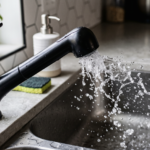
When cold water flows normally but hot water trickles out, the issue is not with your main water supply. The problem lives somewhere between your water heater and your faucet. Pinpointing it early prevents small restrictions from turning into costly repairs.
This article covers the most common reasons hot water pressure drops independently of cold, how to diagnose each cause, and what you can do to fix it — whether you handle it yourself or call a plumber.
What Causes Low Hot Water Pressure but Normal Cold Water Pressure?
Low hot water pressure with normal cold pressure means the restriction is in the hot water loop — not the municipal supply or main shutoff. The most frequent culprits are a partially closed shutoff valve, a failing pressure-reducing valve, sediment buildup inside the water heater, a faulty water heater shutoff, or corroded galvanized pipes on the hot side only.
Each cause produces a slightly different symptom pattern, which makes diagnosis straightforward once you know what to look for.
1. Partially Closed Hot Water Shutoff Valve
Every water heater has a dedicated shutoff valve on the cold water inlet line. If this valve is partially closed — even slightly — it restricts flow into the heater, which reduces pressure at every hot water fixture in the house.
How to check: Locate the valve directly above or beside your water heater on the cold supply line. It should be fully open. For a ball valve, the handle must be parallel to the pipe. For a gate valve, it must be turned fully counterclockwise.
Fix: Open the valve completely. If the valve is old or stiff, replace it. A partially seized gate valve can fail to open fully even when turned, causing persistent pressure loss.
This is the first thing to check before investigating anything else. In many cases, a valve nudged closed during maintenance is the entire problem.
2. Sediment Buildup Inside the Water Heater
Over time, minerals from hard water — primarily calcium carbonate — settle at the bottom of tank water heaters. Heavy sediment accumulation restricts the dip tube outlet and can partially block the cold water inlet or the hot water outlet port.
Signs this is the problem: Low hot water pressure throughout the house, rumbling or popping sounds when the heater runs, and water that takes longer to heat than it used to.
How to check: Turn off the heater and attach a garden hose to the drain valve at the base. Open a hot water faucet upstairs to break the vacuum, then open the drain valve and observe what comes out. Gritty, cloudy, or rust-colored water confirms sediment buildup.
Fix: Flush the tank completely. For moderate buildup, a full drain-and-refill cycle often restores flow. For severe scale, descaling with white vinegar is effective — fill the tank, let it sit for several hours, then flush. If sediment has caused corrosion inside the tank, replacement is the more practical option.
Annual flushing prevents this from recurring. Homes with hard water above 7 grains per gallon benefit from water softening to reduce mineral accumulation significantly.
3. Failing or Corroded Flex Connectors
Flex connectors — the short braided metal hoses that connect your water heater to the household supply lines — can kink, corrode internally, or collapse over years of use. Because they serve both the hot and cold connections, a failing hot-side flex connector affects only hot water pressure.
How to check: Visually inspect both flex connectors at the top of the water heater. Look for kinks, bulges, corrosion at the fittings, or discoloration. Gently feel along the length for soft spots or irregularities that suggest internal collapse.
Fix: Replace both flex connectors at the same time. They are inexpensive (typically under $20 each) and straightforward to swap out with basic tools. Use corrugated stainless steel connectors rated for your water heater’s BTU output and temperature range.
4. Clogged or Malfunctioning Pressure-Reducing Valve (PRV)
A pressure-reducing valve (PRV) sits on your main water supply line and regulates household water pressure, typically set between 40–80 PSI. When a PRV begins to fail, it can behave inconsistently — sometimes restricting hot water more than cold due to temperature-related changes in the valve diaphragm or spring tension.
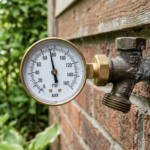
How to check: Use a water pressure gauge (available at hardware stores for under $15) on an outdoor hose bib or laundry hookup. Test cold pressure, then run hot water and compare. A significant difference, or readings below 40 PSI on the hot side, points to PRV involvement.
Fix: PRVs can often be adjusted with a screwdriver by turning the adjustment screw clockwise to increase pressure. If adjustment does not resolve the issue or the valve is over 10 years old, replacement is more reliable than repair. PRV replacement typically costs $150–$350 with professional installation.
5. Corroded or Scaled Galvanized Steel Pipes (Hot Side Only)
In homes built before the 1970s, galvanized steel pipes were common. These pipes corrode from the inside out over decades. Because hot water accelerates mineral deposition and corrosion, galvanized pipes on the hot water side often scale up significantly faster than cold water lines.
How to identify this cause: Pressure problems affect only hot water and are worse at fixtures far from the heater. Multiple faucets show similar low flow. The home is older than 40–50 years and still has original plumbing.
Fix: There is no reliable way to clean corroded galvanized pipes in place. Full or sectional repiping with copper or PEX is the solution. This is a major plumbing project, but targeted repiping of only the affected hot water runs can sometimes address the problem at lower cost than a whole-house repipe.
Checking your water pressure and plumbing system regularly helps catch early-stage corrosion before it causes complete blockage.
6. Faulty Hot Water Heater Outlet Valve or Dip Tube
The dip tube inside a tank water heater directs cold incoming water to the bottom of the tank, keeping it separate from the hot water at the top. If the dip tube breaks or disintegrates, plastic fragments can travel into the hot water outlet and clog fixtures, aerators, and cartridges — but only on the hot side.
Signs of a broken dip tube: White or gray plastic bits in faucet aerators and showerheads, reduced hot water pressure that worsened gradually, and shorter-than-normal hot water duration.
Fix: Start by cleaning aerators and showerhead screens. If plastic debris is present, the dip tube needs replacement. This is a moderate DIY repair — the old tube is removed from the cold water inlet and a new one inserted. Dip tubes cost under $15 but the job requires draining the tank and can be time-consuming.
7. Clogged Faucet Aerators and Showerheads (Hot Side Mineral Buildup)
If the pressure problem is isolated to one or two fixtures rather than every hot water outlet in the house, the issue is likely localized. Aerators and showerhead restrictors accumulate mineral scale faster than cold-side equivalents because hot water carries dissolved minerals that precipitate on cooling.
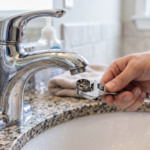
How to check: Unscrew the aerator from the faucet and run the hot water. If pressure improves immediately, the aerator is the problem.
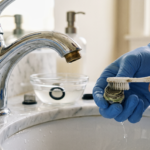
Fix: Soak aerators and showerhead faces in white vinegar for 30–60 minutes to dissolve calcium deposits. For step-by-step guidance, the process of cleaning a faucet aerator to fix low water pressure takes under 15 minutes per fixture and requires no tools.
How to Diagnose the Problem Systematically
Follow this sequence to narrow down the cause before touching any components:
- Check all hot water fixtures. If pressure is low everywhere, the cause is in the water heater or supply system. If only one fixture is affected, start at that fixture.
- Inspect the water heater shutoff valve. Confirm it is fully open.
- Check the flex connectors for kinks or corrosion.
- Measure water pressure at a hose bib with a gauge to rule out a PRV issue.
- Flush the water heater if it has not been serviced in over a year.
- Remove and inspect aerators at problem fixtures for debris or scale.
- Check the age of your pipes. If your home has galvanized steel, repiping may be the only lasting fix.
When to Call a Plumber
Handle it yourself when the problem is a clogged aerator, a partially closed valve, or sediment that flushes out cleanly. Call a licensed plumber when the issue involves a PRV, corroded galvanized pipes, a water heater that shows signs of internal corrosion, or any situation where water pressure differences exceed 20 PSI between hot and cold lines.
Repiping, PRV replacement, and water heater replacement involve safety considerations — gas connections, temperature-and-pressure relief valve integrity, and code compliance — that benefit from professional handling.
FAQ
Can a water heater cause low hot water pressure throughout the whole house?
Yes. A water heater with heavy sediment, a corroded outlet port, a partially closed shutoff valve, or a failed flex connector restricts flow to every hot water fixture simultaneously. If pressure is uniformly low on the hot side across all faucets and showers, the water heater or its supply connections are the likely source.
Why does hot water pressure drop after a few minutes of use?
Pressure that starts normal then falls suggests the water heater is struggling to maintain flow — often due to sediment partially blocking the outlet, a failing dip tube, or an internal valve problem. In some cases, a thermal expansion issue can cause brief pressure spikes followed by drops if the system lacks a proper expansion tank.
Does water temperature affect water pressure?
Indirectly, yes. Hot water expands when heated, which can temporarily increase pressure inside a closed system. However, low hot water pressure at the tap is not caused by temperature itself — it is caused by physical restrictions in the hot water lines, valves, or tank that do not affect the cold water supply.
How often should a water heater be flushed to prevent pressure problems?
Flushing once per year is standard for most households. Homes in areas with hard water — above 7 grains per gallon — benefit from flushing every six months. Regular flushing removes sediment before it reaches a level that restricts flow or damages the tank lining.
Can low hot water pressure damage a water heater?
Not directly. However, restricted flow caused by partially closed valves or kinked flex connectors can force the heater to work harder and heat less efficiently, potentially shortening its service life. More importantly, diagnosing low pressure early helps identify underlying corrosion or sediment that, if left unaddressed, can cause leaks or tank failure.