Bathrooms are responsible for roughly 50% of indoor household water use. Toilets alone account for nearly 27%, followed by showers, faucets, and baths. That means the bathroom is where the most water is used — and where the most can be saved.
You don’t need to tear out fixtures or hire a plumber to make a real difference. Most water-saving changes in the bathroom take minutes, cost very little, and require no tools at all. The seven methods below work for renters and homeowners alike.
1. Install a Low-Flow Showerhead
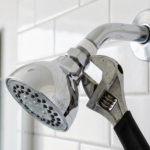
Replacing a standard showerhead is the single highest-impact, lowest-effort water-saving upgrade available for most bathrooms.
Older showerheads typically flow at 2.5 gallons per minute (GPM). WaterSense-labeled showerheads flow at 2.0 GPM or less — a 20% reduction without any noticeable drop in water pressure. For a household where two people shower daily for eight minutes each, that switch saves roughly 2,920 gallons per year.
Most low-flow showerheads twist on and off with no tools beyond a wrench for the initial fitting. They range from $15 to $60 and qualify for rebates through many local utility providers.
What to look for: Choose models with a WaterSense certification from the U.S. Environmental Protection Agency, which guarantees both performance and efficiency standards are met.
2. Add a Faucet Aerator
A faucet aerator is a small mesh screen that screws onto the tip of a faucet. It mixes air into the water stream, maintaining pressure while reducing actual flow.
Standard bathroom faucets run at 2.2 GPM. A WaterSense aerator reduces that to 1.5 GPM or less — a 30% reduction with zero impact on usability. Installation takes under two minutes: unscrew the old aerator, screw on the new one, done.
Aerators cost between $3 and $10 each. If mineral buildup is causing low water pressure at a faucet, cleaning the existing aerator — rather than replacing it — can restore flow. For a step-by-step walkthrough on removing and cleaning aerators, see how to clean a faucet aerator to fix low water pressure.
3. Fix Leaking Faucets and Toilets
A faucet dripping once per second wastes more than 3,000 gallons per year. A leaking toilet can waste far more — between 200 and 7,000 gallons per day depending on severity — often silently.
To check for a toilet leak: Add ten drops of food coloring to the toilet tank. Do not flush. Wait 15 minutes. If color appears in the bowl, the flapper valve is leaking and needs replacing. Replacement flappers cost under $10 and snap into place without tools.
For faucets: Most slow drips come from a worn washer or O-ring inside the faucet cartridge. Replacing the internal cartridge typically costs $5–$25 depending on the faucet model and stops the drip permanently.
Leak repairs have the fastest payback of any water-saving action — savings begin immediately and accumulate every single day.
4. Shorten Shower Duration
The average American shower lasts 8 minutes. Cutting that to 5 minutes saves approximately 7.5 gallons per shower (using a 2.5 GPM showerhead). Across a four-person household, that reduction saves roughly 10,950 gallons annually.
A waterproof shower timer — available for under $10 — gives clear visual feedback without requiring anyone to track time mentally. Some households place a visual marker (a small suction cup hourglass) at eye level to make the goal concrete rather than abstract.
Waiting for hot water before getting in is another common source of waste. A small insulated bucket placed in the shower to catch the cold water for use elsewhere — watering plants, rinsing dishes — recovers water that would otherwise go directly down the drain.
5. Turn Off the Tap While Brushing and Shaving
Running water while brushing teeth wastes about 4 gallons per session. Twice daily for one person, that adds up to nearly 3,000 gallons per year. For a four-person household, the number exceeds 11,000 gallons.
Turning off the tap while brushing, shaving, and rinsing requires no products and costs nothing. It is one of the highest-volume savings available through behavior alone.
If getting everyone in a household on board is difficult, placing a small sign above the faucet as a visual reminder tends to be more effective than verbal reminders over time.
6. Use a Dual-Flush Toilet Converter
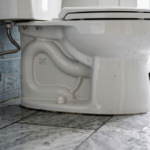
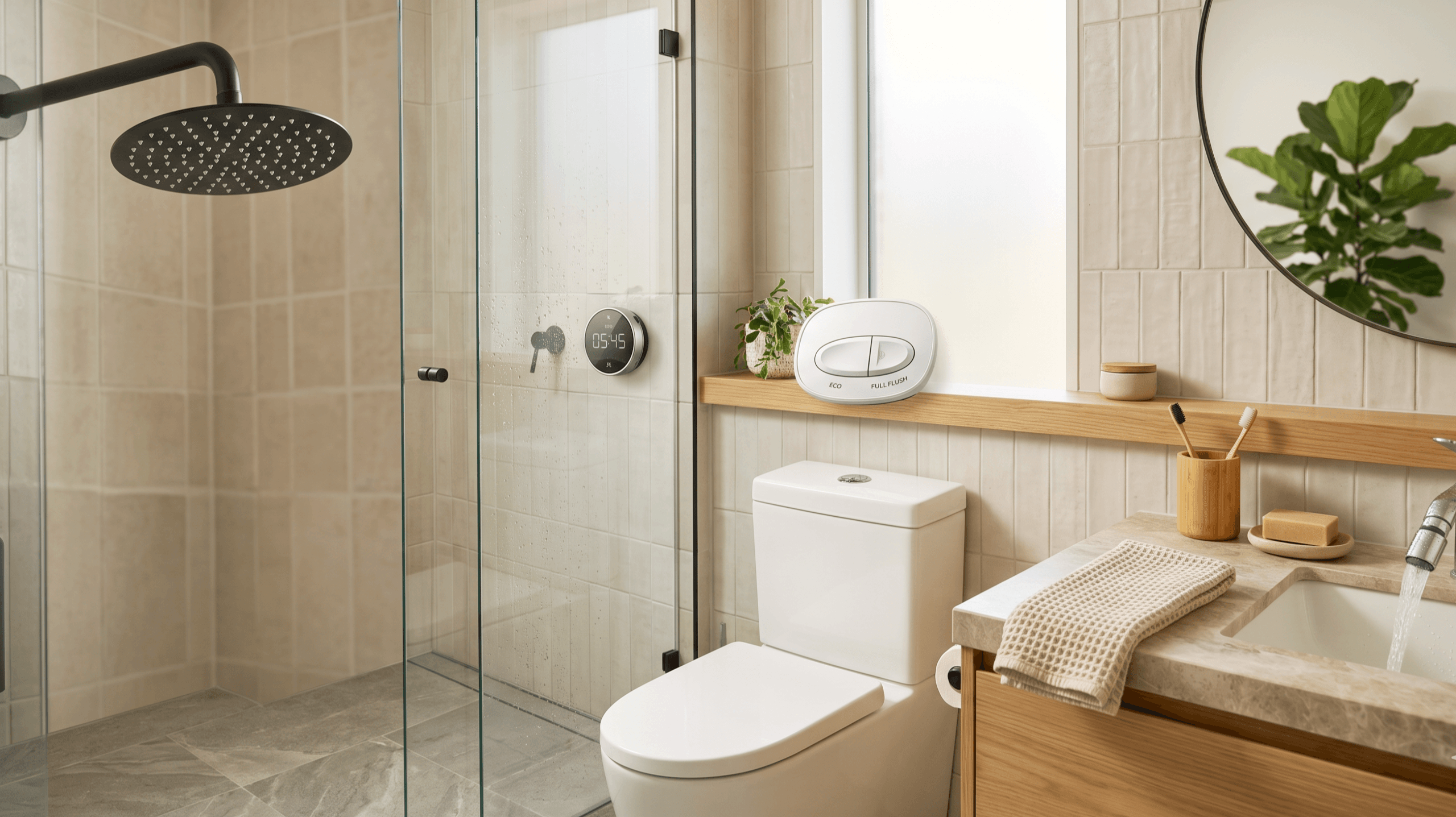
If replacing a toilet isn’t on the table, a dual-flush converter kit can be installed inside the existing tank in about 30 minutes with no plumbing knowledge required.
Dual-flush systems provide two options: a partial flush (0.8–1.0 gallons) for liquid waste and a full flush (1.6 gallons) for solid waste. A standard toilet uses 1.6 gallons per flush regardless of need.
Converter kits range from $20 to $40 and are available for most standard two-piece toilets. Studies of households using dual-flush systems have shown toilet water use reduced by 25–40%, depending on household size and flush habits.
Note: Dual-flush converters don’t work well with all toilet models. Check the manufacturer compatibility list before purchasing.
7. Take Baths Strategically — or Replace Them with Showers
A full bathtub holds 35 to 50 gallons. A five-minute shower using a 2.0 GPM showerhead uses only 10 gallons. If baths are a frequent choice rather than an occasional one, shifting most bathing to showers produces substantial savings without eliminating baths entirely.
When a bath is preferred, filling the tub only to the minimum needed — rather than to the brim — cuts use significantly. A half-full bath at 17–20 gallons uses less water than a full bath and often provides the same experience.
For households with children who require baths, bathing two children at once in the same water is a common and effective approach that effectively halves bath-related water consumption per wash.
Bathroom Water Conservation: Key Takeaways
| Action | Estimated Annual Savings | Cost |
|---|---|---|
| Low-flow showerhead | 2,900+ gallons/household | $15–$60 |
| Faucet aerator | 1,000–2,000 gallons | $3–$10 |
| Fix toilet leak | Up to 2.5 million gallons | $5–$10 |
| 3-minute shorter showers | 10,000+ gallons (4-person HH) | $0–$10 |
| Turn off tap while brushing | 11,000+ gallons (4-person HH) | $0 |
| Dual-flush converter | 25–40% toilet water reduction | $20–$40 |
| Showers over full baths | 15–40 gallons per wash | $0 |
The EPA’s WaterSense program maintains a database of certified fixtures — a reliable starting point when choosing aerators, showerheads, or toilets. For broader water conservation strategies beyond the bathroom, the Water Conservation & Sustainable Living section of Home Water Insights covers additional approaches for whole-home efficiency.
Frequently Asked Questions
How much water can you save in the bathroom without replacing fixtures?
Behavioral changes alone — turning off the tap while brushing teeth, shortening showers by three minutes, and fixing a leaking toilet flapper — can save 15,000 to 25,000 gallons per year for an average four-person household. No fixture replacement is required to achieve meaningful savings.
Does a low-flow showerhead reduce water pressure?
A well-designed low-flow showerhead does not feel weaker than a standard one. It uses smaller nozzle openings and air-infusion technology to maintain pressure while reducing volume. Models with a WaterSense label must pass performance tests to earn certification. However, if your shower already has weak flow, the issue may be your plumbing rather than the showerhead itself. Learn why hot water pressure might be low while cold is fine.
How do I know if my toilet is leaking silently?
Add food coloring or a dye tablet to the toilet tank without flushing. Wait 15 minutes. If the color appears in the bowl, the flapper valve is not sealing properly and is leaking. Silent leaks are among the most common and largest sources of bathroom water waste.
Is it better to take a bath or a shower for water conservation?
A short shower — five minutes or less with a low-flow showerhead — consistently uses less water than a typical bath. A five-minute shower at 2.0 GPM uses 10 gallons, while a standard bath uses 35–50 gallons. Longer showers can match or exceed bath consumption, so duration matters.
Can renters make water-saving changes in the bathroom?
Yes. Faucet aerators and showerheads are removable without tools or permanent modification. Renters can swap them in at move-in and swap the originals back at move-out. Dual-flush toilet converters are similarly reversible. These changes require no landlord approval in most cases and produce measurable savings in monthly water bills.