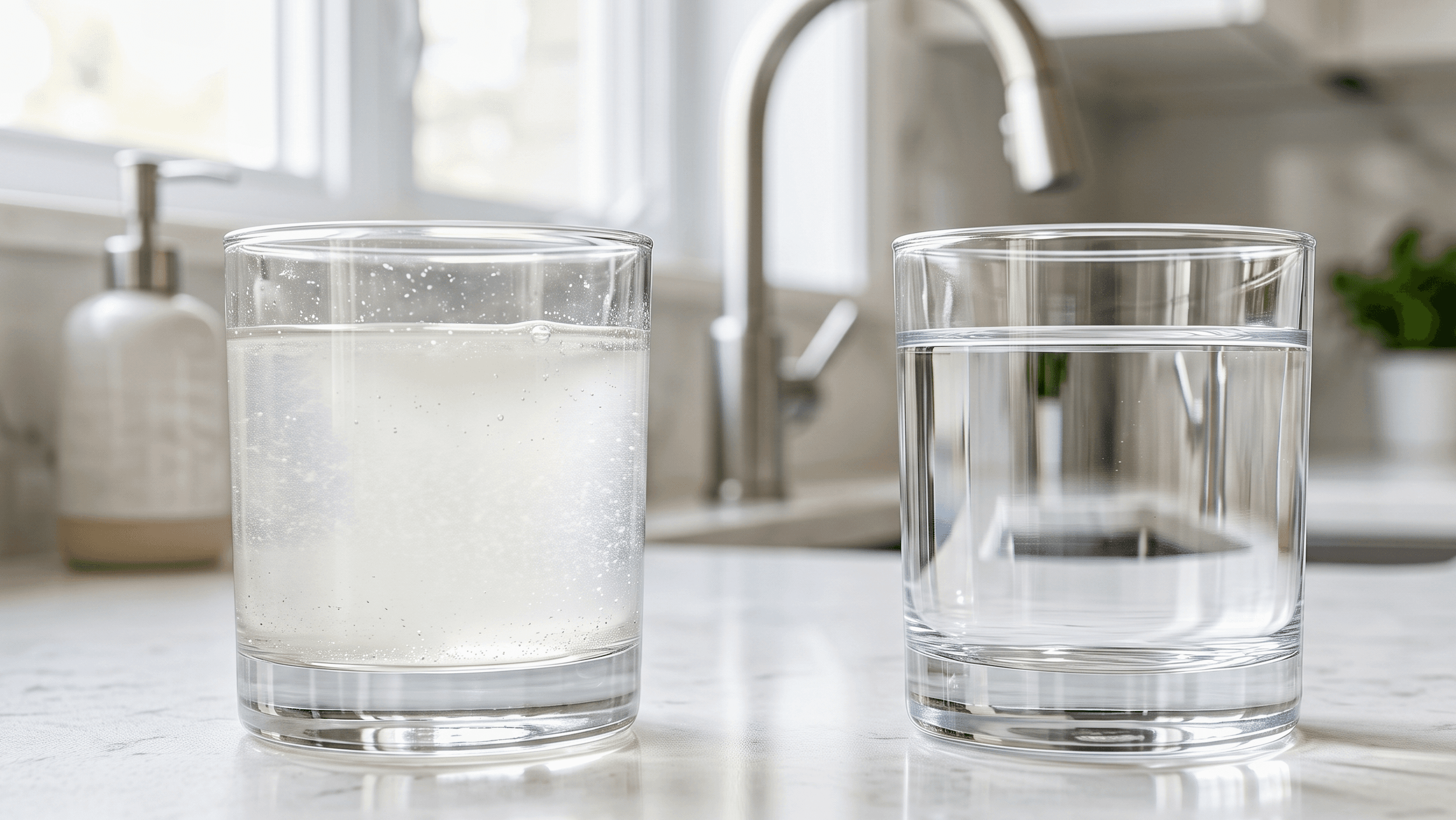
Cloudy tap water that clears up within 30–60 seconds is almost always harmless — but understanding the cause helps you know when it isn’t. There are five distinct reasons water turns temporarily milky or white, and each has a different fix.
This article covers each cause in plain terms, explains how to confirm which one applies to your home, and tells you what to do about it.
How to Tell the Difference at a Glance
| Cloudiness Type | Clearing Pattern | Settling | Odor | Likely Cause |
|---|---|---|---|---|
| Milky, uniform | Bottom to top, within 60 sec | None | None | Dissolved air |
| Milky or white | Slow, partial | White residue | None | Hard water / calcium |
| Grayish or brown | Stays suspended | Settles to bottom | Earthy or musty | Sediment / pipe scale |
| Milky, uniform | Bottom to top, within 60 sec | None | Gas-like | Methane (well water) |
| Milky, after outage | Clears slowly | Varies | None | Pressure disturbance |
Why Does Cloudy Water Clear from the Bottom Up?
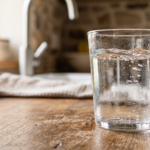
When cloudy water clears from the bottom of a glass upward, that’s a reliable sign the cloudiness is caused by dissolved air — specifically tiny air bubbles suspended throughout the water. As the bubbles rise and escape, the water clears in a visible wave from bottom to top.
This directional clearing is one of the fastest ways to distinguish harmless aeration from cloudiness caused by particles or contamination, which either stays suspended or settles to the bottom.
5 Causes of Cloudy Water That Clears Up
1. Dissolved Air (Aeration) — The Most Common Cause
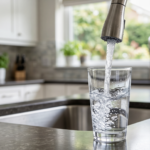
Dissolved air is responsible for the majority of cloudy-then-clear tap water complaints. Cold water holds more dissolved oxygen and nitrogen than warm water. When that water enters your home’s pipes — which are under higher pressure than the atmosphere — and then drops in pressure as it flows from the tap, dissolved gases rapidly come out of solution as microscopic bubbles.
The result is a glass of water that looks milky or opaque, then clears within 30–60 seconds as the bubbles rise. This phenomenon is entirely harmless and requires no treatment.
It becomes more noticeable in winter when water from municipal sources or ground reservoirs is colder and gas solubility increases. Homes supplied by well water can also experience it, particularly after the pump cycles. If your faucet sputters briefly when first turned on, aeration in the supply line may be involved — a situation covered in detail on the faucet sputtering guide.
How to confirm: Fill a clear glass and set it on the counter. If clearing starts at the bottom and moves upward within a minute, dissolved air is the cause.
How to fix: No action required. If it bothers you, letting water sit in an open pitcher for a few minutes eliminates the bubbles before drinking.
2. Pressure Changes in the Distribution System
Water pressure fluctuations — from municipal supply adjustments, nearby construction, or demand spikes — can introduce air into the distribution system or temporarily destabilize water chemistry enough to cause brief cloudiness.
When a water main undergoes maintenance or a pressure surge travels through local pipes, small quantities of air and loosened sediment can enter the supply. This typically resolves within minutes to a few hours. If cloudiness appears across all faucets simultaneously after an interruption in water service, pressure-related disturbance is the likely explanation.
Persistent pressure fluctuations in the home are worth investigating separately. Daily water pressure fluctuations are often tied to municipal demand patterns, failing pressure regulators, or waterlogged expansion tanks.
How to fix: Run cold water at a tap for 2–3 minutes after water service resumes. This flushes air and disturbed sediment from your home’s portion of the supply line.
3. Sediment or Particulate Disturbance
Not all cloudy water clears in the same way. Sediment-caused cloudiness — from disturbed pipe scale, mineral deposits, or fine sand — behaves differently than air-bubble cloudiness. Instead of clearing from bottom to top, it either stays evenly suspended for longer or gradually settles to the bottom of the glass.
Common sources include:
- Aging galvanized steel or copper pipes shedding mineral scale
- Well water after a pump repair or heavy rain event that stirs up the aquifer
- Seasonal changes in municipal water sources that alter the mineral load
- Recently replaced or repaired plumbing that introduced debris into the line
If the water leaves a residue or feels gritty, that confirms particulate matter rather than air. A tap water quality report from your municipality can help identify whether mineral levels are elevated during certain periods.
How to fix: Flush affected taps for 3–5 minutes. Clean faucet aerators every 6–12 months to prevent mineral buildup from accumulating. For persistent sediment from old pipes, a whole-house sediment pre-filter (typically a 5–20 micron cartridge) installed at the main water entry point captures particles before they reach taps.
4. Methane Gas (Well Water Homes Only)
Homes on private well water can occasionally experience cloudiness caused by naturally occurring methane gas dissolved in groundwater. Like dissolved oxygen and nitrogen, methane comes out of solution when pressure drops at the tap. The visual appearance is nearly identical to air-bubble cloudiness — milky water that clears within a minute.
The key difference is odor. Methane has a faint natural gas or petroleum smell at higher concentrations. At low concentrations it may be odorless, which makes visual inspection alone unreliable.
Methane in well water is a naturally occurring condition in certain geological areas rather than a sign of contamination, but it warrants professional testing if suspected. Well water systems carry different risk profiles than municipal supplies, and methane dissolved in water can be a fire hazard at high concentrations if the water is used near open flames.
How to fix: Have the well tested by a licensed water quality professional. Aeration treatment systems remove dissolved gases from well water before it enters the home’s distribution lines.
5. Hard Water Reacting with Temperature
Temporary hardness — calcium bicarbonate dissolved in water — can precipitate out as calcium carbonate when water temperature changes rapidly. This typically appears as a white cloudiness that may or may not fully clear, and often leaves a white residue on clear glassware or inside kettles.
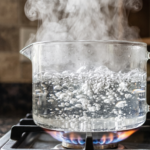
Unlike air-bubble cloudiness, hard water cloudiness tends to be more persistent and may leave deposits visible on glass after the water dries. It’s most noticeable in hot water applications — kettles, shower steam, or dishwashers — rather than cold tap water.
Hard water does not pose a health risk, but the scale it deposits causes real problems over time: reduced water heater efficiency, clogged aerators, and shortened appliance lifespan. A comparison of water softener vs. water conditioner options is worth reviewing if scale buildup is a recurring problem.
How to fix: A water softener removes calcium and magnesium ions through ion exchange and eliminates scaling. Water conditioners address scale without ion exchange. The right choice depends on water hardness level, plumbing type, and preference for salt-based versus salt-free treatment.
When Cloudy Water Requires Action
Temporary cloudy water that clears within 60 seconds and has no odor, taste change, or discoloration is safe in most cases. The EPA’s drinking water quality standards set turbidity limits for public water systems precisely because persistent cloudiness can interfere with disinfection effectiveness.
Contact your water utility if:
- Cloudiness persists for more than a few hours
- The water has an unusual smell alongside the cloudiness
- Color is yellow, brown, or orange rather than white or gray
- Multiple neighbors report the same issue simultaneously
- The problem appeared after a plumbing repair or pipe replacement
Well water users should test annually regardless of appearance. A certified lab test covers turbidity, coliform bacteria, nitrates, and heavy metals — none of which are detectable by sight. Common tap water contaminants that pose health risks are typically invisible, odorless, and tasteless.
FAQ
Is it safe to drink cloudy tap water that clears up on its own?
In most cases, yes. Cloudy water that clears from the bottom of a glass upward within 60 seconds is caused by dissolved air, which is harmless. Cloudiness caused by sediment disturbance or pressure changes also poses no health risk in properly treated municipal water. The exception is well water, where unexplained cloudiness warrants testing before assuming it is safe.
Why does my cold water look cloudy but my hot water is clear?
Cold water dissolves more gas than hot water, so aeration-caused cloudiness is more common in cold taps. If hot water is consistently clearer, dissolved air from the cold supply line is almost certainly the cause. The water heater’s higher temperature drives off dissolved gases before they reach the hot tap.
Can a water filter prevent cloudy water?
A sediment filter prevents cloudiness caused by particulate matter but has no effect on air-bubble cloudiness. For dissolved gases, a point-of-entry aeration or degassing system is the appropriate treatment. Water filter pitchers and faucet-mounted filters improve taste and remove certain contaminants but do not address turbidity from dissolved air or sediment.
Why does my water only look cloudy in the morning?
Water that sits in cold pipes overnight absorbs more dissolved gases than water that has recently flowed. When the tap is opened first thing in the morning, that gas-saturated water releases bubbles rapidly. Running the tap for 15–30 seconds flushes the standing water and usually resolves it. If morning cloudiness is also accompanied by a metallic or musty smell, check the tap water metal taste guide for pipe-related causes.
Does cloudy water from a well mean the well is contaminated?
Not necessarily, but it warrants investigation. Well water cloudiness can result from dissolved gases, clay or silt infiltration after heavy rain, a pump drawing from a disturbed aquifer layer, or — less commonly — bacterial activity. Visual cloudiness alone is not a reliable contamination indicator. Testing for coliform bacteria, turbidity, and other parameters is the only way to confirm water quality in a private well system.