If you’re dealing with scale buildup, dry skin, or spotted dishes, you’ve probably come across two types of solutions: water softeners and water conditioners. They’re often marketed interchangeably, but they work through entirely different mechanisms and produce different results.
The core distinction is this — a water softener removes hardness minerals from water permanently through ion exchange. A water conditioner alters how those minerals behave without removing them. Knowing which outcome you need determines which system is worth buying.
This article explains how each system works, what it actually costs to own, and which situations each is suited for.
How Hard Water Creates Problems in the First Place
Hard water contains dissolved calcium and magnesium ions. These minerals are harmless to drink, but they cause real problems when water is heated or evaporates — they precipitate out and form limescale. Scale accumulates inside pipes, water heaters, dishwashers, and washing machines, reducing efficiency and shortening equipment lifespan.
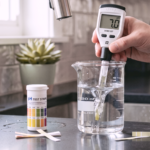
Water hardness is measured in grains per gallon (GPG) or milligrams per liter (mg/L). Water above 7 GPG is considered hard; above 10.5 GPG is very hard. You can verify your water’s hardness by reading your municipal water quality report or using a home test kit.
How Water Softeners Work
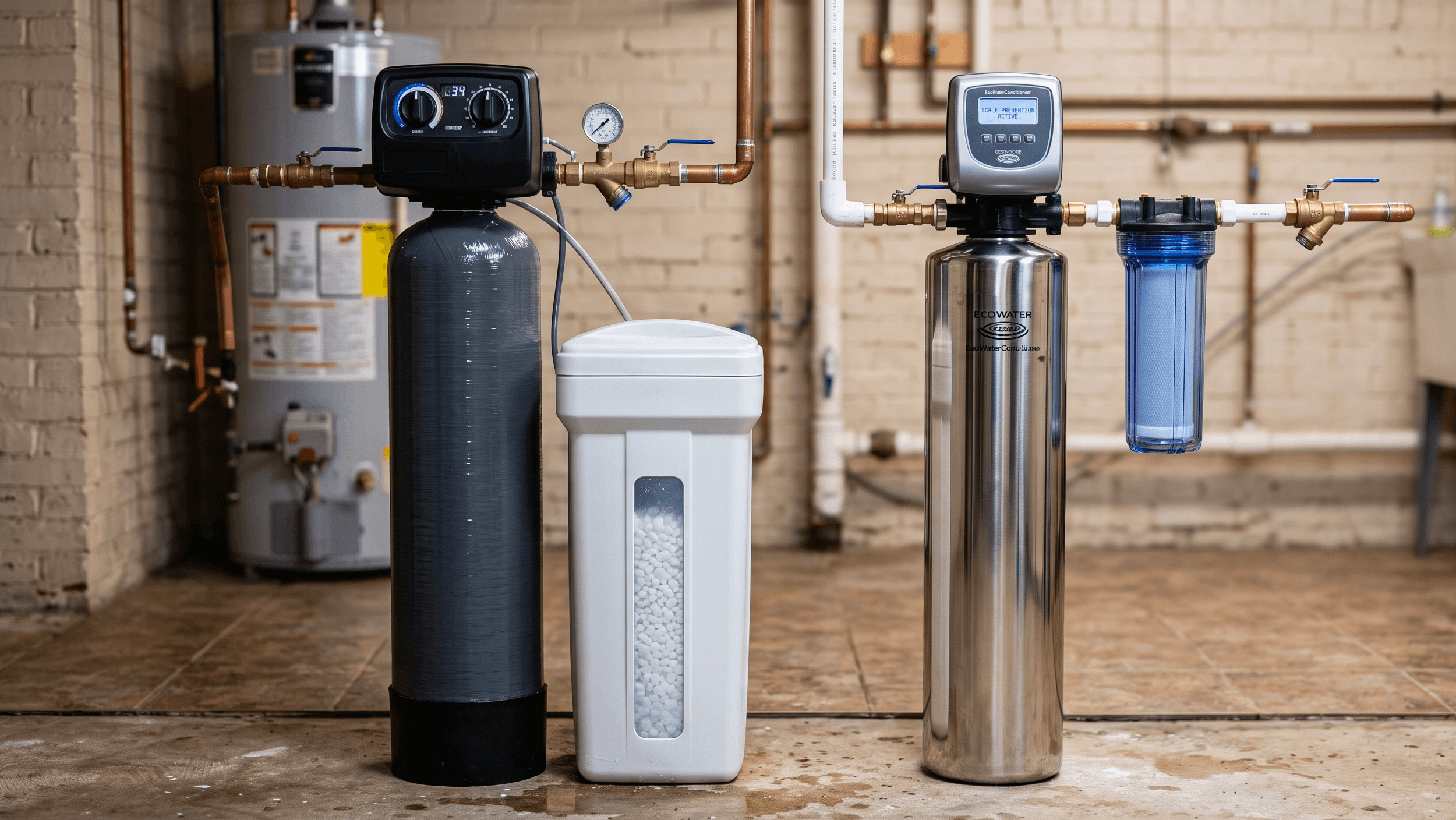
A traditional salt-based water softener removes calcium and magnesium ions from water using a process called ion exchange. Water passes through a resin tank filled with negatively charged resin beads that attract and hold the positively charged hardness minerals. Sodium ions replace them in the water, which exits the system fully softened.
The resin tank periodically flushes with a concentrated salt brine to regenerate — washing the captured minerals down the drain and recharging the beads for the next cycle. This is why salt-based softeners require a brine tank filled with sodium chloride or potassium chloride pellets.
What a Water Softener Actually Fixes
- Eliminates limescale buildup in pipes, water heaters, and appliances
- Removes soap scum and hard water spotting on dishes, glass, and fixtures
- Reduces mineral deposits on skin and hair
- Extends the operational life of washing machines and dishwashers by measurable margins — water heaters operating on softened water can last 1.5x longer than those running on hard water above 15 GPG
Limitations of Salt-Based Softeners
- Adds a small amount of sodium to treated water (roughly 20–40 mg per liter at high hardness levels), which matters for anyone on a low-sodium diet
- Requires ongoing salt purchases and periodic regeneration
- Produces wastewater during regeneration cycles — typically 25–65 gallons per cycle
- Banned or restricted in some California communities due to chloride discharge into water systems
- Does not filter contaminants like chlorine, heavy metals, or bacteria — if those are concerns, a separate filtration stage is needed (see common tap water contaminants)
How Water Conditioners Work
Water conditioners — also called salt-free softeners, descalers, or template-assisted crystallization (TAC) systems — do not remove hardness minerals. Instead, they change the physical structure of calcium and magnesium ions so they can’t bind to surfaces as easily.
The most common technology is template-assisted crystallization (TAC). Media inside the unit causes dissolved minerals to form microscopic crystals that remain suspended in water and pass through pipes without adhering to surfaces. Another approach is electromagnetic or electronic descalers, which use magnetic fields or electrical pulses to alter mineral behavior — though the scientific evidence supporting these is considerably weaker than for TAC systems.
What a Water Conditioner Actually Fixes
- Reduces new limescale formation in pipes and appliances
- Requires no salt, no electricity (for TAC systems), and produces no wastewater
- Treats water without adding sodium — relevant for households avoiding dietary sodium
- Low maintenance: most TAC media lasts 3–6 years with no regeneration required
- Generally acceptable in areas where salt-based softeners are restricted
Limitations of Water Conditioners
- Does not soften water in the traditional sense — hardness mineral levels remain unchanged
- Existing scale deposits already in pipes and appliances are not dissolved; they break down gradually over months, not immediately
- Will not eliminate soap scum, hard water spots, or the skin/hair effects associated with high mineral content
- Performance claims vary significantly by brand — TAC systems have stronger peer-reviewed support than magnetic or electronic units
- Less effective at extremely high hardness levels (above 25 GPG)
Side-by-Side Comparison
| Feature | Salt-Based Water Softener | Water Conditioner (TAC) |
|---|---|---|
| Removes hardness minerals | ✅ Yes | ❌ No |
| Prevents scale buildup | ✅ Yes | ✅ Yes (new scale only) |
| Eliminates soap scum & spots | ✅ Yes | ❌ No |
| Adds sodium to water | ✅ Yes | ❌ No |
| Requires salt | ✅ Yes | ❌ No |
| Produces wastewater | ✅ Yes | ❌ No |
| Electricity required | Sometimes | ❌ No (TAC) |
| Maintenance | Monthly salt refill + periodic service | Minimal; media replacement every 3–6 years |
| Legal in all areas | ❌ Not always | ✅ Generally yes |
| Upfront cost | $400–$2,500+ | $300–$1,500+ |
Cost Breakdown: Water Softener vs. Water Conditioner
Water Softener Costs
Upfront cost: $400–$2,500 for the unit itself, depending on capacity (measured in grains). A whole-home unit for a family of four typically ranges from $600–$1,500. Professional installation adds $200–$500.
Ongoing costs: Salt bags run $5–$10 each and a typical household uses 6–10 bags per month, putting annual salt costs at $360–$1,200. Higher-efficiency demand-initiated regeneration (DIR) systems use 30–50% less salt by regenerating only when needed rather than on a fixed schedule.
Maintenance: Annual service inspections cost $100–$200. Resin tanks typically last 10–15 years; the brine tank lasts indefinitely with proper care.
Total 10-year cost estimate: $4,500–$15,000 depending on water hardness, household size, and salt usage.
Water Conditioner Costs
Upfront cost: $300–$1,500 for TAC-based whole-home systems. Electronic/magnetic descalers are cheaper ($30–$300) but have lower verified effectiveness.
Ongoing costs: TAC media replacement every 3–6 years costs $100–$300. No salt, no regular chemical costs.
Maintenance: Minimal. Most TAC systems are fully passive with no moving parts and no electrical connection.
Total 10-year cost estimate: $600–$2,500 for TAC systems, making them significantly cheaper to own over time.
Which System Is Right for Your Home?
Choose a salt-based water softener if:
- Your water hardness exceeds 10 GPG and you want fully softened water
- You have significant existing scale buildup and want it stopped immediately
- Hard water is affecting your skin, hair, laundry, or soap lathering
- You’re willing to manage ongoing salt costs for complete mineral removal
Choose a water conditioner if:
- Your water hardness is moderate (under 15 GPG) and scale prevention — not full softening — is your goal
- You want to reduce appliance scale without adding sodium to your water
- Salt-based softeners are restricted in your area
- You prefer a low-maintenance, no-salt approach and don’t need soft water for skin or laundry benefits
- You’re on a well water system where discharge concerns apply — see more about well water system considerations
Consider combining both if: Some homeowners pair a TAC conditioner with a drinking water filtration system to address scale, taste, and contaminants without running softened water through the whole house. This approach is especially common in households concerned about sodium intake but still dealing with hard water side effects.
For issues like metallic taste or chlorine odor that persist after addressing hardness, see tap water that tastes like metal or water that smells like rotten eggs — these often point to separate contaminant issues that water softeners and conditioners don’t address.
Efficiency and Water Waste Considerations
Salt-based softeners have improved significantly in efficiency over the past decade. Older timer-based systems regenerate on a fixed schedule regardless of water use; modern demand-initiated models regenerate based on actual consumption and use 50% less salt and water as a result. If water conservation matters in your household, this distinction is worth investigating before purchasing — see also water conservation strategies for a broader look at reducing residential water use.
TAC conditioners produce zero wastewater and use no electricity, which makes them the more sustainable option for households tracking environmental impact.
FAQ
Does a water conditioner soften water?
No. A water conditioner does not soften water in the technical sense. It changes the physical structure of hardness minerals — calcium and magnesium — so they are less likely to deposit on surfaces, but the mineral content of the water remains the same. True water softening, which reduces measured hardness and produces lathering, silky water, requires ion exchange through a salt-based system.
Is softened water safe to drink?
Softened water is safe for most people, but the ion exchange process replaces calcium and magnesium with sodium. At high hardness levels (above 20 GPG), sodium added by softening can reach 150–200 mg per liter. People on physician-prescribed low-sodium diets should consult their doctor, and many households install a separate reverse osmosis unit at the kitchen tap to provide unsoftened drinking water.
How do I know if I have hard water?
Common signs include white or chalky deposits around faucets and showerheads, soap that doesn’t lather well, dishes with spots after washing, and dry or itchy skin after bathing. A water hardness test kit confirms the level precisely and costs less than $15 at most hardware stores. Your municipality’s annual water quality report also lists average hardness — reading that report takes about five minutes and tells you what you’re working with before buying any equipment.
Will a water conditioner remove existing scale?
Over time, yes — but slowly. TAC conditioners cause existing calcium carbonate deposits to gradually dissolve as conditioned water flows past them. This can take weeks to months depending on scale thickness and water flow. A salt-based softener accelerates existing scale removal more quickly because fully softened water is more aggressive at dissolving deposits.
Do electronic or magnetic descalers actually work?
The evidence is mixed. TAC (template-assisted crystallization) systems have peer-reviewed studies showing measurable reductions in scale formation. Electromagnetic and magnetic descalers have a much weaker evidence base — independent testing results vary widely and many claims rely on manufacturer-funded studies. If scale prevention is the goal and a salt-based system isn’t viable, a TAC unit from a reputable brand is the more defensible choice over a plug-in magnetic device.
Can water softeners cause low water pressure?
A water softener tank can reduce water pressure slightly if the resin becomes fouled with iron, sediment, or if the unit is undersized for household demand. Pressure issues are uncommon in properly sized, maintained systems, but if you notice pressure changes after installation, check whether the issue traces back to the softener’s bypass valve, sediment accumulation, or a plumbing restriction elsewhere. Diagnosing home water pressure before installing any whole-home system is a good baseline step.