Beautiful Amaryllis: How to Grow These Show-Stopping Blooms
There’s a moment, usually sometime in late January, when winter feels like it will never end. The sky is gray, the heating is running nonstop, and every plant in the house looks tired. Then one morning you notice it — a thick green spike pushing up from the papery bulb on your windowsill, and within days it unfolds into a trumpet flower the size of your hand. That is the amaryllis doing what it does best: being spectacularly beautiful exactly when you need it most.
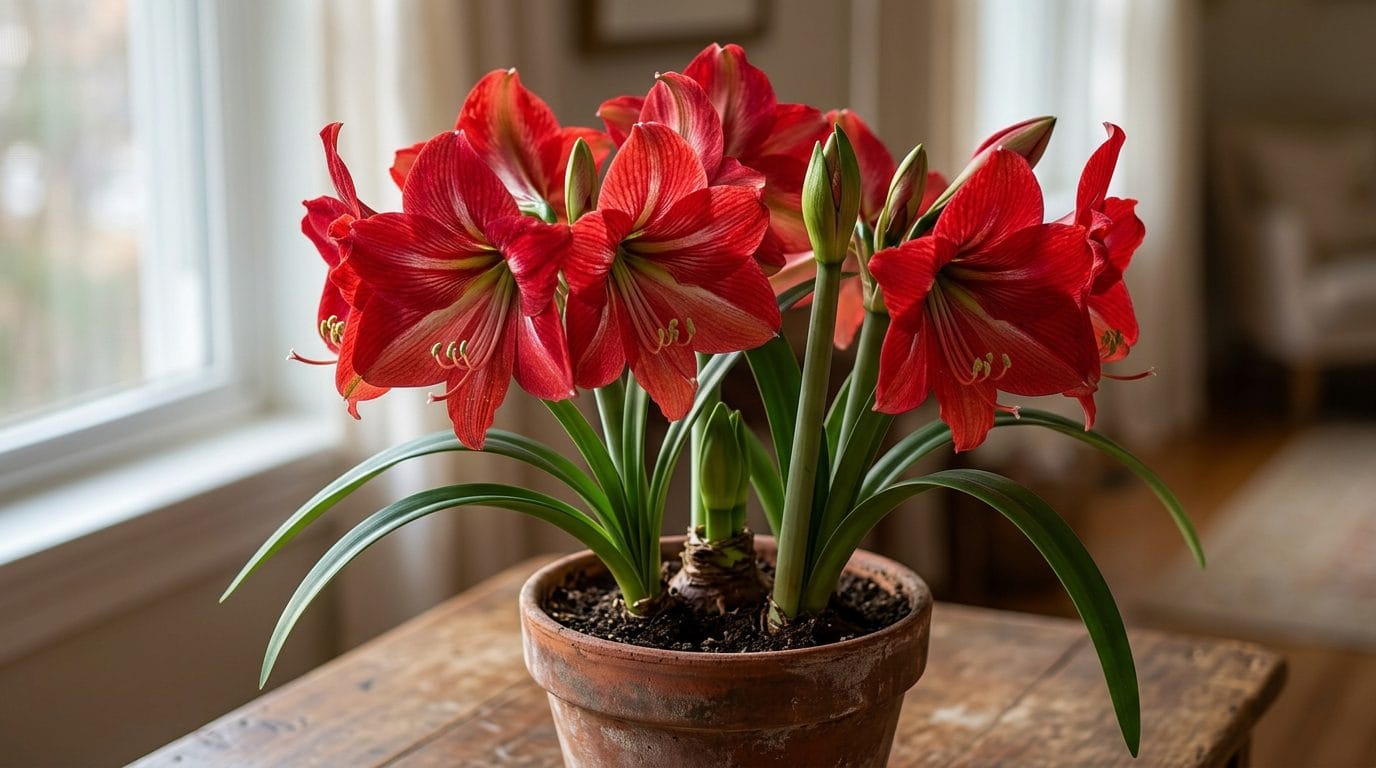
Most of us meet the amaryllis as a holiday gift — one of those boxed bulbs that looks like a sad brown onion and somehow becomes a three-foot tower of red blossoms. But the beautiful amaryllis is so much more than a December novelty. With a little know-how, the same bulb can bloom for you year after year, and there are dozens of varieties in colors that go far beyond the classic Christmas red.
In Hebrew, incidentally, the flower’s name carries that same sense of loveliness — it’s called אמריליס יפהפה (amaryllis yafefah), literally “beautiful amaryllis.” Lovely, isn’t it? Let’s make sure yours actually lives up to the name.
What Exactly Is an Amaryllis?
Here’s a fun bit of botany: the bulbs sold in garden centers as “amaryllis” are technically Hippeastrum hybrids. True amaryllis (Amaryllis belladonna) is a different, rarer plant. Nobody outside a botany department really cares about the distinction, and the name “amaryllis” has stuck to Hippeastrum for over two centuries. It’s one of those things the whole industry just agreed on.
What you’re growing is a tropical bulb from South America, bred over generations into the big, bold hybrids we know today. A single healthy bulb produces one or two thick flower stalks, each carrying four to six large trumpet-shaped blooms. Individual flowers last about a week to ten days, and a whole stalk can keep your windowsill colorful for up to three weeks as the buds open in succession.
The flowers come in an almost ridiculous range of colors now — deep reds, soft pinks, pure whites, salmon, orange, stripes, picotee edges, even doubles that look more like peonies than bulbs. The bulbs are impressively large too, often the size of a tennis ball or bigger. And here’s the first rule of amaryllis shopping: bigger is genuinely better. A larger bulb stores more energy, which means more flower stalks and bigger blooms. Pick up bulbs in the store and choose the heaviest, firmest ones you can find. Skip anything soft, squishy, or showing mold.

Planting Your Amaryllis Bulb (The Part Most People Get Wrong)
Planting an amaryllis feels almost suspiciously simple, and the most common mistake is burying the bulb too deep. Unlike tulips or daffodils, which want to be tucked underground, amaryllis bulbs like to sit high. Plant yours so the top third of the bulb stays above the soil line — some growers describe it as planting “from the shoulders down.” The bulb’s neck and growing tip should be out in the open air.
Choose a pot with drainage holes that’s only about one to two inches wider than the bulb. This sounds counterintuitive, but amaryllis actually likes being a little snug. A pot that’s too roomy holds excess moisture around the bulb, and moisture is the enemy here — a soggy bulb rots, and a rotten bulb doesn’t bloom.
Fill the pot with a loose, well-draining potting mix — standard houseplant mix with a bit of perlite mixed in works perfectly. Set the bulb in place, fill in around it, and water lightly just to settle the soil. Then comes the hard part: waiting.
How Long Until It Blooms?
Most amaryllis bulbs bloom six to eight weeks after planting. If you plant in late October, you’ll have flowers for the holidays. Plant in January, and you’ll have blooms brightening the bleakest part of winter. I like to stagger plantings — one bulb in October, another in December, a third in February — which gives me a rolling show that lasts from Christmas into spring.
For the first couple of weeks, keep the newly planted bulb in a warm spot (around 65–70°F is ideal) and water sparingly. Seriously — barely any water until you see growth. The bulb already contains everything it needs to get started, and too much water at this stage is the number one killer of amaryllis bulbs. Once the flower spike or leaves emerge, you can move it to a bright location and water more generously.

Light, Water, and Temperature: The Daily Basics
Once your amaryllis is growing, it’s not fussy. It wants what most houseplants want, just in slightly larger doses.
Light. Bright, indirect light is the sweet spot. A south or east-facing window works beautifully. As the stalk grows, rotate the pot every few days — amaryllis stalks lean hard toward the light, and rotating keeps them growing straight instead of doing a dramatic sideways sprawl. Once the buds start to open, you can move the plant wherever you want to show it off; the flowers last longer in a slightly cooler spot away from direct sun.
Water. Water when the top inch of soil feels dry. During active growth, that usually means watering once a week or so. Let the excess drain out the bottom, and never let the pot sit in a saucer of standing water. After flowering, when you want the plant to rest, you’ll cut water back dramatically — more on that below.
Temperature. Amaryllis likes normal room temperatures, roughly 65–75°F. It’ll grow faster in warmth and slower in cool rooms, which actually gives you a handy trick: if your buds are opening too fast for an event, move the plant somewhere cooler to slow things down. A warmer spot speeds everything up.
Food. Once the leaves are growing, feed every four to six weeks with a balanced liquid houseplant fertilizer (a 10-10-10 or similar, used at half strength). Don’t fertilize during dormancy. Think of fertilizer as fuel for the leaves — and the leaves are what build next year’s flowers.
Varieties Worth Knowing (Beyond the Classic Red)
The red amaryllis will always be iconic, but if you’ve only ever seen the classic, you’re missing out. Here are some varieties that reliably earn their keep:
- Red Lion — The classic. Big, velvety, true-red blooms. If you want the postcard amaryllis, this is it. Incredibly reliable and widely available.
- Apple Blossom — Soft white petals with a pink blush that deepens toward the edges. Delicate-looking but just as easy to grow as the reds.
- Minerva — A show-off: bright red petals striped and starred with white. People stop and stare at this one.
- Picotee — White petals edged with a fine red border, like someone traced each petal with a pen. Elegant and unusual.
- Double Dream — A fully double white bloom with layers of petals. From a distance it reads more like a peony than an amaryllis, and it opens gradually for an extra-long display.
- Papilio — The eccentric of the family. Greenish-white petals with burgundy striping and a butterfly-like shape. Harder to find, worth the hunt.
Some amaryllis are also sold “waxed” — the bulb is dipped in colored wax with a wire stand, no soil or pot needed. These are fun as gifts, but know that the waxed bulb is a one-season affair; without soil and roots, it can’t recharge itself for a second year. If you want a perennial bulb, plant it the old-fashioned way.
After the Bloom: How to Get Your Amaryllis to Rebloom
This is where most people give up and throw the bulb away. Don’t. A healthy amaryllis bulb can rebloom for years — some gardeners keep the same bulbs going for a decade. You just need to understand the plant’s rhythm: grow, recharge, rest, repeat.
Step 1: Let the Leaves Do Their Job
When the flowers fade, cut the flower stalk down to about an inch or two above the bulb — but leave the leaves alone. This is the single most important rule of reblooming. Those long, strappy leaves are solar panels, and they’re feeding the bulb right now. Cut them and you starve next year’s flowers.
Keep watering and feeding through spring and summer. Once the danger of frost is past, you can move the pot outdoors. Amaryllis loves a summer vacation — put it somewhere it’ll get at least six hours of sun a day (ease it into full sun over a week so the leaves don’t scorch) and keep watering whenever the top inch of soil dries out. Some people sink the whole pot into the garden bed. Just don’t plant the bulb directly in the ground if you live somewhere cold — digging it up later risks damaging the brittle roots.
Step 2: Force the Dormancy Rest
In late summer — around August or September — stop watering and stop fertilizing. Move the pot to a cool, dark spot (a basement, garage, or closet works; around 50–55°F is ideal). The leaves will yellow and wither. Let them die back completely, then trim them off.
The bulb needs this rest for eight to ten weeks. This is the part that mimics the dry season in its native habitat, and it’s what triggers the flower bud to form inside the bulb. Skimp on dormancy and you may get leaves next season but no flowers.
Step 3: Wake It Up
After eight to ten weeks of rest, bring the bulb back into warmth and light and resume watering. You’ll typically see a new spike emerging within a few weeks, and blooms will follow about four to six weeks after that. If you time dormancy right — start the rest in September, wake it in November — you’ll have blooms ready for the holidays.
One practical tip: mark your calendar. It’s easy to forget the bulb in the basement and discover it in March. Set a reminder for when dormancy should end. Your future self will thank you.
Growing Amaryllis Outdoors
If you live in USDA zones 8 through 10, amaryllis can live outdoors year-round in the garden, where it will bloom naturally in spring. Plant it with the neck just above the soil in a sunny, well-drained spot. In colder climates, you can still give your bulb a summer outdoors and bring it in before the first frost — just be sure to bring it inside before nighttime temperatures drop below about 50°F.
Outdoor amaryllis tends to be hardier and more forgiving than the potted indoor kind, mostly because nature handles the dormancy cycle for you. The trade-off is timing: you don’t control when it blooms the way you do with a forced indoor bulb.

Common Problems (and How to Fix Them)
Amaryllis is genuinely one of the easiest flowering bulbs to grow, but a few issues do come up. Here’s a quick diagnostic table:
| Symptom | Likely Cause | What to Do |
|---|---|---|
| Yellow, mushy leaves; bulb feels soft | Overwatering / bulb rot | Stop watering immediately, let soil dry completely. Remove the bulb, trim away any rotted tissue, and repot in fresh dry mix. Prevention beats cure: only water when the top inch of soil is dry. |
| Lots of leaves, no flowers | Missed or short dormancy; weak bulb | Make sure the bulb gets a full 8–10 weeks of cool, dry dormancy. Feed regularly during the growing season so the bulb rebuilds energy. |
| Red blotches or streaks on leaves and stalk | Red blotch (fungal disease) | Remove affected leaves, improve air circulation, and avoid wetting the foliage. Severe cases may need a fungicide. Don’t reuse contaminated soil. |
| Flower buds drop before opening | Sudden temperature change or low light | Keep the plant away from heat vents and drafty doors. Give it bright light and steady room temperature while budding. |
| Stalk leans dramatically to one side | Growing toward light | Rotate the pot a quarter turn every few days. For tall stalks, stake them discreetly with a bamboo stick. |
| Tiny insects on leaves or buds | Aphids, mealybugs, or spider mites | Wipe off with a damp cloth or a cotton swab dipped in rubbing alcohol. For stubborn infestations, insecticidal soap works well. |
| Flower stalk grows, but leaves barely appear | Usually normal | Amaryllis often blooms before the leaves fully develop — especially forced bulbs. The leaves will catch up after flowering. |
A Quick Note on Pets
This one’s important if you share your home with a cat or dog: amaryllis is toxic to pets. All parts of the plant contain lycorine and related compounds, with the bulb holding the highest concentration. Ingestion can cause vomiting, drooling, diarrhea, and abdominal pain; in severe cases, tremors or heart rhythm issues. Keep the plant — and especially stored bulbs — well out of reach of curious mouths, and call your vet immediately if you suspect your pet has chewed on it. The flowers are gorgeous on a high shelf or a table your cat doesn’t patrol.
Frequently Asked Questions
How long do amaryllis flowers last?
Each individual bloom lasts about seven to ten days. Because the buds on a stalk open in succession, one flower stalk can keep you company for up to three weeks. Keep the plant in a cool spot (away from radiators) and the flowers will last noticeably longer.
Can I plant amaryllis bulbs outside and leave them there?
In USDA zones 8–10, yes — they’ll naturalize and bloom each spring. In colder zones, treat outdoor planting as a summer arrangement: plant out after the last frost, enjoy the foliage, and dig up the bulb before the first autumn frost.
Why did my amaryllis only grow leaves?
Almost always, it missed its dormancy. The bulb needs eight to ten weeks of cool, dry darkness to set a flower bud. If you kept watering all summer and never gave it a rest, it will grow leaves happily and bloom never. Next cycle, force the rest.
Should I cut off the leaves after flowering?
No — this is the mistake that costs people their rebloom. Cut the spent flower stalk, but leave every leaf standing. The leaves photosynthesize all summer and funnel that energy back into the bulb. Only remove leaves once they’ve yellowed and withered on their own.
Can I reuse the same bulb next year?
Absolutely. A well-cared-for amaryllis bulb can bloom for many years. The cycle is simple: grow the leaves through summer, rest the bulb cool and dry for 8–10 weeks in fall, then wake it up with warmth, light, and water.
Is amaryllis poisonous to humans?
The bulbs contain compounds that are toxic if ingested, so they’re not edible and should be kept away from small children. Handling the plant is perfectly safe — just wash your hands afterward as you would with any garden work.
Read Also: Tozymagazine.com: What It Really Is, What It Publishes, and Is It Legit? (2026 Guide)