Tap water pH affects how your water tastes, how it interacts with your pipes, and whether certain contaminants become more or less harmful. Most homeowners never check it — but pH outside the safe range can quietly corrode your plumbing, alter the effectiveness of water filters, and signal underlying water quality issues worth knowing about.
The U.S. Environmental Protection Agency (EPA) recommends a tap water pH between 6.5 and 8.5. Water within this range is considered safe for drinking and household use. Water below 6.5 is acidic; above 8.5 is alkaline — both can cause problems depending on how far outside the range your water falls.
This article covers what pH actually measures, what causes tap water to fall outside safe levels, the real health implications, and what you can do about it.
What pH Measures in Tap Water
pH stands for “potential of hydrogen” and measures the concentration of hydrogen ions in a solution on a scale from 0 to 14. A pH of 7.0 is neutral. Values below 7 are acidic; values above 7 are alkaline (also called basic).
Tap water is not pure H₂O. It contains dissolved minerals, gases, and treatment byproducts — all of which influence pH. Even a small shift on the scale represents a significant chemical change: the pH scale is logarithmic, so a reading of 6.0 is 10 times more acidic than a reading of 7.0, not just slightly more.
Municipal water utilities monitor pH continuously because it affects disinfection efficiency, pipe corrosion rates, and the solubility of metals like lead and copper in distribution systems.
What Is the Safe pH Range for Tap Water?
The EPA’s secondary drinking water standard for pH is 6.5 to 8.5. This is a non-enforceable guideline focused on aesthetic and corrosion-related concerns rather than direct toxicity — but that does not make it unimportant.
Most municipal tap water in the United States falls between 7.0 and 8.0. Water utilities often adjust pH slightly above neutral intentionally, because mildly alkaline water (around 7.5–8.0) forms a protective calcium carbonate scale inside pipes that reduces lead and copper leaching.
| pH Range | Classification | Common Concern |
|---|---|---|
| Below 6.5 | Acidic | Pipe corrosion, metal leaching |
| 6.5 – 7.0 | Mildly acidic to neutral | Generally acceptable |
| 7.0 – 8.5 | Neutral to mildly alkaline | Typical safe range |
| Above 8.5 | Alkaline | Bitter taste, scale buildup, reduced disinfection |
| Above 11 | Highly alkaline | Irritant to skin and mucous membranes |
Well water often shows more extreme pH variation than municipal water because it lacks centralized treatment. If you rely on a private well, testing pH is especially important—and pairing pH data with a full contaminant screen gives a clearer picture of what you are actually drinking. Learn more about well water testing and treatment in our dedicated guide.
What Causes Low pH in Tap Water?
Acidic tap water (pH below 6.5) has identifiable causes. Understanding the source helps determine the right fix.
- Carbon dioxide dissolution. Rainwater naturally absorbs CO₂ from the atmosphere, forming weak carbonic acid. This acidic water percolates through soil and eventually enters groundwater supplies, lowering pH before it ever reaches a treatment plant.
- Soil and bedrock composition. Water moving through granite or other low-mineral rock picks up few alkaline minerals to buffer acidity. Areas with acidic soils — common in the northeastern United States and parts of the Pacific Northwest — frequently report lower groundwater pH.
- Acid rain effects. Industrial emissions release sulfur dioxide and nitrogen oxides into the atmosphere. These react with atmospheric moisture to form sulfuric and nitric acid, which deposit into water sources and lower pH over time.
- Decaying organic matter. Water that passes through areas with high organic content — leaf litter, peat, wetlands — can pick up natural organic acids that pull pH down.
Acidic water rarely tastes noticeably sour at pH levels just below 6.5. More often, the first signs are visual: a blue-green stain around faucet drains (copper leaching), reddish-brown staining (iron pipes corroding), or unexplained metallic taste. If your tap water tastes metallic, low pH-driven pipe corrosion is one of the first things worth ruling out.
What Causes High pH in Tap Water?
Alkaline tap water (pH above 8.5) is common in areas with mineral-rich geology and in water systems where utilities add alkalizing agents to control corrosion.
- Limestone and chalk geology. Water passing through calcium carbonate-rich rock dissolves minerals that raise pH naturally. This is also what causes hard water — high pH and high water hardness often appear together.
- Water treatment additives. Utilities commonly add lime (calcium hydroxide) or soda ash (sodium carbonate) to raise pH in distribution systems. This is deliberate and regulated, but it means tap water pH at the treatment plant may differ from what exits your faucet.
- Saltwater intrusion. In coastal areas, seawater mixing with freshwater sources introduces alkaline minerals, pushing pH upward.
High pH water is not usually a direct health hazard at levels below 11. The main concerns are practical: bitter or flat taste, white scale deposits on fixtures and appliances (the same mechanism behind hard water damage), and reduced effectiveness of chlorine as a disinfectant — chlorine works most efficiently at pH levels between 6.5 and 7.5.
If you notice white mineral buildup around faucet openings or on showerheads, a clogged faucet aerator is often the first visible consequence of alkaline, mineral-heavy water. Scale accumulates inside the aerator mesh and reduces flow, which many homeowners mistake for a pressure problem.
Health Effects of Drinking Water with Abnormal pH
The direct health effects of pH outside the 6.5–8.5 range depend heavily on how far outside that range the water falls and what co-contaminants are present.
- Acidic water and metal exposure. The most significant health concern with low-pH water is not the acidity itself — it is what acidic water dissolves. Water with pH below 6.5 actively corrodes copper and lead pipes and solder joints. Lead has no safe level of exposure in drinking water; even low concentrations cause neurodevelopmental harm in children. Copper at elevated levels causes gastrointestinal symptoms. The EPA’s Lead and Copper Rule specifically addresses the relationship between water chemistry and metal leaching. The most common tap water contaminants — including heavy metals — are often more soluble and more harmful in acidic water conditions.
- Alkaline water at extreme levels. Tap water with pH above 11 is a chemical irritant to skin, eyes, and mucous membranes. At the levels most household taps produce (8.5–10), direct health harm is unlikely in healthy adults, but the research on long-term effects of consistently high-pH drinking water is limited.
- Digestive chemistry. The stomach’s natural pH is between 1.5 and 3.5 — highly acidic — which neutralizes most pathogens and initiates digestion. Drinking mildly alkaline water does not meaningfully alter stomach acidity in healthy individuals; the body tightly regulates blood pH regardless of what is consumed.
How to Test Your Tap Water pH at Home
Several testing options are available, each suited to different accuracy needs.
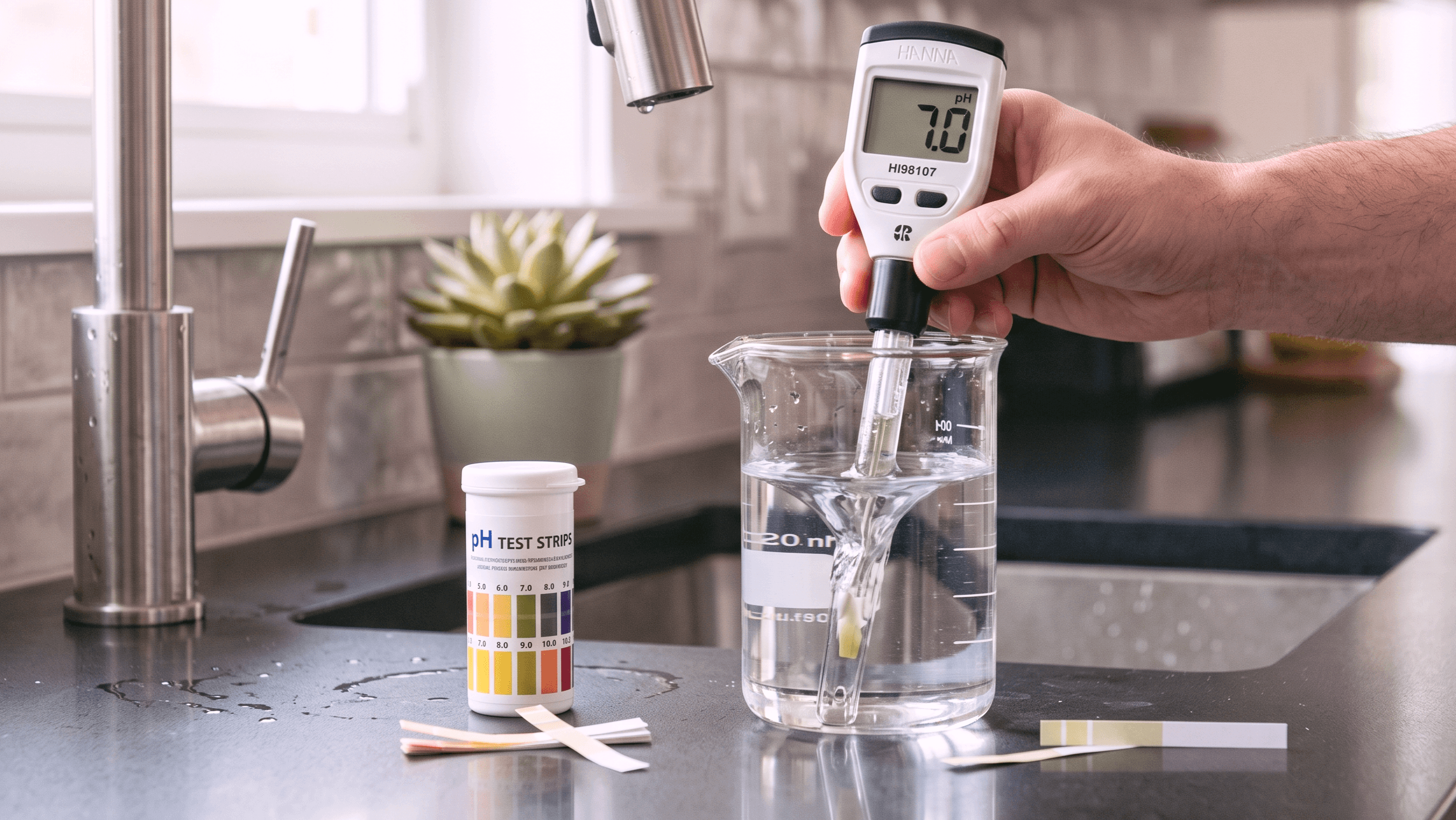
- pH test strips. Inexpensive and available at hardware stores or online. Strips change color when dipped in water; you match the result against a color chart. Accurate to within approximately 0.5 pH units — sufficient for identifying water that is clearly acidic or alkaline, but not for precise readings.
- Digital pH meters. A handheld meter with a probe gives readings accurate to 0.01–0.1 pH units. Meters require calibration using buffer solutions (usually pH 4.0 and 7.0) before use. Calibration should be performed every few weeks for reliable results.
- Laboratory water testing. For detailed analysis — especially if you suspect lead or copper contamination linked to pipe corrosion — a certified laboratory test covers pH alongside heavy metals, bacteria, and other parameters. Your state health department or local utility can often direct you to certified labs. Learning how to read a water quality report helps you interpret both utility-provided data and private lab results.
Test tap water directly from the faucet you use most often, not from an outdoor spigot or after running water for an extended period, to get the most representative reading.
How to Adjust Tap Water pH
The appropriate adjustment method depends on whether your water runs acidic or alkaline and how significant the deviation is.
Raising pH (Treating Acidic Water)
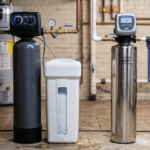
- Calcite neutralizer filters. A whole-house neutralizer tank filled with calcite (calcium carbonate) or a calcite/magnesium oxide blend slowly dissolves alkaline minerals into the water as it passes through, raising pH gradually. These systems are common in homes with well water and private systems. They require periodic media top-up but otherwise operate passively.
- Soda ash injection systems. For severely acidic water (pH below 6.0), a chemical feed pump injects a sodium carbonate solution upstream of the household supply. This is more precise than calcite filtration but adds sodium to the water.
- Blend with municipal water. In some cases where a well source is acidic, blending with a municipal supply is a practical option — though this depends on access and local regulations.
Lowering pH (Treating Alkaline Water)
- Carbon dioxide injection. CO₂ injection systems dissolve carbon dioxide into water to form carbonic acid, which reduces pH. Used primarily in commercial and municipal settings.
- Acid injection systems. Citric or acetic acid can be injected to lower pH in point-of-use or whole-house applications. These require careful calibration and metered dosing.
- Reverse osmosis filtration. RO systems produce slightly acidic water (typically pH 5.5–6.5) as a byproduct of the filtration process, since minerals that buffer alkalinity are removed along with contaminants. For households where mildly lower pH water is acceptable, an RO system addresses both contaminant removal and pH simultaneously. Water filter pitchers using activated carbon reduce some organic compounds but do not significantly alter pH. For a breakdown of pitcher filter capabilities versus other options, see water filter pitcher vs. faucet filter.
How pH Interacts with Water Filtration
pH is not just a standalone measurement — it affects how well common water treatment methods perform.
Activated carbon filters remove chlorine, chloramines, and some organic compounds, but their effectiveness varies with pH. At lower pH levels, carbon adsorption of certain compounds improves; at higher pH, some contaminants bind less effectively to carbon media. If you use a pitcher filter to remove chlorine, knowing your water’s pH can help you understand why performance might vary over the filter’s lifespan.
Chlorine disinfection — the primary method used in most municipal systems — is significantly pH-dependent. At pH 7.5, roughly 50% of chlorine in water exists as hypochlorous acid (HOCl), the active disinfecting form. At pH 8.5, that drops to around 10%. Utilities that maintain slightly alkaline water compensate by using higher chlorine doses or supplemental treatment like UV disinfection.
Boiling water does not remove dissolved minerals or change pH in any meaningful way, though it does remove dissolved CO₂, which can cause a slight temporary pH increase. For more on what boiling does and does not accomplish, does boiling water remove chlorine covers the process in detail.
FAQ
What pH level is best for drinking water?
The EPA recommends tap water pH between 6.5 and 8.5. Within this range, water is safe for drinking and household use. A pH between 7.0 and 7.5 is widely considered ideal for taste and minimal pipe interaction, though slightly higher levels (up to 8.0) are common in municipal supplies and present no health concern for most people.
Can high pH tap water make you sick?
Tap water with pH above 8.5 is unlikely to cause illness in healthy adults at the concentrations typically found in household supplies. The body regulates blood pH tightly regardless of what is consumed. Extremely high pH water (above 11) acts as a chemical irritant to mucous membranes and skin, but this level is not encountered in normal tap water. The more practical concern with high-pH water is scale buildup in pipes and appliances and reduced chlorine disinfection efficiency.
Does low pH tap water mean my pipes are leaching lead?
Not automatically, but low pH (below 6.5) significantly increases the risk. Acidic water corrodes lead solder, lead service lines, and copper pipes, which releases metals into the water supply. If your water tests acidic and your home was built before 1986 — when lead solder was still legal in plumbing — testing for lead is a practical next step. Homes built after 1986 are not risk-free either, since lead-free standards still permitted solder containing up to 8% lead until 2014.
Does alkaline water have proven health benefits?
No peer-reviewed clinical evidence supports the marketed health claims for alkaline water — including improved hydration, anti-aging effects, or acid reflux relief. The stomach’s highly acidic environment neutralizes alkaline water almost immediately upon ingestion, meaning the body’s pH is unaffected by the pH of what you drink. Alkaline water products are legal and safe to consume but have not demonstrated documented health advantages over standard tap water in controlled studies.
Why does my water smell bad if the pH is in the normal range?
pH and odor are separate water quality parameters. Water within the 6.5–8.5 pH range can still carry odor-causing compounds — most commonly hydrogen sulfide (a rotten egg smell), chloramine byproducts, or organic matter. If your water smells like rotten eggs, hydrogen sulfide is the likely cause, regardless of pH reading. Water quality testing that includes both pH and dissolved gases gives a more complete picture than pH alone.