.A faucet that spits and sputters the moment you turn it on is rarely a serious plumbing problem — but it is telling you something. In most cases, the cause is trapped air in the supply lines, a clogged aerator, or a pressure irregularity, and each of these has a straightforward fix.
This article covers the five most common reasons a faucet sputters on startup, how to identify which one applies to your situation, and what to do about it.
Quick Reference: Faucet Sputtering Causes and Fixes
| Cause | Key Signs | Fix |
|---|---|---|
| Trapped air | Clears in seconds, affects multiple faucets | Flush all faucets; purge lines |
| Clogged aerator | One faucet affected, weak or angled stream | Clean or replace aerator |
| Pressure fluctuation | Pulsing flow, inconsistent pressure at multiple fixtures | Test PSI; adjust or replace PRV |
| Worn washer/cartridge | One faucet, doesn’t self-clear, may drip | Replace washer or cartridge |
| Sediment in supply line | Discolored water, grit visible, worsens after utility work | Flush line; clean aerator |
Why Does a Faucet Sputter When First Turned On?
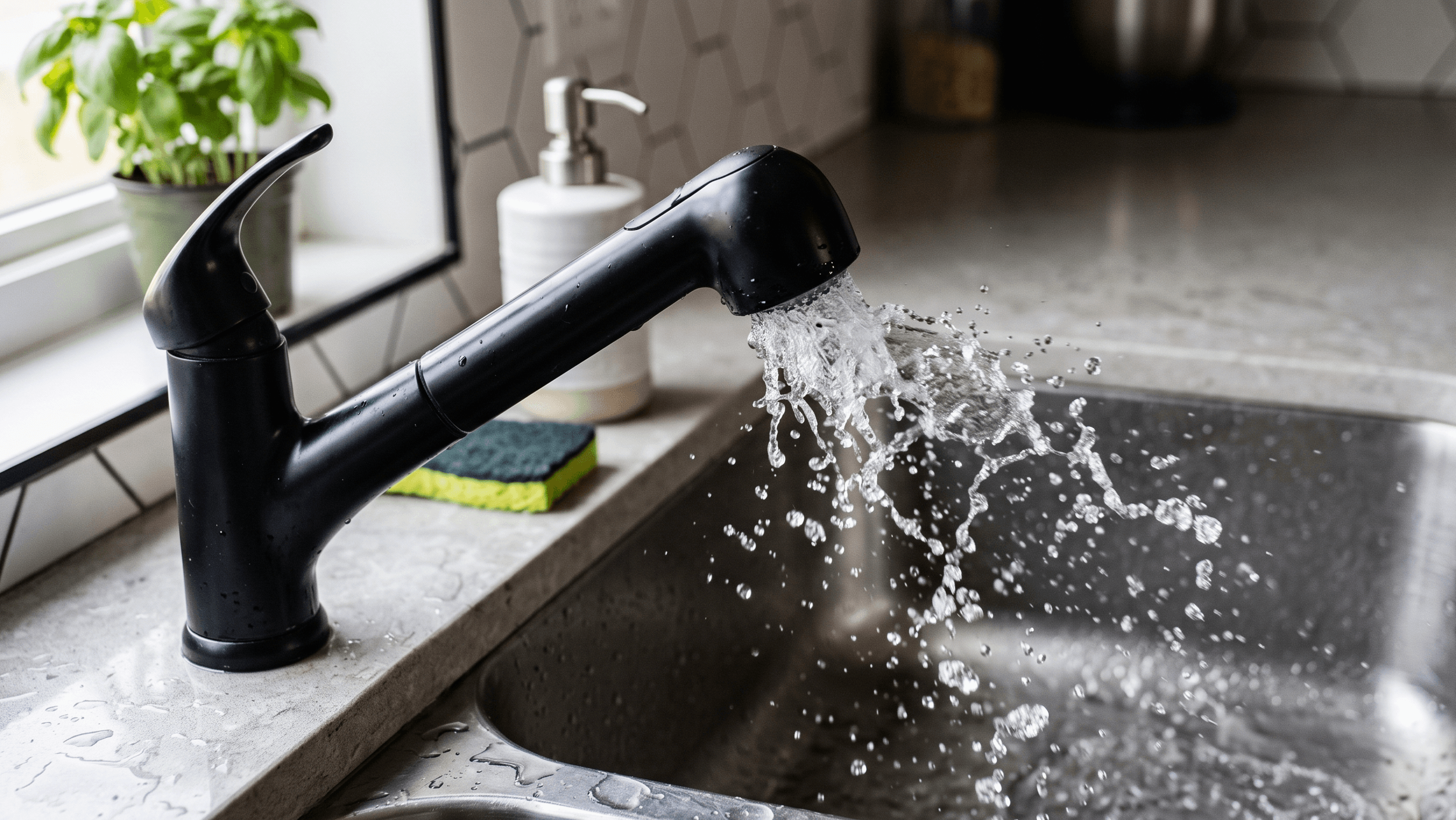
A faucet sputters when air or debris disrupts the steady flow of water through the line. Under normal conditions, water flows at consistent pressure with no air gaps. When air enters the supply line — or when something physically obstructs the flow path — you get the characteristic spitting, coughing, or uneven stream that appears in the first few seconds after turning on the tap.
The sputtering is usually brief. If it clears within 5–10 seconds and water flows normally after that, the issue is almost always air-related. If the sputtering persists longer or recurs every time, the cause is more likely a clog, pressure irregularity, or a worn internal component.
Cause 1: Air Trapped in the Supply Lines
Trapped air is the most common cause of faucet sputtering, especially after a recent plumbing repair, a period of no water use, or a municipal water shutoff. When the supply line is refilled, air pockets get pushed ahead of the water and exit through the faucet — producing a stuttering, uneven stream.
How to identify it: The sputtering clears on its own within a few seconds. It may affect multiple faucets in the house, not just one.
How to fix it: Run all faucets in the house — starting from the lowest floor and working upward — for 2–3 minutes each. This purges trapped air from the system. For a single affected faucet, simply run it at full flow for 30–60 seconds. No tools required.
If air regularly enters your lines without an obvious cause, the issue may be a failing check valve or a crack in a supply line fitting that allows air infiltration.
Cause 2: Clogged or Dirty Faucet Aerator
The aerator is a small mesh screen screwed onto the tip of the faucet spout. Its job is to mix air into the water stream and reduce splashing. Over time, mineral deposits, sediment, and debris collect in the aerator mesh, partially blocking water flow and causing the spitting or sputtering effect — particularly when pressure first hits the screen.
How to identify it: The sputtering is specific to one faucet. The flow may also appear weaker than normal, or the stream may spray unevenly to the side.
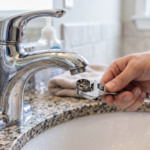
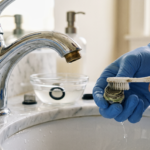
How to fix it: Unscrew the aerator by hand or with pliers (wrap the jaws with tape to avoid scratching). Disassemble the screen components, soak them in white vinegar for 20–30 minutes, then scrub with an old toothbrush and rinse. Reassemble and reinstall.
If the aerator screen is corroded or physically damaged, replace it. Standard aerators cost under $5 at any hardware store and are sold by faucet thread size (typically 15/16″ male or 55/64″ female). For a full walkthrough of this repair, the guide on cleaning a faucet aerator to fix low water pressure covers each step in detail.
Cause 3: Pressure Fluctuations in the Supply Line
Inconsistent water pressure can cause a faucet to sputter when first opened, particularly if pressure drops sharply the moment flow begins. This is different from the steady-state low pressure that affects all fixtures — pressure fluctuation affects how water behaves the instant a valve opens.
How to identify it: The sputtering coincides with pressure that feels inconsistent — high then low, or pulsing rather than steady. You may notice water pressure that fluctuates throughout the day or between different fixtures.
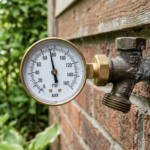
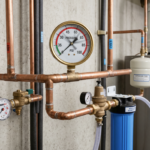
How to fix it: Start by testing your home water pressure with a gauge attached to an outdoor hose bib. Normal residential pressure runs between 40–80 PSI. If your reading is outside that range, the pressure reducing valve (PRV) — typically located near the main shutoff — may need adjustment or replacement.
A PRV adjustment is a DIY-accessible repair on most models: locate the adjustment screw on top of the PRV, turn clockwise to increase pressure and counterclockwise to reduce it. If the valve is old or no longer holds a stable setting, a licensed plumber should replace it. PRV replacement typically costs $200–$400 including labor.
Cause 4: Worn Faucet Washer or Cartridge
Inside every faucet is a mechanism that controls water flow — either a rubber washer (in older compression faucets) or a ceramic cartridge (in modern single-handle designs). When this component wears out or fails, it can cause turbulence in the water flow path, resulting in sputtering when the faucet first opens.
How to identify it: The sputtering is limited to one faucet and doesn’t resolve on its own. You may also notice dripping when the faucet is closed — a classic sign of washer or cartridge wear.
How to fix it:
- Turn off the water supply at the shutoff valves beneath the sink.
- Remove the faucet handle (usually a single screw under the decorative cap).
- Extract the cartridge or washer assembly — cartridges pull straight out; washers are held by a brass screw at the base of the stem.
- Take the worn part to a hardware store for an exact match, or note the faucet brand and model to order the correct replacement.
- Install the new component, reassemble the handle, and restore water supply.
Cartridge replacement typically costs $15–$40 in parts and takes 30–60 minutes for a first-time repair.
Cause 5: Sediment or Debris in the Supply Line
Particles of sediment, pipe scale, or dislodged mineral buildup can enter the supply line and cause intermittent sputtering — especially in older homes with galvanized steel pipes or after nearby municipal water work disturbs settled sediment in the main line.
How to identify it: The sputtering is accompanied by discolored water (brown or rust-tinged), grit in the stream, or debris visible in the aerator after removal. If your water also has taste or odor changes, checking for common tap water contaminants can help identify whether the issue is sediment-based or chemical.
How to fix it: Remove and clean the faucet aerator first — sediment usually collects there. Run the faucet at full flow for 2–3 minutes with the aerator removed to flush debris from the supply line. Reinstall the cleaned aerator and check for improvement.
If sediment re-accumulates quickly or the problem affects multiple fixtures, the source is likely in the main supply line or at the point where water enters the home. In well water systems specifically, sediment issues often trace back to a failing filtration or pressure tank component — a separate diagnostic process from city water systems.
Homes on city water experiencing persistent sediment should contact the local utility, as main line disturbances during nearby construction or repairs are a common but temporary cause.
When the Sputtering Indicates a Bigger Problem
Most faucet sputtering is minor and self-correcting. However, a few patterns warrant closer attention:
- Sputtering only from the hot water side — This typically points to a problem with the water heater: a corroded dip tube, sediment buildup in the tank, or air introduced during a heating cycle. A guide on why hot water pressure is low when cold is fine covers this distinction in more detail.
- Sputtering across all faucets simultaneously — This suggests a system-wide pressure or air issue rather than an isolated faucet problem.
- Sputtering accompanied by hammering or banging pipes — These are separate issues often related to water hammer, which occurs when water flow is abruptly stopped. Hissing, banging, or other pipe noises often share a root cause with pressure irregularities.
FAQ
Is a faucet sputtering at startup harmful to my plumbing?
Occasional sputtering caused by trapped air is harmless and does not damage pipes or fixtures. Persistent sputtering from sediment or a worn cartridge can cause gradual wear on faucet components over time, but poses no immediate risk to the supply system. Addressing the root cause within a few weeks is sufficient — no emergency repair is needed for most cases.
Can sputtering damage the faucet aerator?
Yes, over time. Repeated pressure surges from air pockets or sediment can accelerate aerator mesh deterioration and clog it faster than normal. Cleaning the aerator every 6–12 months is good practice regardless of sputtering, especially in areas with hard water where mineral buildup is a common source of flow problems.
Why does only one faucet sputter and not the others?
When sputtering is isolated to one fixture, the cause is almost always local to that faucet — typically a clogged aerator, worn cartridge, or partially closed supply valve beneath the sink. System-wide causes like trapped air or pressure fluctuations tend to affect multiple fixtures at once.
Does a sputtering faucet mean my water pressure is too high?
Not necessarily. High pressure can contribute to turbulent flow and occasional sputtering, but sputtering is more often caused by air or debris than by pressure alone. If your pressure exceeds 80 PSI consistently, that warrants its own fix — but test first before assuming pressure is the root cause.
Could sediment in my water be a health concern?
Sediment in water is typically composed of harmless mineral particles like calcium, sand, or rust from aging pipes. It is rarely a health hazard on its own, but can affect taste, clog fixtures, and signal underlying pipe corrosion. If water discoloration or taste changes accompany the sputtering, reviewing your home water quality report is a reasonable starting point.