Chlorine is added to tap water by municipal water treatment facilities to kill bacteria and pathogens. It’s effective at that job — but once the water reaches your tap, the chlorine is no longer needed. Many people filter it out because of the taste and odor it leaves behind.
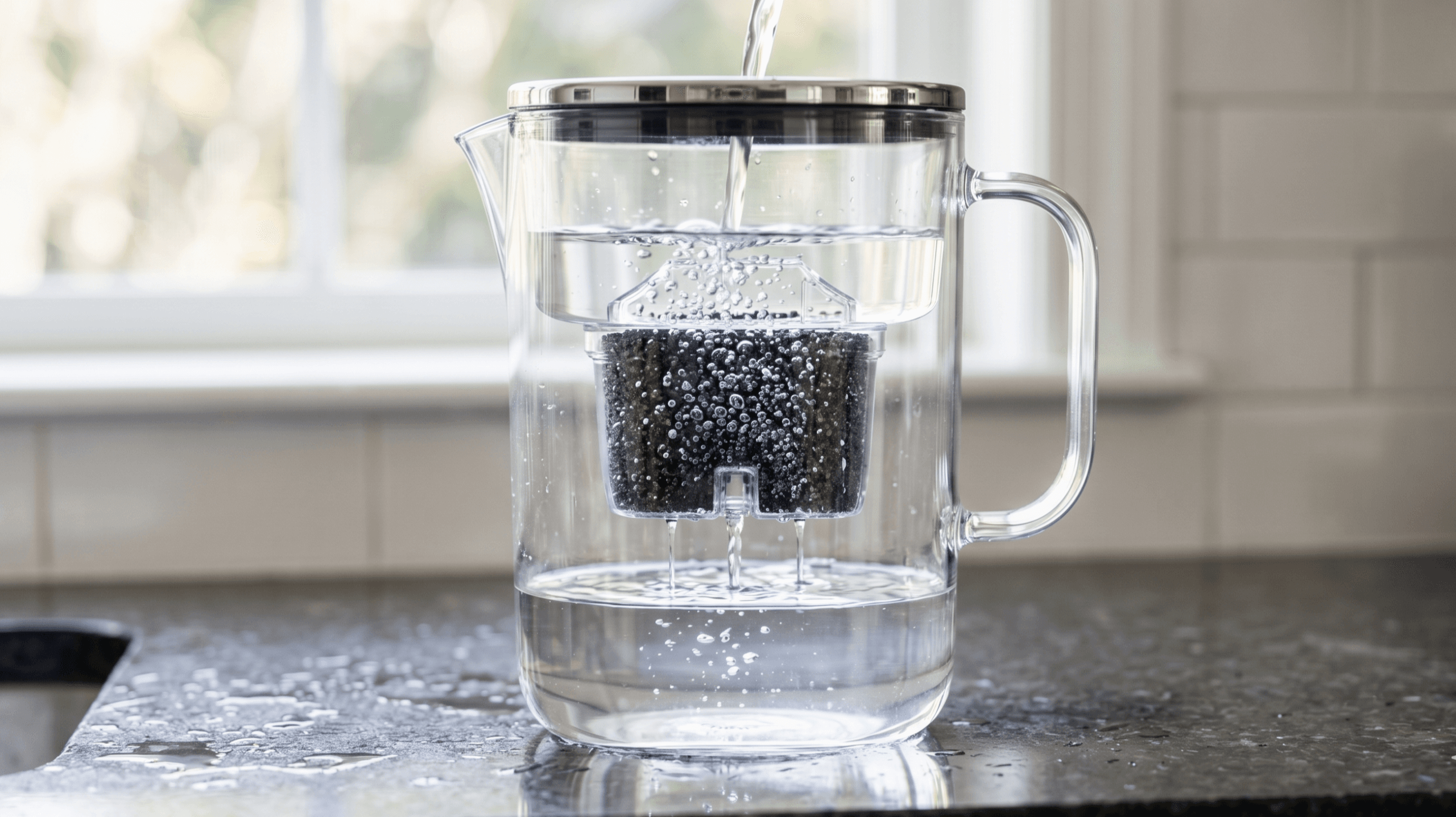
Water filter pitchers remove chlorine primarily through activated carbon, a highly porous material that traps and neutralizes chlorine before you drink the water. The process is faster and simpler than most people expect, and understanding it helps you use your pitcher more effectively.
This article covers how the filtration process works, what it removes beyond chlorine, what it doesn’t remove, and how to keep your filter performing well.
What Is Activated Carbon and Why Does It Work on Chlorine?
Activated carbon is the core material in almost every water filter pitcher on the market. It’s typically made from coconut shells, wood, or coal that has been heated at high temperatures to create an extremely porous structure. One gram of activated carbon can have a surface area exceeding 500 square meters — all of it available to trap contaminants.
Chlorine removal happens through two mechanisms: adsorption and chemical reduction.
Adsorption
Adsorption (not absorption) is the process where chlorine molecules stick to the surface of the carbon as water passes through. The porous structure of activated carbon creates millions of tiny binding sites. Chlorine has a strong chemical affinity for carbon surfaces, which is why this pairing works so well.
Chemical Reduction
In some carbon filters, chlorine undergoes a chemical reaction at the carbon surface rather than just sticking to it. The reaction converts chlorine (Cl₂) into chloride ions (Cl⁻), which are harmless and have no taste or odor. This is particularly effective with catalytic carbon filters, a more advanced version found in some premium pitchers.
Both mechanisms work simultaneously in most filters, and both happen within seconds as water trickles through the carbon block or granules.
The Two Types of Carbon Used in Pitcher Filters
Not all carbon filters are identical. The physical form of the carbon affects how well and how quickly it removes chlorine.
Granular Activated Carbon (GAC) is made up of loose carbon particles. Water flows through the gaps between granules. GAC filters are common, inexpensive, and effective for chlorine removal, though water can sometimes channel through without full contact.
Carbon Block Filters compress activated carbon into a solid block. Water is forced through the entire block, ensuring complete contact. Carbon block filters typically remove chlorine more consistently and also capture smaller particles. Several pitcher brands use a combination of GAC and carbon block layers.
Pitcher filters from brands like Brita, PUR, and ZeroWater each use slightly different carbon formulations and configurations, which is why their certified removal rates for chlorine and other contaminants vary.
What Else Do Pitcher Filters Remove?
Chlorine removal gets most of the attention, but activated carbon also reduces or eliminates several other contaminants.
- Chloramines — Many municipalities now use chloramines (a chlorine-ammonia compound) instead of chlorine. Standard GAC filters are less effective against chloramines; catalytic carbon is required for reliable removal.
- Volatile Organic Compounds (VOCs) — Pesticides, herbicides, and industrial chemicals are well-captured by activated carbon.
- Taste and odor compounds — Hydrogen sulfide (rotten egg smell) and musty compounds from algae are effectively reduced.
- Some heavy metals — Certain pitcher filters, particularly those with ion exchange resin added to the carbon, also reduce lead, copper, and mercury.
Pitcher filters are not ion exchange water softeners and do not remove dissolved minerals like calcium or magnesium. If hard water is a concern — scale buildup on appliances, stiff laundry, or dry skin — a pitcher filter won’t address it.
What Pitcher Filters Don’t Remove
Activated carbon has real limits. Knowing them helps you decide whether a pitcher filter is sufficient for your specific water situation.
What pitcher filters typically do not remove:
- Dissolved salts and minerals (including calcium, magnesium, sodium)
- Nitrates and nitrites from agricultural runoff
- Fluoride (unless the filter specifically includes a fluoride-removal medium like alumina)
- Most bacteria and viruses
- PFAS/PFOA (some newer filters claim partial reduction, but removal is inconsistent)
If your water comes from a private well rather than a municipal system, the contamination profile is different and often more complex. Well water can contain bacteria, iron, manganese, hydrogen sulfide, or agricultural chemicals that a pitcher filter alone won’t adequately address. Well water filtration requires more targeted treatment depending on what a water test reveals.
How Long Does Chlorine Removal Stay Effective?
Activated carbon has a finite capacity. Every chlorine molecule that binds to a carbon surface takes up a binding site permanently. Once the available surface area is saturated, the filter stops removing chlorine and other contaminants — even if water is still passing through it.
Most pitcher filter manufacturers recommend replacing the filter every 40 gallons or approximately every two months for average household use. That recommendation is based on typical chlorine levels in municipal water. In areas where chlorine levels are higher than average, filters may exhaust sooner.
Signs a filter may need replacing before the scheduled date:
- Chlorine taste or odor returns to filtered water
- Water flow through the pitcher slows noticeably
- The manufacturer’s indicator light (if present) signals replacement
Sediment can also clog filters prematurely. Tap water in older homes or areas with aging infrastructure sometimes carries fine particulate matter. If your faucet aerator collects debris regularly, your pitcher filter may be working harder than usual.
Factors That Affect Chlorine Removal Performance
Several variables influence how well a pitcher filter removes chlorine in practice.
Water temperature: Cold water passes through activated carbon more slowly, which actually improves contact time and chlorine removal. Hot water can release captured contaminants back into the water, which is why pitcher filters should only be used with cold water.
Contact time: Faster flow through the carbon means less time for chlorine molecules to bind. Filters that drain quickly may have lower effective removal rates than slower-flowing models.
Initial chlorine concentration: Municipal chlorine levels in the United States typically range from 0.2 to 4.0 mg/L, per EPA guidelines. Higher chlorine levels deplete filter capacity faster.
Filter certification: Look for NSF/ANSI Standard 42 certification specifically for chlorine taste and odor reduction. Standard 53 covers health-related contaminants like lead. A filter certified under both standards provides broader protection. Third-party certification means the removal claims have been tested by an independent lab, not just stated by the manufacturer.
Pitcher Filters vs. Other Chlorine Removal Methods
Pitcher filters are one of several options for reducing chlorine in drinking water.
| Method | Chlorine Removal | Cost | Notes |
|---|---|---|---|
| Filter pitcher | High (certified) | Low upfront, ongoing cartridge cost | Portable, no installation |
| Faucet-mount filter | High | Low-medium | Filters at point of use |
| Under-sink filter | High | Higher upfront | Larger capacity, lower per-gallon cost |
| Reverse osmosis | Very high | High | Removes most contaminants including minerals |
| Letting water sit | Moderate | None | Chlorine dissipates; chloramines do not |
For most households with municipal water, a pitcher filter is a practical and cost-effective way to reduce chlorine for drinking and cooking.
Pitcher filters also contribute to reducing single-use plastic bottle consumption, which has measurable environmental benefits. Households that switch from bottled water to filtered tap water can eliminate hundreds of plastic bottles per year, supporting broader water conservation goals.
FAQ
Does a water filter pitcher remove chloramine as well as chlorine?
Standard activated carbon filters remove free chlorine effectively but are significantly less effective against chloramines. Chloramine is a more stable compound and doesn’t react with carbon surfaces as readily. Catalytic activated carbon filters — available in select pitcher models — are specifically designed to break down chloramines. If your water utility uses chloramines (check your annual water quality report), confirm your filter is rated for chloramine reduction before purchasing.
Can I taste the difference after filtering chlorinated water through a pitcher?
Yes, in most cases. Free chlorine has a distinct chemical taste and bleach-like odor that activated carbon removes efficiently. A blind taste test of 150 participants conducted using carbon-filtered municipal water showed that over 80% preferred the taste of filtered water over unfiltered tap. The difference is more noticeable in areas with higher-than-average chlorine treatment levels.
Is it safe to drink water from a pitcher filter that’s past its replacement date?
A filter past its replacement date won’t add harmful substances to your water, but it will stop removing chlorine and other contaminants. The filter becomes inert rather than harmful. That said, an overloaded filter can potentially release previously captured contaminants if bacteria begin to grow on the carbon surface — a risk that increases significantly after several months of use without replacement.
Do all pitcher filters use the same type of activated carbon?
No. Carbon source material (coconut shell, coal, wood), activation method, and physical form (granular vs. block) vary by manufacturer and product line. These differences affect surface area, pore size distribution, and which contaminants the filter targets most effectively. NSF certification data for each specific filter model is publicly available and shows exactly which contaminants were tested and at what removal rates.
How does water pressure affect a pitcher filter’s performance?
Pitcher filters rely on gravity rather than water pressure, unlike plumbing-based filtration systems. This means household water pressure has no direct effect on how a pitcher filter operates. Gravity feed actually provides a natural, consistent flow rate that supports effective contact time between water and activated carbon.