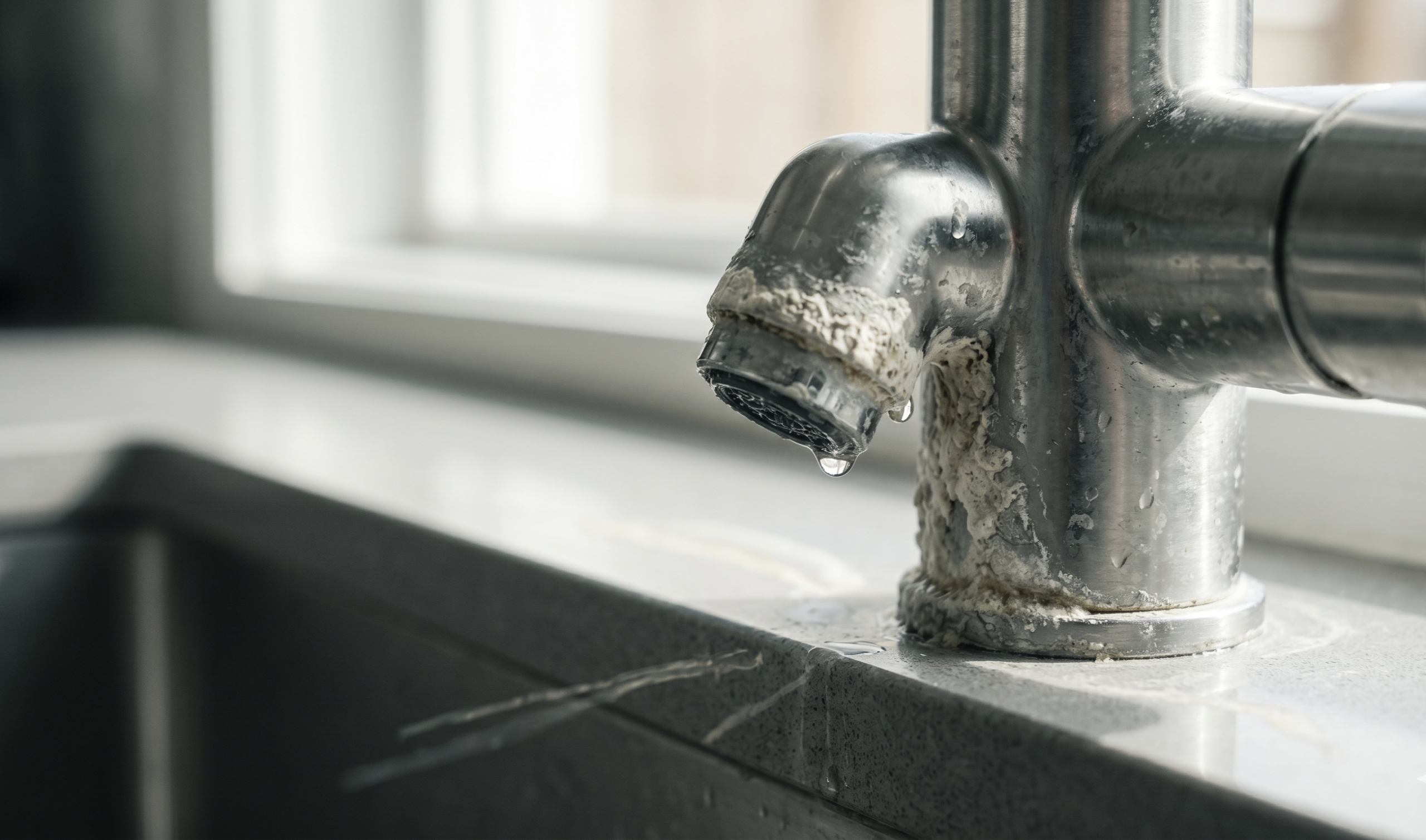
Hard water is one of the most common — and most overlooked — sources of damage in a home. It costs homeowners money quietly, through rising energy bills, shortened appliance lifespans, and plumbing repairs that often get blamed on something else entirely.
This guide explains what hard water is, how it forms, and exactly what it does to the different systems in your home. You’ll also find a practical framework for deciding whether you need to act and — if you do — which solution fits your situation.
What Is Hard Water, and Where Does It Come From?
Hard water is water that contains elevated levels of dissolved minerals — primarily calcium and magnesium — picked up as groundwater moves through rock formations like limestone and chalk. It is not a contaminant in the regulatory sense; the EPA does not set limits on water hardness. It is, however, a measurable condition that has real consequences for your plumbing, appliances, and wallet.
Water hardness is measured in two common units: grains per gallon (GPG), used by the water treatment industry, and parts per million (PPM) or milligrams per liter (mg/L), used in water quality reports. One GPG equals approximately 17.1 mg/L. The USGS classifies water hardness as follows:
| Classification | GPG | mg/L (PPM) |
|---|---|---|
| Soft | 0–3.5 | 0–60 |
| Moderately Hard | 3.5–7 | 60–120 |
| Hard | 7–10.5 | 120–180 |
| Very Hard | 10.5+ | 180+ |
Roughly 85% of U.S. homes have hard water, with the highest concentrations in the Midwest, Southwest, and Great Plains — regions underlain by limestone and calcium-rich geology. If your home uses a private well, you’re particularly likely to encounter elevated hardness levels, since well water draws directly from local aquifers without municipal treatment. You can learn more about well water hardness and how to test it.
Hard water is not dangerous to drink. The calcium and magnesium it contains are minerals the body uses. The problem is entirely mechanical: these minerals don’t stay dissolved. Under heat or changes in pressure, they precipitate out of the water and form a hard, chalky mineral deposit called scale — and scale accumulates on every surface water touches.
How to Tell If You Already Have Hard Water
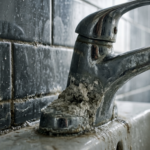
The signs of hard water are usually visible before you ever think to test for it. The most common indicators include white or chalky buildup around faucets, showerheads, and the base of taps; a filmy residue on dishes and glasses after washing; soap that refuses to lather properly and leaves a sticky film on skin; and laundry that feels stiff or looks dull after repeated washes.
A simple home test: fill a clear plastic bottle about one-third with water from your tap, add a few drops of pure liquid soap (not detergent), cap it, and shake for 10 seconds. If the water turns cloudy with few or no bubbles, you likely have hard water. If it produces generous, persistent suds, your water is soft. This is not a precise measurement, but it takes about 30 seconds and costs nothing.
For an actual hardness reading, you have three practical options:
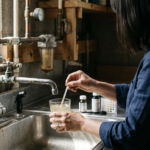
- Water test strip kit — Available at hardware stores for under $15. Dip a strip in your tap water and compare the color to a chart. Accurate enough for most homeowners.
- Your utility’s annual water quality report — Municipal suppliers are required to publish this data. Search for your city’s “Consumer Confidence Report” or “Annual Water Quality Report.” Hardness is usually listed in mg/L.
- Mail-in lab test — The most accurate option. Useful if you’re on well water or want precise numbers before buying a treatment system.
For a detailed breakdown of what each sign means and how to interpret your results, see how to tell if you have hard water.
What Hard Water Actually Does Inside Your Home
Most of the real damage from hard water happens where you can’t see it. The chalky deposits on your faucets are cosmetic. The scale building up inside your water heater, inside your pipes, and coating the heating elements of your dishwasher and washing machine is where the financial cost accumulates.
The Water Heater: Your Most Vulnerable Appliance
The water heater is where hard water does its most expensive work. It’s the one appliance that heats water constantly, and heat is exactly what causes dissolved minerals to precipitate out and form scale. As little as ¼ inch of limescale on a heating element can reduce energy efficiency by up to 40%, because scale acts as an insulating barrier the heating element has to work through.
A 2009 study by the Battelle Memorial Institute found that water heaters running on hard water lost efficiency steadily over time, while water heaters supplied with softened water maintained their original factory efficiency for 15 years or more. The U.S. Department of Energy estimates that water heating accounts for roughly 17% of a home’s energy use — so even a moderate efficiency loss has a real dollar impact on your monthly bills.
In practical terms: a water heater that should last 12–15 years may fail significantly sooner in a hard water household, and it will cost more to operate every year it runs.
Pipes and Water Pressure
Scale accumulates on the inside walls of pipes over time, gradually narrowing the passage water flows through. This is most pronounced in older metal pipes and at bends, elbows, and joints where water slows down. The result is reduced water pressure throughout the house — showers feel weaker, faucets run slower — and eventually, restricted flow that can mimic a blockage.
Scale buildup inside pipes can reduce water flow by 40% or more before a homeowner notices anything unusual. By then, the damage is structural. Repiping a home costs between $5,000 and $15,000 depending on size and materials, which is why plumbers often list hard water history as a key factor when assessing older homes.
Dishwashers, Washing Machines, and Other Appliances
Appliances that use water regularly take on scale at every surface water contacts — spray arms, heating elements, water inlet valves, and internal tubing. The Water Quality Association commissioned a study specifically examining this, and found that appliance lifespan was shortened substantially across the board in hard water households.
Studies have shown appliances exposed to hard water can consume up to 30% more energy than those running on soft water. In a dishwasher, this shows up as cloudy dishes, longer cycle times, and eventually a machine that stops cleaning effectively. In a washing machine, it means clothes that feel rough, colors that fade faster, and more detergent required to get basic results. Households with hard water typically use 30–50% more cleaning products than those with soft water — not because they’re dirtier, but because minerals in the water neutralize soap’s effectiveness before it can do its job.
The Hardness-Damage Relationship: A Practical Framework
Not all hard water causes the same amount of damage. The impact depends on your hardness level, how much water your household uses, and whether hot water is involved (heat accelerates scale formation significantly). This framework helps you assess where you stand:
Soft to Slightly Hard (0–3.5 GPG / 0–60 mg/L) Minor or no scale. Soap lathers well. Appliances operate normally. No treatment needed for hardness.
Moderately Hard (3.5–7 GPG / 60–120 mg/L) Occasional spotting on dishes and fixtures. Some reduction in soap efficiency. Appliances experience gradual scale buildup over several years. Preventive descaling maintenance is worth doing, but treatment is optional unless you have a high-efficiency water heater or tankless system (these are more vulnerable to scale damage).
Hard (7–10.5 GPG / 120–180 mg/L) Visible buildup on fixtures within weeks. Noticeably reduced lathering. Appliances begin accumulating meaningful scale within one to two years. Showerheads and faucet aerators need regular cleaning. Water heater efficiency begins declining measurably. Treatment is worth considering, especially if you have appliances you want to protect.
Very Hard (10.5+ GPG / 180+ mg/L) Heavy white deposits form quickly on all fixtures. Pipes begin restricting flow within years. Water heater lifespan is substantially reduced. Shower doors become etched and permanently cloudy. Treatment is strongly recommended. At this level, untreated water causes real, measurable, and expensive damage to your home’s systems.
The key insight most homeowners miss: the damage from hard water is cumulative and largely invisible until it’s already significant. A water heater running in a 12 GPG household doesn’t fail suddenly — it loses 4–6% efficiency per year, adds to your energy bills invisibly, and eventually fails years before it should.
Hard Water’s Effect on Skin, Hair, and Daily Comfort
Hard water isn’t a health risk, but it does affect how you feel on a daily basis. Calcium and magnesium ions react with soap to form insoluble compounds — the sticky film you feel on skin after showering in hard water isn’t dirt, it’s undissolved soap residue that clings rather than rinsing away. Over time, this leaves skin drier and more prone to irritation. People with eczema or sensitive skin often notice their symptoms worsen when moving to a hard water area.
Hair washed in hard water absorbs minerals that affect its texture and appearance. Mineral-coated hair resists styling, loses shine, and can become brittle with repeated exposure. For people who color or chemically treat their hair, hard water can affect how products absorb and may accelerate fading.
These effects are real but reversible. They tend to resolve relatively quickly once water is softened or the minerals are removed before washing.
Hard Water vs. Soft Water: Key Differences at a Glance
| Factor | Hard Water | Soft Water |
|---|---|---|
| Mineral content | High (calcium, magnesium) | Low |
| Scale formation | Yes, accelerates with heat | Minimal |
| Soap efficiency | Reduced — requires more | Full lathering |
| Appliance lifespan | Shortened | Extended |
| Energy costs | Higher (10–40% increase) | Lower |
| Pipe longevity | Reduced over time | Better maintained |
| Skin/hair effect | Drier, filmy residue | Softer, cleaner rinse |
| Pipe corrosion risk | Low (minerals coat pipes) | Slightly higher if very soft |
One nuance worth knowing: very soft water (below about 1 GPG) can actually be mildly corrosive to metal pipes because it lacks the mineral coating that slightly hard water naturally provides. This is one reason many water treatment professionals recommend treating to a moderate softness target rather than zero hardness.
Your Decision Point: Should You Treat Your Hard Water?
Whether treatment makes sense depends on your hardness level, your home’s situation, and what you’re trying to protect. Run through this decision path:
Step 1: Do you know your hardness level? If not, get a test. Everything else depends on this number.
Step 2: Are you below 7 GPG? If yes, standard maintenance (regular descaling, faucet aerator cleaning, occasional appliance cleaning) is usually sufficient. Full treatment is optional.
Step 3: Are you at 7 GPG or above? Treatment is worth considering. Move to Step 4.
Step 4: Do you have a tankless water heater, high-efficiency appliances, or older metal pipes? If yes, these are more vulnerable to hard water damage. Treatment becomes a stronger recommendation even at moderate hardness.
Step 5: What is your hardness level above 10 GPG? Treatment is recommended without qualification. The long-term cost of not treating significantly exceeds the cost of a softener or alternative system.
Choosing a treatment type:
- Salt-based ion exchange water softener — The most effective solution. Removes calcium and magnesium through an ion exchange process, replacing them with a small amount of sodium. Best for hardness above 7 GPG. Requires ongoing salt purchase and periodic maintenance. Not suitable for those on sodium-restricted diets without a separate drinking water filter.
- Salt-free water conditioner (template-assisted crystallization / TAC) — Changes the structure of minerals so they don’t adhere to surfaces, without removing them from the water. Effective for preventing scale at moderate hardness (4–10 GPG). Requires no salt or electricity. Does not actually soften water in the traditional sense.
- Reverse osmosis (RO) system — Removes minerals along with other dissolved solids. Typically installed as a point-of-use system at the kitchen sink for drinking and cooking water rather than whole-house treatment. Pairs well with a softener in very hard water households.
- Magnetic/electronic descalers — Claimed to alter mineral behavior without adding chemicals. Evidence for whole-house effectiveness is limited. May reduce scale in specific pipes near the unit.
For most households with hard water above 7 GPG and a standard municipal or well water supply, a properly sized salt-based softener remains the most proven option. Sizing matters: a softener that’s too small regenerates too frequently and wears out faster; one that’s too large wastes salt. Your hardness level in GPG multiplied by your daily water usage in gallons gives you a daily grain load to size against.
Common Hard Water Mistakes Homeowners Make
Treating scale deposits as a cleaning problem rather than a symptom. Many homeowners spend years buying limescale removers, special dishwasher tablets, and cleaning products without addressing the source. These products reduce visible buildup but do nothing for the scale accumulating inside appliances and pipes. The cleaning cost adds up, and the underlying damage continues.
Ignoring hard water until an appliance fails. Because scale damage is gradual and invisible, it rarely triggers action until something breaks — usually the water heater. By that point, pipes have narrowed, other appliances have been running inefficiently for years, and the cost of replacement often exceeds what a softener would have cost over the same period. Hard water damage compounds over time; acting earlier is nearly always cheaper.
Buying a water softener without testing hardness first. A softener sized for 8 GPG installed in a home with 15 GPG water will regenerate too often, consume excess salt, and underperform. The $15 test kit that reveals your exact hardness level is the most important step in getting the right solution.
Assuming soft water means safe water — or that hard water means unsafe water. These are separate issues. Water hardness measures mineral content. Water safety involves bacteria, heavy metals, nitrates, and other contaminants. A water softener addresses hardness; it does not disinfect or purify. If you have concerns about water safety (especially on a private well), a comprehensive water test covering a broader panel of contaminants is the right starting point.
Expert Perspective on Hard Water
Water treatment professionals often note that homeowners consistently underestimate how much hard water costs them annually — not because it’s dramatic, but because the costs are distributed across energy bills, cleaning supplies, and appliance repairs that never get connected to the water supply. A plumber sees the end result: the corroded anode rod, the scale-choked water heater element, the showerhead with almost no flow. The homeowner sees a repair bill.
The other common misunderstanding: people assume that if their water tastes fine and looks clear, it can’t be causing damage. Hardness minerals are colorless, odorless, and tasteless at most levels. The water can look and taste perfectly normal while quietly depositing scale on every surface it touches. Clear water and clean water are not the same thing when it comes to mineral content.
For well water users, there’s an additional layer of complexity — hardness levels can shift seasonally as aquifer levels change, meaning a test taken in spring may not reflect summer conditions. Testing annually is a reasonable precaution if you rely on a private well. More guidance on that specific scenario is available in what causes hard water and how it varies by source.
Frequently Asked Questions
Is hard water safe to drink?
Yes. Hard water is safe to drink for most people. The calcium and magnesium it contains are minerals the body uses, and neither the EPA nor the WHO classifies water hardness as a health risk. People with specific medical conditions that require low mineral intake may want to consult a doctor, but for the general population, drinking hard water poses no health concern. The problems hard water causes are mechanical — scale, appliance damage, and energy inefficiency — not biological.
How do I know if my water is hard without buying a test kit?
The clearest signs are white or chalky buildup around faucets and showerheads, spots on dishes and glasses after washing, soap that doesn’t lather well, and skin that feels filmy or dry after showering. A quick informal test is to shake a few drops of liquid soap in a bottle of your tap water — hard water produces very little foam. For a reliable number, check your municipal water utility’s annual Consumer Confidence Report, which is required to publish hardness data.
Can hard water damage pipes permanently?
Yes, over time. Scale buildup inside pipes gradually narrows the interior diameter, restricting flow and increasing pressure on joints and fittings. In older galvanized steel pipes, scale accumulation can be severe enough to reduce flow by 40% or more before visible symptoms appear. Modern copper and PVC pipes are less vulnerable but still affected. Full repiping is rarely caused by hard water alone, but hard water is frequently a contributing factor in premature pipe degradation, particularly in homes built before the 1980s.
What’s the difference between a water softener and a water conditioner?
A water softener uses an ion exchange process to physically remove calcium and magnesium from water, replacing them with trace sodium. The result is genuinely “softened” water that no longer forms scale. A water conditioner (also called a salt-free conditioner or descaler) alters the structure of minerals so they are less likely to stick to surfaces, but leaves the minerals in the water. Conditioners require no salt or electricity and work well for scale prevention at moderate hardness levels. They do not reduce the mineral content of water or fully replicate the lathering and cleaning benefits of softened water.
How much does it cost to treat hard water?
A basic water test kit costs $10–$25. A salt-based water softener for a typical household ranges from $400–$1,500 for the unit, plus $150–$600 for professional installation. Salt costs roughly $5–$15 per month depending on hardness level and household size. Salt-free conditioners run $300–$1,000 installed, with minimal ongoing cost. A reverse osmosis system for drinking water ranges from $150–$600 for under-sink installation. Most homeowners in hard water areas find that a softener pays for itself within 2–4 years through energy savings and reduced appliance repair and replacement costs.
Does a water softener affect water pressure?
A properly functioning water softener should have no negative effect on water pressure — and in homes with existing scale buildup, softening the water actually allows deposits to slowly break down over time, potentially improving pressure in pipes that were already restricted. An undersized softener running in bypass mode, or one that’s overdue for maintenance, can affect flow, but this is a function of condition, not the technology itself.