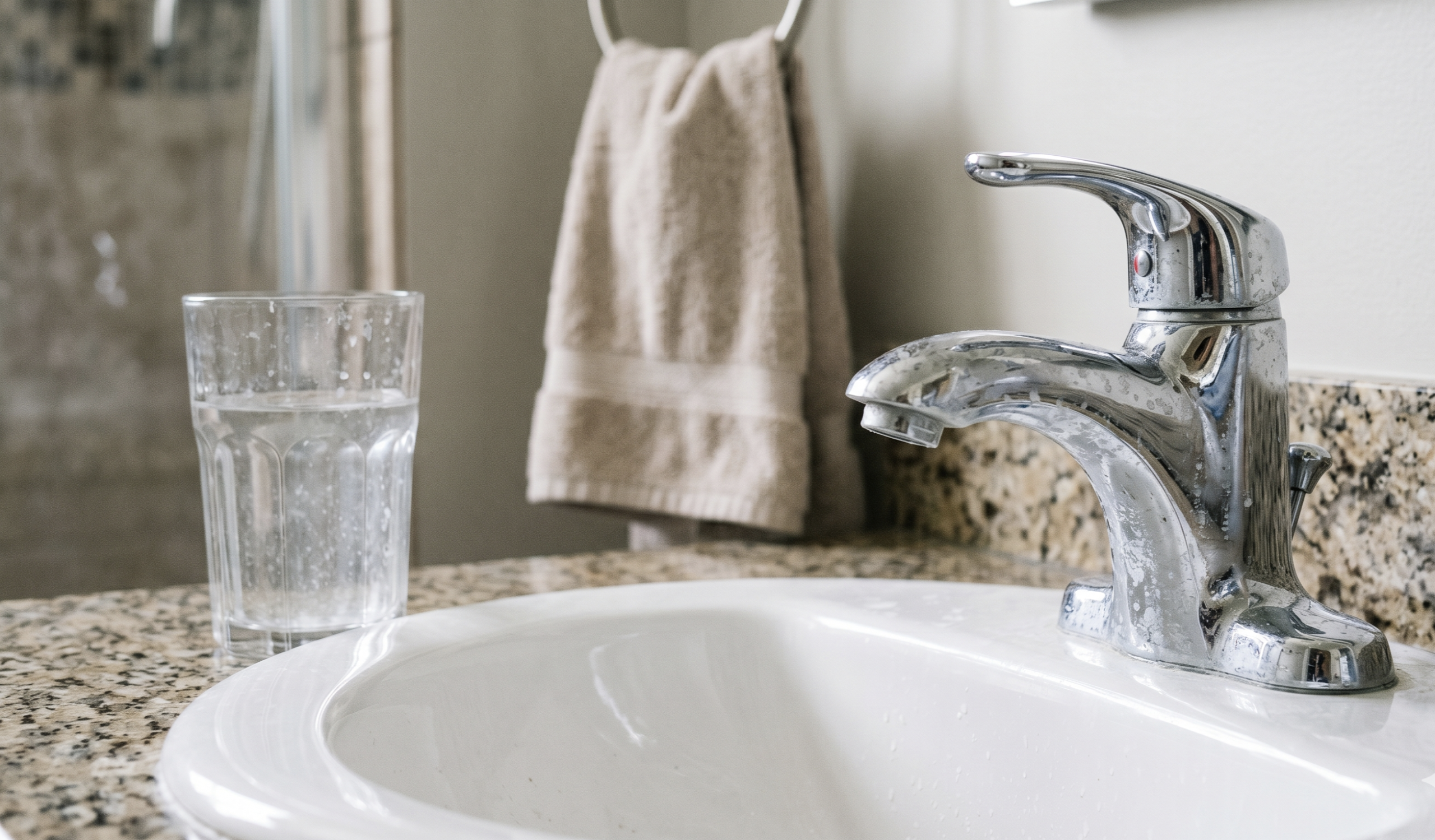
Hard water leaves clues everywhere — on your dishes, skin, pipes, and appliances. If you notice white crusty buildup around faucets, soap that won’t lather, or skin that feels dry after showering, there’s a good chance your home has hard water. Here’s how to know for sure and what to do about it.
What Is Hard Water?
Hard water contains elevated levels of dissolved minerals — primarily calcium and magnesium — that it picks up as it moves through rock and soil. The U.S. Geological Survey estimates that about 85% of American homes receive hard water, so it’s far more common than most people realize.
Water hardness is measured in grains per gallon (GPG) or milligrams per liter (mg/L):
| Hardness Level | GPG | mg/L (ppm) |
|---|---|---|
| Soft | 0–1 | 0–17 |
| Slightly Hard | 1–3.5 | 17–60 |
| Moderately Hard | 3.5–7 | 60–120 |
| Hard | 7–10 | 120–180 |
| Very Hard | 10+ | 180+ |
Common Signs You Have Hard Water
You don’t need a lab test to suspect hard water. These everyday signs are your first tip-off:
- White or chalky buildup on faucets, showerheads, and around drains
- Spots on dishes and glassware after washing or running the dishwasher
- Soap scum that clings to shower walls and bathtubs
- Stiff, scratchy laundry even after washing
- Dry, itchy skin or hair that feels coated after showering
- Low water pressure caused by mineral buildup inside pipes
- Appliances wearing out faster — especially water heaters, dishwashers, and washing machines
- Soap or shampoo that won’t lather well
The more of these you notice, the harder your water likely is.
What Do Hard Water Stains Look Like?
Hard water stains have a few distinct appearances depending on where they form:
- White or chalky deposits (limescale) — The most common sign. You’ll see these around faucet bases, on showerheads, inside kettles and coffee makers, and on the inside of toilet bowls. The buildup is calcium carbonate left behind when water evaporates.
- Cloudy spots on glass and dishes — These are mineral film deposits baked on by dishwasher heat. Unlike grease or food residue, they don’t wipe off easily with a dry cloth.
- Reddish-brown or rust-colored stains — These appear in toilets, sinks, and tubs and are typically caused by iron in the water rather than calcium or magnesium hardness. If you see these, your water may have both hardness and iron issues.
- Soap scum rings — A grayish-white film that builds up on tub walls and shower doors. This forms when hard water minerals react with soap, creating an insoluble residue.
Quick ID tip: If a white stain dissolves with a little white vinegar, it’s almost certainly limescale from hard water.
What Does Hard Water Taste and Feel Like?
Taste: Hard water often has a slightly mineral or chalky taste, sometimes described as “flat” compared to soft water. In areas with very hard water, you may detect a faint bitterness. Some people actually prefer a light mineral taste — it’s not inherently unpleasant, but noticeable.
Feel: In the shower, hard water tends to leave skin feeling dry, tight, or slightly filmy. That’s because the minerals interfere with how soap rinses off, leaving a thin residue on your skin. Hair may feel rough, lack shine, or become harder to manage over time.
If you fill a glass with tap water and it looks slightly cloudy or leaves a ring on the glass after sitting — that’s another tactile clue.
How to Test Your Water at Home
1. The Soap Test (Free, Takes 30 Seconds)
Fill a clear plastic bottle one-third with tap water. Add a few drops of pure liquid castile soap (not dish soap — it has added detergents). Shake vigorously for 10 seconds.
- Soft water: produces fluffy, lasting bubbles with clear water below
- Hard water: produces few bubbles; water turns cloudy or milky
2. Home Test Strips ($10–$20)
Water hardness test strips are available at hardware stores and online. Dip a strip in tap water, wait a few seconds, and compare the color to the chart. They measure hardness in GPG or ppm and give results in under a minute.
3. At-Home Water Test Kits ($20–$50)
More comprehensive kits test for hardness plus pH, iron, chlorine, and other contaminants. Good option if you want a fuller picture of your water quality.
4. Free Municipal Water Report
Your water utility is required by law to publish an annual Consumer Confidence Report (CCR). Search “[your city] water quality report” or visit the EPA’s website at epa.gov/ccr to find yours. It will list hardness levels and any other detected contaminants.
5. Professional Water Test
For well water or if you want lab-accurate results, a certified water testing lab can analyze your sample for $50–$150. This is the most reliable method and is strongly recommended for private well owners.
Hard Water vs. Soft Water: Quick Comparison
| Feature | Hard Water | Soft Water |
|---|---|---|
| Mineral content | High calcium & magnesium | Low mineral content |
| Soap lather | Poor | Good |
| Dishes/glassware | Spots and film | Streak-free |
| Skin & hair | Dry, dull | Soft, smoother |
| Appliance lifespan | Shortened | Extended |
| Taste | Mineral/chalky | Neutral or slightly salty* |
| Pipe scale buildup | Yes | Minimal |
*Softened water treated with a salt-based softener has a slightly salty taste, which some people prefer to filter afterward with a reverse osmosis system.
Is Hard Water Bad for You?
For drinking: Hard water is generally safe to drink and is not considered a health hazard by the EPA or WHO. In fact, the calcium and magnesium in hard water are minerals your body needs. Some research even suggests a modest cardiovascular benefit from drinking mineral-rich water.
For your skin and hair: Chronic exposure can worsen dry skin, eczema, and dandruff — especially in children. Studies have linked hard water to increased skin irritation in people with sensitive skin.
For your home: This is where hard water causes real, measurable damage. The U.S. Department of Energy estimates that limescale buildup reduces water heater efficiency by up to 29%. Scale-clogged pipes restrict flow. Dishwashers and washing machines wear out years earlier than they should.
What to Do If You Have Hard Water
Once you’ve confirmed hard water, you have several effective options:
Water Softeners (Salt-Based Ion Exchange) The most effective whole-home solution. Replaces calcium and magnesium ions with sodium ions, preventing scale buildup throughout your plumbing and appliances. Best for households with hard water above 7 GPG.
Salt-Free Water Conditioners (Template Assisted Crystallization) Don’t remove minerals but change their structure so they can’t form scale. No salt, no wastewater discharge. Good for mild-to-moderate hardness and eco-conscious households.
Reverse Osmosis (RO) Systems Point-of-use systems installed under the sink that filter drinking and cooking water to near-pure levels. Excellent for taste and drinking quality, but don’t address whole-home scale buildup on their own.
Magnetic/Electronic Descalers Wrap around pipes and use electromagnetic fields to alter mineral behavior. Mixed research on effectiveness — best considered a low-cost experiment rather than a primary solution.
Descaling Cleaners White vinegar, citric acid-based sprays, and commercial descalers can remove existing limescale from fixtures and appliances. Not a long-term fix, but useful for maintenance.
Best approach for most homeowners: A whole-home water softener combined with an under-sink RO system for drinking water covers both scale prevention and water taste/quality.
FAQs
How do I know if I have hard water without a test?
Look for white crusty deposits on faucets, spots on dishes, poor soap lather, and dry skin after showering. Multiple signs together are a strong indicator.
Can hard water damage my hair?
Yes. Over time, mineral buildup on hair strands can make hair feel rough, look dull, and become harder to style. A shower head filter or water softener can help.
Does boiling water remove hardness?
Boiling removes temporary hardness (caused by bicarbonates) but does not remove permanent hardness from calcium sulfate. It’s not a practical solution for household use.
How much does a water softener cost?
Whole-home salt-based softeners typically run $800–$2,500 installed, depending on capacity and brand. Salt-free conditioners range from $500–$2,000. Many homeowners recover costs through reduced appliance repairs and lower energy bills.
Is soft water safe to drink?
Softened water is safe for most people. Those on very low-sodium diets may want to use an RO filter for drinking water, as softened water contains slightly elevated sodium levels.
My water looks fine but feels weird — could it still be hard?
Yes. Hard water is usually clear. The feel (dry skin, poor lather) and the buildup over time are better indicators than appearance alone.
Understanding your water quality is the first step to protecting your home, health, and appliances. If you’ve spotted multiple signs of hard water, a simple test kit or your local water report can confirm it — and from there, the right solution is straightforward.