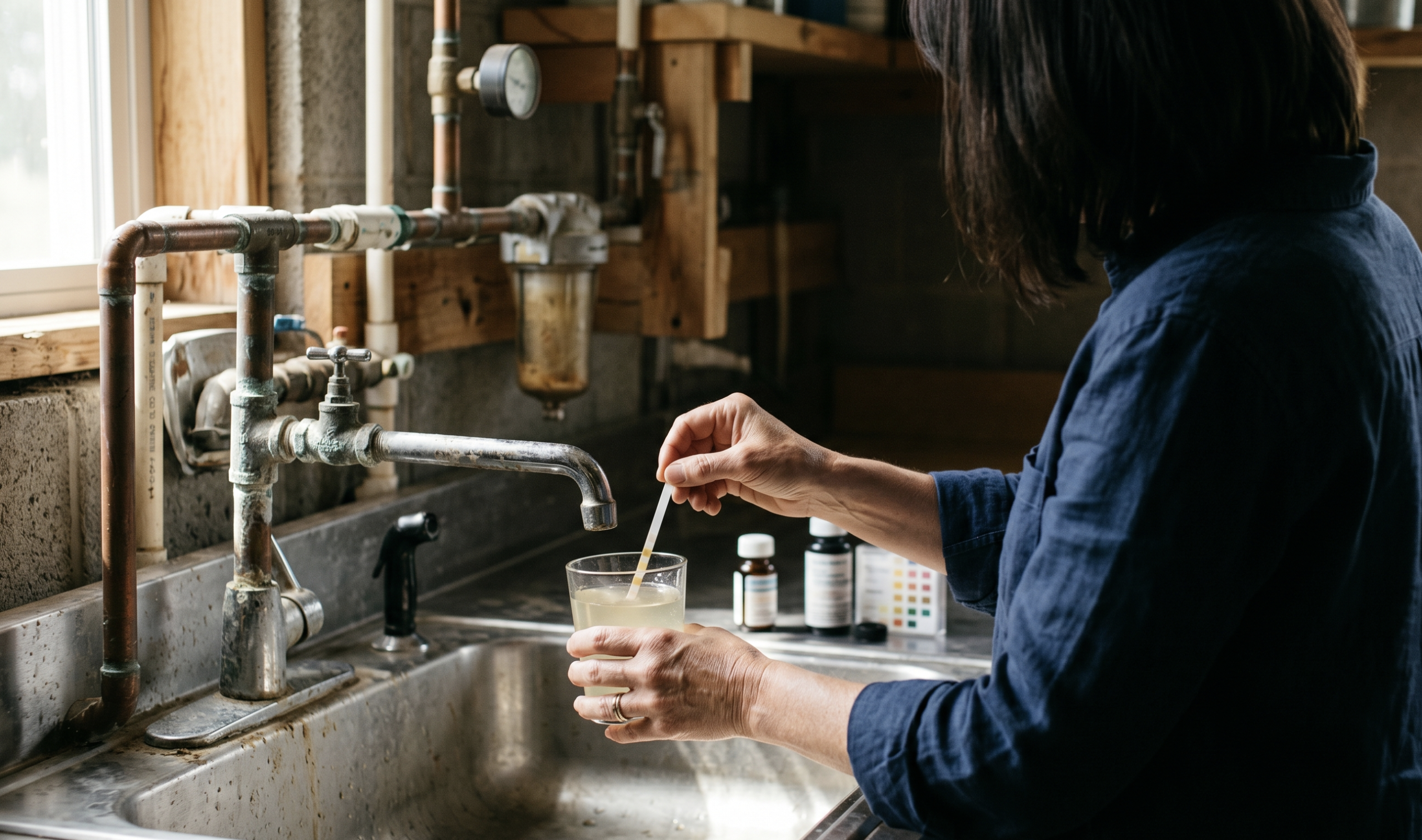
Yes, well water is almost always hard. Because it comes from underground aquifers, it picks up dissolved minerals — mainly calcium and magnesium — as it moves through rock and soil. Most well water tests hard to very hard, though the exact level depends on your local geology.
At a Glance: Well Water vs. City Water vs. Tap Water Hardness
| Water Type | Hard or Soft? | Typical Hardness | Mineral Content | Variability |
|---|---|---|---|---|
| Well Water | Usually hard | 150–400+ mg/L (GPG 9–23+) | High calcium & magnesium | High — varies by region and aquifer |
| City Water | Varies | 50–200 mg/L (GPG 3–12) | Moderate; treated at plant | Moderate — softened in some cities |
| Tap Water | Depends on source | Varies widely | Depends on supply source | High — reflects city or well source |
GPG = grains per gallon, the most common hardness unit. Anything above 7 GPG is considered hard. Above 14 GPG is very hard.
Note: “Tap water” refers to whatever comes out of your faucet — it can be city water or well water depending on where you live.
Is Well Water Hard or Soft Water?
Well water is almost always hard. Studies from the U.S. Geological Survey (USGS) show that groundwater — the source of most private wells — tends to have significantly higher mineral concentrations than surface water used by city systems.
Hard water isn’t dangerous, but it causes real problems around the house:
- White chalky buildup on faucets, showerheads, and dishes
- Dry, itchy skin and dull hair after showering
- Soap that won’t lather properly
- Shorter lifespan for water heaters and appliances
- Stiff, scratchy laundry
Whether your well water is mildly hard or extremely hard depends on what type of rock your aquifer runs through. Limestone and dolomite regions — common across the Midwest, Mid-Atlantic, and parts of the South — produce some of the hardest well water in the country.
Why Is Well Water Considered Hard Water?
Well water is hard because of how it forms. Rainwater is naturally soft, but once it seeps into the ground, it begins dissolving minerals from the surrounding rock and soil. The longer water stays underground, the more minerals it absorbs.
The two main hardness minerals are:
- Calcium — leached from limestone, chalk, and gypsum deposits
- Magnesium — absorbed from dolomite and other sedimentary rock
City water goes through a municipal treatment process that often reduces these minerals. Well water skips that process entirely. It comes straight from the aquifer to your home, minerals and all.
This is the core reason well water hardness levels are typically higher — and less predictable — than city water.
For a deeper look at what drives mineral buildup in your water supply, see: What Causes Hard Water? Sources, Stains & Effects
How Does Well Water Hardness Compare With City Water and Tap Water?
Well Water vs. City Water
City water is treated before it reaches your home. Many municipal systems use a process called lime softening or ion exchange to reduce hardness levels during treatment. The EPA also regulates municipal water quality, so cities must test and report their water’s mineral content annually.
Well water has none of these checkpoints. You are responsible for testing and treating your own supply. This means well water is:
- More likely to be very hard (above 14 GPG)
- More variable from one property to the next
- Untreated unless you install your own system
Is City Water Hard or Soft?
It depends on the city. Some municipal systems use naturally soft surface water (from rivers or reservoirs) and do minimal treatment. Others draw from groundwater and may add softening steps.
Cities in the Southwest (Phoenix, Las Vegas, Denver) are known for very hard municipal water. Cities in the Pacific Northwest and New England tend to have softer supplies. Check your city’s annual Consumer Confidence Report (CCR) — it’s required to list hardness levels.
Is Tap Water Hard or Soft?
Tap water is whatever comes out of your faucet. If your home is on a public water system, your tap water hardness reflects your city’s supply. If you’re on a private well, your tap water is your well water. The term “tap water” doesn’t tell you anything about hardness on its own — it depends entirely on the source.
What Are the Signs That Your Well Water Is Hard?
You don’t need a test kit to suspect hard water. These are the most common signs homeowners notice:
In the kitchen and bathroom:
- White or yellowish scale buildup on faucets, showerheads, and around drains
- Spots and film on glasses, dishes, and silverware after washing
- Soap scum that’s difficult to remove from tubs and tiles
- Weak lather from soap, shampoo, or dish detergent
On your body:
- Dry, tight skin after showering
- Itchy scalp or dull, flat hair
- Feeling like soap never fully rinses off
In your appliances and plumbing:
- Water heater working harder or making rumbling noises (scale buildup inside the tank)
- Reduced water pressure over time (mineral deposits in pipes)
- Coffee maker or kettle with white deposits inside
In your laundry:
- Stiff, rough towels and clothes after washing
- Whites turning gray or colors looking faded
Any combination of these symptoms strongly suggests hard water. The more you notice, the harder your water likely is.
For the full breakdown of hard water symptoms and how to identify them, see: How to Tell If You Have Hard Water: Signs, Taste, Feel & Stains
How Can You Test the Hardness of Well Water?
There are four main ways to test your well water for hardness:
1. Home Test Strips (Easiest)
Dip a strip into a glass of tap water and compare the color change to the included chart. Strips give a quick estimate in GPG or mg/L. Accuracy is limited but good enough to confirm whether you have a problem.
- Cost: $10–$20 for a pack
- Best for: Quick screening
2. Liquid Drop Test Kits (More Accurate)
Add a few drops of reagent to a water sample and count how many drops it takes to cause a color change. Each drop represents a set hardness level. More accurate than strips.
- Cost: $15–$30
- Best for: Homeowners who want a reliable number
3. Digital Hardness Meters (TDS Meters)
These measure total dissolved solids (TDS) in your water, not hardness directly. High TDS often correlates with hard water, but it’s not a precise hardness reading. Useful as a general indicator.
- Cost: $15–$50
- Best for: Quick general screening, not specific hardness levels
4. Professional Water Test (Most Accurate)
A certified lab tests a water sample for hardness, as well as other contaminants common in well water (iron, manganese, bacteria, nitrates, pH). Many water treatment companies offer free testing, or you can order a mail-in kit from a certified lab.
- Cost: $30–$150+ depending on what’s tested
- Best for: New homeowners, those planning to buy a treatment system, or anyone with unusual symptoms
Tip: If you’re on a private well, the EPA recommends testing your water annually. A full panel test every few years is worth it — well water quality can change over time.
What Should You Do If Your Well Water Is Too Hard?
Once you confirm hard water, you have several effective options. The right choice depends on your hardness level, household size, and whether you have other water quality issues.
Option 1: Salt-Based Water Softener (Most Effective)
A traditional ion exchange softener replaces calcium and magnesium ions with sodium ions, completely eliminating hardness throughout your home. This is the most reliable whole-house solution.
- Best for: Very hard water (above 10–12 GPG), large households, homes with serious scale or appliance damage
- Pros: Eliminates hardness entirely, protects all plumbing and appliances
- Cons: Uses salt (requires regular refilling), adds small amounts of sodium to water, not ideal if you’re on a low-sodium diet
- Cost: $400–$2,500+ installed
Option 2: Salt-Free Water Conditioner
These systems use a process called template-assisted crystallization (TAC) to change the structure of hardness minerals so they don’t stick to surfaces. They don’t remove minerals — they prevent scale.
- Best for: Mild to moderate hardness, eco-conscious homeowners, those avoiding sodium
- Pros: No salt, no wastewater, low maintenance
- Cons: Less effective than salt softeners at very high hardness levels
- Cost: $500–$2,000+ installed
Option 3: Reverse Osmosis (RO) System
An RO unit filters water through a semi-permeable membrane, removing hardness minerals along with most other contaminants. Typically installed under the kitchen sink for drinking and cooking water only.
- Best for: Improving drinking water taste and quality; not a whole-house solution on its own
- Pros: Removes hardness, chlorine, nitrates, heavy metals, and many other contaminants
- Cons: Only treats one point of use; doesn’t protect plumbing or appliances
- Cost: $150–$600 for a quality under-sink unit
Option 4: Magnetic or Electronic Descalers
These attach to your pipes and claim to change mineral behavior using magnetic or electric fields. Evidence for effectiveness is mixed, and they’re generally not recommended as a primary solution for genuinely hard well water.
Option 5: Test First, Then Decide
If your hardness is borderline (7–10 GPG) and you don’t have serious symptoms, you may not need a whole-house system immediately. A countertop or under-sink filter for drinking water, combined with regular appliance maintenance, may be enough in the short term.
Quick Decision Guide
| Your Situation | Recommended Solution |
|---|---|
| Very hard water (12+ GPG), whole house | Salt-based water softener |
| Moderate hardness, want to avoid salt | Salt-free conditioner |
| Hard water + other contaminants (iron, nitrates) | Softener + sediment/carbon filter combo |
| Just want better drinking water | Reverse osmosis under-sink system |
| Mild hardness, testing the waters | Test strips + monitor; reassess in 6 months |
Frequently Asked Questions
Is well water always hard?
Almost always, yes. Well water comes from underground aquifers where it absorbs calcium and magnesium from rock and soil. It’s rare to find naturally soft well water unless you’re in a region with very little limestone or dolomite geology.
Can hard well water make you sick?
No. Hard water is safe to drink. The calcium and magnesium it contains are not harmful — in fact, they’re minerals your body needs. The problems with hard water are practical (scale, soap scum, dry skin, appliance damage), not health-related.
How do I know if my well water is hard without a test?
Look for white or chalky buildup on faucets and showerheads, spots on dishes and glassware, dry skin after showering, and reduced soap lather. These are reliable indicators. A home test strip can confirm it for about $15.
Does a water softener remove everything from well water?
A standard water softener removes hardness minerals (calcium and magnesium) and small amounts of iron. It does not remove bacteria, nitrates, sulfur, or most other contaminants. Well water often benefits from a multi-stage treatment approach — softener plus additional filtration.
Is city water better than well water?
Not necessarily. City water is treated and regulated, but it often contains chlorine, chloramines, or other disinfectants. Well water is untreated but can be mineral-rich and fresh-tasting if managed properly. Both benefit from point-of-use filtration for the best drinking water quality.
How hard is too hard for well water?
There’s no health-based limit, but practically speaking, water above 7 GPG will cause noticeable issues. Above 14 GPG, you’ll likely see heavy scale buildup, significant soap problems, and accelerated appliance wear. Most water treatment professionals recommend softening at 10 GPG and above.
Sources: U.S. Geological Survey (USGS) Groundwater Resources; U.S. Environmental Protection Agency (EPA) Private Drinking Water Wells; Water Quality Association (WQA) Hardness Standards