A toilet leaking silently can waste between 30 and 200 gallons of water every single day — enough to add $100 or more to a monthly water bill without a single drip landing on the floor. The tricky part is that most toilet leaks are invisible and silent, which is exactly why most homeowners don’t catch them until the bill arrives.
Checking for a toilet leak takes no special tools and no plumbing knowledge. These five signs cover the most common leak points — the flapper, the fill valve, the supply line, and the base seal — and all can be confirmed within two minutes.
Sign 1: Your Toilet Runs Intermittently Without Being Flushed
A toilet that turns itself on briefly — what plumbers call a “phantom flush” — is one of the most reliable signs of a flapper leak. The flapper is the rubber seal at the bottom of the tank that holds water in place between flushes. When it degrades or warps, water slowly seeps into the bowl until the tank level drops low enough to trigger the fill valve to refill.
You’ll hear the tank refilling for 15–30 seconds even though no one flushed. This cycle can repeat every few minutes or a few hours depending on how fast water is escaping. A degraded flapper is the cause of roughly 20–25% of all household toilet leaks and is a $10–$15 fix.
Sign 2: The Dye Test Reveals Color in the Bowl Without Flushing
The food dye test is the fastest definitive check for a flapper leak. Drop 5–10 drops of any dark food coloring — or a dye tablet available at hardware stores — into the tank. Do not flush. Wait 10–15 minutes without using the toilet.
If color appears in the bowl, water is leaking through the flapper seal. A clean bowl after 15 minutes means the flapper is holding. This test catches leaks that are too slow to trigger the phantom flush sound but still waste a measurable volume of water daily.
Sign 3: You Hear Hissing After the Tank Finishes Filling
A faint but constant hissing sound after the tank refills points to a problem with the fill valve rather than the flapper. The fill valve — also called a ballcock — controls water flow into the tank from the supply line. When it fails to shut off completely, water continues trickling in and may exit through the overflow tube into the bowl.
To confirm this, remove the tank lid and look at the overflow tube — the tall open tube in the center of the tank. If water is running into it rather than stopping 1 inch below the rim, the fill valve isn’t closing correctly or the water level is set too high. If your toilet makes a hissing sound after flushing that persists beyond 60 seconds, a fill valve problem is the most likely cause.
Sign 4: Water or Staining Appears at the Base of the Toilet
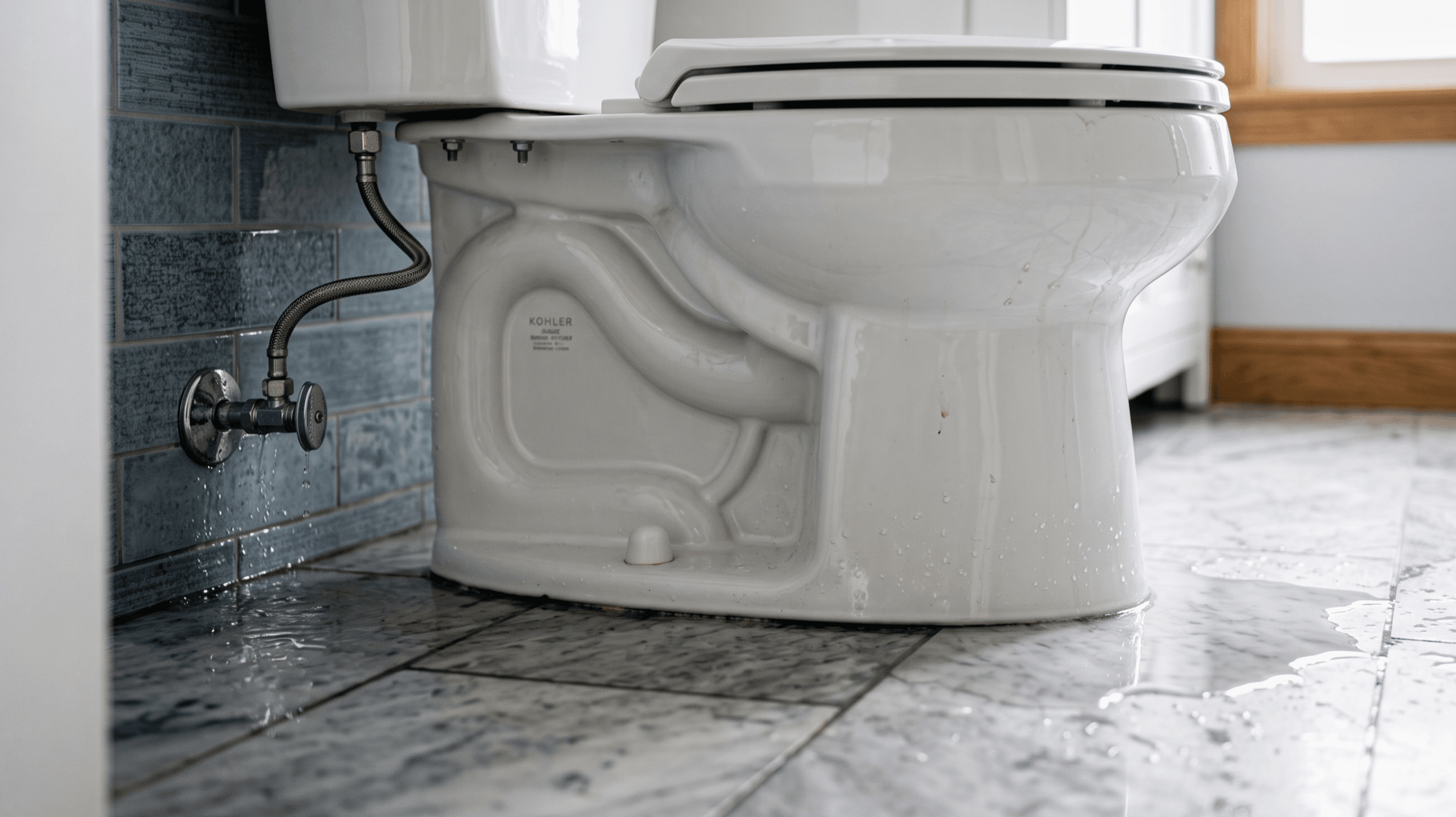
Water pooling around the base of a toilet — or a yellowish ring staining the floor — indicates a failed wax ring seal beneath the toilet. The wax ring creates a watertight connection between the toilet base and the drain flange. When it cracks or shifts, water escapes at floor level, especially during and after flushing.
Press a dry paper towel firmly against the base of the toilet, then flush. If the towel picks up moisture immediately after flushing, the wax ring has failed. Ignoring a wax ring leak causes subfloor water damage that costs significantly more to repair than the seal replacement itself. A failed wax ring also allows sewer gases to enter the room.
Unusual pressure changes in your supply lines — including water pressure that fluctuates throughout the day — can sometimes accelerate wax ring wear by creating repeated stress on the base connection.
Sign 5: The Supply Line Fitting Is Damp or Corroded
The supply line connects the shutoff valve on the wall to the bottom of the toilet tank. Check the connection points at both ends — the wall fitting and the tank inlet — by running a dry finger or paper towel along each joint. Any moisture, white mineral crust, or green corrosion on the fittings indicates a slow external leak.
Supply line leaks are easy to miss because the water often evaporates before it accumulates, leaving only mineral deposits as evidence. Braided stainless steel supply lines degrade at their compression fittings after 5–8 years and should be inspected annually. If the fitting is damp rather than just dusty, tightening the compression nut a quarter turn is the first step. If that doesn’t stop the moisture, the line needs replacing.
If you’re already aware that your home has broader low water pressure problems on the hot water side or inconsistencies across fixtures, checking all supply line connections — not just the toilet — is worth doing at the same time.
What to Do After Finding a Toilet Leak
Most toilet leaks fall into one of three categories based on where the water is escaping:
| Leak Location | Most Likely Cause | Typical Repair Cost |
|---|---|---|
| Tank to bowl (silent) | Degraded flapper | $10–$20 DIY |
| Tank continuously filling | Fill valve failure | $15–$30 DIY |
| Base of toilet | Failed wax ring | $20–$50 DIY or plumber |
| Supply line fitting | Loose or corroded connection | $10–$25 DIY |
Flapper and fill valve replacements are within reach for most homeowners with no prior plumbing experience and can be completed in under 30 minutes. Wax ring replacement requires removing the toilet from the floor, which is manageable as a DIY task but warrants professional help if subfloor damage is present.
For a broader look at how small fixture upgrades affect household water use, saving water in the bathroom without remodeling covers toilet, faucet, and shower adjustments that reduce daily consumption without structural changes.
How Much Water Does a Leaking Toilet Actually Waste?
A slow flapper leak wastes approximately 30 gallons per day. A moderate fill valve leak that runs continuously can waste 200 gallons per day. At average U.S. water rates of roughly $0.005 per gallon, a moderate toilet leak costs between $3 and $30 per day — or $90 to $900 per month. A single toilet leak caught early using the dye test or the listening check eliminates one of the most common sources of avoidable household water waste. Since water pressure affects how much water exits fixtures with each use, homes running at higher-than-normal pressure tend to see faster leak rates at both flappers and supply line fittings.
FAQ
How do I know if my toilet is leaking if I can’t hear anything?
A silent toilet leak produces no audible sound but still wastes water steadily. The most reliable detection method is the food dye test: add dye to the tank, wait 15 minutes without flushing, and check for color in the bowl. If color appears, the flapper is leaking. You can also check the supply line fittings for mineral deposits, which indicate slow external moisture.
Can a running toilet increase my water bill significantly?
Yes. A toilet with a faulty fill valve that runs continuously can waste up to 200 gallons per day, adding $60–$900 to a monthly water bill depending on local water rates and leak severity. Even a slow flapper leak wasting 30 gallons per day amounts to roughly 900 gallons per month — enough to create a noticeable billing difference.
How often should I check my toilet for leaks?
A dye test and a visual inspection of the supply line and base should be performed every 6–12 months. Flappers typically last 4–6 years before the rubber degrades enough to allow seepage. Homes with hard water may see faster flapper and fill valve wear due to mineral buildup on the rubber and valve seat.
Is water around the base of the toilet always a sign of a wax ring failure?
Not always. Condensation on the exterior of the toilet tank can drip to the floor and mimic a base leak, especially in humid climates during summer months. To distinguish between the two, flush the toilet and press a dry paper towel against the base immediately after. If it absorbs water right after flushing, the wax ring has failed. If the base is dry right after flushing but wet later, condensation is the more likely cause.
Can I fix a toilet leak myself or do I need a plumber?
Flapper replacements, fill valve replacements, and supply line swaps are all standard DIY repairs requiring no specialized tools. A wax ring replacement is also achievable without a plumber but requires shutting off the water supply, draining the tank and bowl, unbolting the toilet from the floor, and reseating it on a new ring — a process that takes 45–90 minutes. A plumber is advisable when floor or subfloor damage is visible around the toilet base.