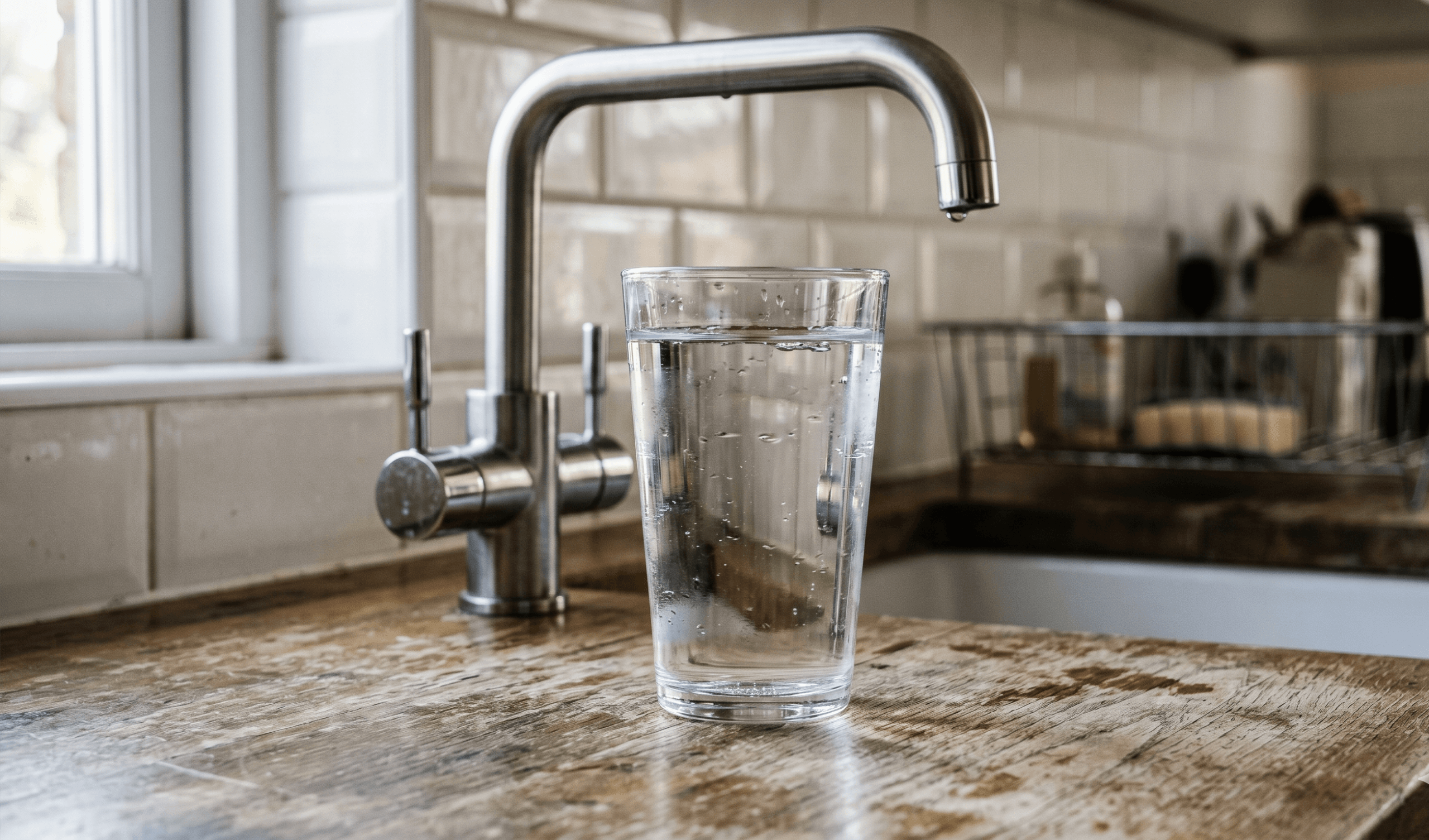
A metallic taste in tap water is one of the most reported water quality complaints among homeowners. It’s usually a sign that dissolved metals — iron, copper, zinc, or manganese — are present in concentrations high enough to detect on the palate, even when they fall within safe drinking limits.
The source of those metals matters. It could be your home’s aging pipes, your municipal water supply, a failing water heater, or naturally occurring minerals in your groundwater. Each cause has a different fix, so correctly identifying the source saves time and money.
Below are the 8 most common reasons tap water develops a metallic taste, along with specific steps to resolve each one.
1. Corroding Copper Pipes
Copper pipes that are corroding release dissolved copper ions directly into the water flowing through them. Water that sits in copper pipes overnight — sometimes called “first flush” water — can carry noticeably higher copper concentrations than water that has been running for a minute or two.
Corrosion accelerates when water has a low pH (below 7.0), high dissolved oxygen, or elevated chlorine levels. The U.S. Environmental Protection Agency’s Lead and Copper Rule sets the action level for copper at 1.3 mg/L — water above this threshold requires corrective action from utilities, but corrosion inside your own plumbing is your responsibility to address.
Fix: Run cold water for 30–60 seconds before drinking, especially in the morning. For a long-term solution, test your water’s pH and consider a whole-house water filter with an activated carbon stage, which reduces dissolved copper effectively. If pipes are severely corroded, re-piping with PEX or CPVC eliminates the problem at the source.
2. High Iron Content in the Water Supply
Iron is the most common mineral behind metallic-tasting tap water. At concentrations above 0.3 mg/L — the EPA’s secondary maximum contaminant level — water can taste and smell distinctly metallic or rusty. Iron can enter water through corroding iron or steel pipes, naturally iron-rich aquifers, or aging municipal infrastructure.
Two forms exist: ferrous iron (dissolved, clear water that turns rust-colored when exposed to air) and ferric iron (particulate, visibly rusty water). Both produce a metallic taste, but treatment methods differ.
Fix: For ferrous iron, a water softener or iron-specific filter using oxidation and filtration (such as a Birm or greensand filter) will remove it efficiently. Ferric iron requires a sediment pre-filter before the main filter. Well water owners dealing with high iron should also check for well casing integrity and surrounding soil composition, as both affect how much iron enters the water column.
3. Galvanized Steel Pipe Degradation
Galvanized steel pipes — common in homes built before the 1960s — are coated with zinc to prevent rust. Over time, the zinc coating wears away, and both zinc and iron leach into the water. Zinc produces a distinct metallic or bitter taste and is detectable at concentrations as low as 5 mg/L.
Beyond taste, degraded galvanized pipes reduce water pressure due to internal mineral buildup that narrows the pipe’s interior diameter. The two problems — taste and pressure — often appear together as an early warning of significant pipe degradation.
Fix: Flushing the lines and using a pitcher or under-sink filter with activated carbon will reduce zinc temporarily. The permanent fix is pipe replacement. PEX piping is now the most widely recommended replacement material for residential use due to its corrosion resistance and flexibility.
4. Manganese in Groundwater
Manganese occurs naturally in soil and rock and is particularly common in well water. The EPA’s health advisory limit for manganese is 0.3 mg/L for adults, but the taste threshold is closer to 0.05 mg/L — meaning water can taste metallic before it poses a health concern.
Manganese often co-occurs with iron in groundwater. Water with both minerals present tends to have a more complex metallic flavor and may leave black or brownish-black staining on fixtures and laundry.
Fix: Oxidation filtration (greensand, KDF, or air injection systems) effectively removes manganese from well water. If manganese levels are consistently above the health advisory threshold, an annual water test for private wells is the appropriate starting point to size the right treatment system.
5. Water Heater Corrosion
If the metallic taste appears only in hot water, the water heater is the likely source. Most tank-style water heaters use a sacrificial anode rod — typically magnesium or aluminum — that corrodes in place of the tank itself. When the anode rod is depleted, the steel tank begins to corrode, releasing iron and other metals into hot water.
A depleted anode rod is one of the leading causes of metallic hot water taste in homes with water heaters older than 8–10 years. The problem is often noticed first in water used for cooking or making tea, where heating concentrates dissolved minerals.
Fix: Inspect and replace the anode rod every 3–5 years, or sooner in areas with hard or acidic water. Flushing the water heater tank annually removes sediment buildup that can also contribute to off-flavors. If the tank has visible corrosion or rust-colored hot water is persistent, replacement is the safer option.
6. Low pH (Acidic Water)
Water with a pH below 6.5 is classified as acidic and is significantly more corrosive to metal plumbing components. Acidic water dissolves copper, iron, and zinc from pipes at a faster rate than neutral or slightly alkaline water, which is why pH is one of the first parameters measured when investigating metallic taste complaints.
Rainwater naturally has a slightly acidic pH due to dissolved carbon dioxide. Groundwater in areas with granite or sandstone geology tends to be naturally acidic. Municipal water systems typically adjust pH before distribution, but private well owners do not have that buffer.
Fix: A calcite neutralizer filter raises pH by dissolving calcium carbonate into the water as it passes through. For severely acidic water (pH below 6.0), a chemical injection system using soda ash provides more precise control. Testing water pH with a home kit or laboratory analysis takes 15 minutes or less and should be the first diagnostic step when acidic water is suspected.
7. Chloramine Reactions with Plumbing
Many municipal water utilities have switched from chlorine to chloramines (a combination of chlorine and ammonia) as a disinfectant because chloramines are more stable over long distribution distances. However, chloramines are more chemically reactive with certain pipe materials than chlorine alone and can accelerate corrosion in older copper and lead service lines.
This accelerated corrosion is a documented factor in several municipal water quality investigations since 2000. Homes with pre-1986 plumbing are at greater risk because lead solder was legal in residential plumbing before that year, and chloramine reactions can mobilize lead alongside copper and other metals.
Fix: Activated carbon block filters effectively reduce chloramine levels at the point of use. Whole-house carbon systems address the problem at every tap. Homeowners in areas with confirmed chloramine use and older plumbing should also test for lead as a precaution — an important step when evaluating the right drinking water filtration system for their household.
8. Hard Water Mineral Interaction
Hard water contains elevated levels of calcium and magnesium. While these minerals themselves do not typically cause a metallic taste, hard water creates conditions that can amplify metallic flavors through two mechanisms: mineral scale buildup inside pipes that traps and concentrates metal ions, and the interaction of hard water with water heaters and appliances that accelerates corrosion of metal components.
Water hardness is measured in grains per gallon (GPG) or milligrams per liter. Water above 7 GPG is classified as hard; above 10.5 GPG is very hard. A correlation exists between very hard water, increased scale, and more frequent metallic taste reports — particularly in areas where the water supply draws from limestone or chalk aquifers.
Fix: A salt-based ion exchange water softener replaces calcium and magnesium ions with sodium, reducing scale accumulation and its downstream effects on plumbing. For homeowners evaluating hard water treatment options, a water hardness test is the right starting point before selecting a softening system. Descaling pipes where significant buildup has occurred restores flow and removes accumulated metal deposits that can continue leaching between maintenance cycles.
How to Diagnose Metallic Tap Water at Home
Before purchasing equipment or scheduling a plumber, a systematic diagnosis narrows the cause quickly.
- Test cold vs. hot water separately. Metallic taste only in hot water points to the water heater or hot water pipes. Metallic taste in both suggests the supply line or water source.
- Run the tap for 60 seconds before tasting. If the taste disappears after flushing, stagnant water in pipes — rather than the water supply itself — is the source.
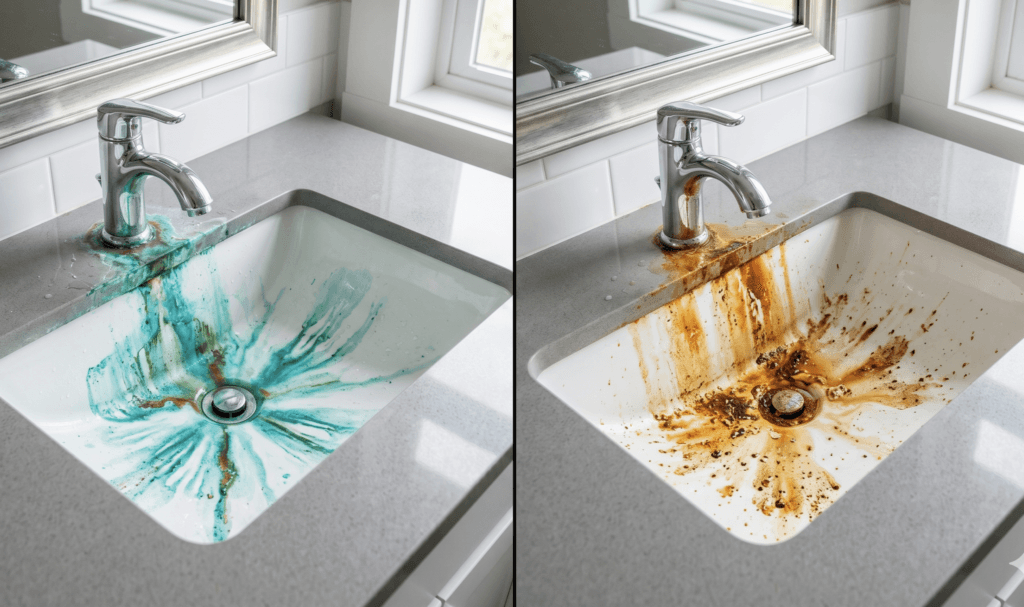
- Check for visual clues. Blue-green staining on fixtures indicates copper corrosion. Rust-orange staining suggests iron. Black staining points to manganese.
- Test your water. A certified lab water test provides a full mineral and metal panel for $30–$100 depending on the number of parameters. Many county health departments offer subsidized testing for well water owners.
Filtration Options by Cause
| Cause | Recommended Filter Type | Point of Use or Whole House |
|---|---|---|
| Copper / zinc leaching | Activated carbon block | Both options work |
| Iron (ferrous) | Oxidation + KDF or greensand filter | Whole house preferred |
| Manganese | Oxidation filtration system | Whole house required |
| Low pH / acidic water | Calcite neutralizer | Whole house required |
| Chloramine reaction | Carbon block (rated for chloramine) | Both options work |
| Hard water scale | Ion exchange water softener | Whole house required |
Understanding which contaminant is present before purchasing a filter prevents a common and expensive mistake: buying a product optimized for one problem that does not address another. For households with multiple water quality issues, a multi-stage filtration system that combines sediment pre-filtration, oxidation, and activated carbon stages handles most combinations.
Conservation is another angle worth considering: inefficient filtration systems that backwash frequently can waste significant water. Reviewing water-efficient filtration options is worthwhile for households in drought-prone areas or those on metered well pumps. And for those building complete plumbing overviews, understanding how pressure affects pipe corrosion rates rounds out the picture.
Frequently Asked Questions
Is metallic-tasting tap water safe to drink?
In most cases, a mild metallic taste does not indicate a health emergency, but it does signal the presence of dissolved metals above detection thresholds. Iron and copper at low levels are not acutely toxic, but long-term exposure to elevated copper, lead, or manganese warrants water testing and filtration. If the taste is sudden, strong, or accompanied by discolored water, stop drinking it and test immediately.
Why does my water taste metallic only in the morning?
Water that sits overnight in copper or galvanized pipes accumulates dissolved metals from pipe contact. The concentration is highest after long stagnation periods, which is why metallic taste peaks with the first morning draw. Running the cold tap for 30–60 seconds before drinking flushes this standing water and typically eliminates the taste.
Can a water filter remove metallic taste from tap water?
Yes. Activated carbon block filters reduce dissolved copper, zinc, chloramines, and some iron effectively at the point of use. For iron and manganese at higher concentrations, an oxidation-based filtration system is required. The right filter depends on which metals are present — a water test identifies this before any equipment purchase.
Does water softening fix metallic-tasting water?
A water softener addresses hardness (calcium and magnesium) and reduces scale buildup that can trap and concentrate metals, but it does not directly remove iron, copper, or manganese. It can improve metallic taste indirectly by reducing scale and corrosion conditions in pipes, but if dissolved metals are the primary cause, a dedicated iron filter or carbon block filter is also needed.
What does it mean if only my hot water tastes metallic?
A metallic taste isolated to hot water is a reliable indicator that the water heater is the source. The most likely causes are a depleted anode rod, tank corrosion, or sediment buildup. Inspecting and replacing the anode rod, or flushing the tank, resolves the issue in most cases. If the hot water also appears rusty or discolored, the tank may need replacement.