Nobody thinks much about their knees until they start complaining. One day you’re taking the stairs two at a time without a second thought; the next, a familiar ache greets you somewhere around step three. If that sounds familiar, you’re in good company. Knee discomfort is one of the most common everyday complaints people deal with — whether it’s the result of an active lifestyle catching up, long hours at a desk, or simply the passing of time.
The good news is that mild, everyday knee soreness often responds well to simple, sensible care at home. You don’t need an elaborate routine or a medicine cabinet full of gadgets. For many people, a combination of rest balanced with gentle movement, a little cold or warmth, and a few small adjustments to daily habits can take the edge off noticeably — and help you get back to your normal routine with more confidence.
This guide walks through the practical basics: what’s commonly behind everyday knee discomfort, the at-home approaches people tend to reach for first, some gentle low-impact exercises worth knowing about, lifestyle tweaks that take pressure off your knees, and — just as important — the signs that your knee deserves a professional opinion rather than another week of waiting it out. A quick note before we start: this is general information, not medical advice, and if your pain is persistent or severe, a healthcare professional is the right person to talk to.
IN THIS GUIDE
The short answer: for mild, everyday knee soreness, the approach most people start with is a balance of rest and gentle movement rather than complete immobility. Cold is commonly used for fresh flare-ups or noticeable puffiness, while warmth tends to feel better on stiff, achy knees. Keeping the leg elevated when you rest, easing back into activity gradually, and avoiding long unbroken periods of sitting all seem to help most people. Over the longer term, low-impact movement, light strengthening of the muscles around the knee, comfortable supportive footwear, and keeping an eye on overall weight are the habits most associated with happier knees. And if pain is severe, keeps worsening, or doesn’t settle after a couple of weeks of sensible self-care, it’s worth talking to a healthcare professional — more on that later in the guide.
Why Knees Get Sore: Common Everyday Causes
Knee pain rarely has one single, neat explanation, which is part of what makes it frustrating. The knee is a hinge joint doing a surprising amount of work: it absorbs impact every time your foot hits the ground, stabilises you when you turn or pivot, and carries your body weight through thousands of small bends every day. When something in that system gets a little overloaded or irritated, you feel it. Here are some of the most common, everyday reasons knees start aching — presented in general terms, since only a professional examining you can say what’s behind your particular discomfort.
Doing too much, too soon. One of the most frequent triggers is a sudden jump in activity. Taking up running after years on the sofa, walking far more than usual on a holiday, starting a new workout class, or even a weekend of gardening after a sedentary winter — these sudden spikes in load can irritate the tissues around the knee. The knee doesn’t protest immediately; often the soreness shows up the next day, which is why it can feel mysterious.
Repetitive strain from familiar activities. Sometimes it’s not a new activity but an old one, repeated often enough. Jobs that involve kneeling, crouching, climbing ladders or stairs, or carrying loads up and down steps can gradually irritate the knee. Long runs on hard surfaces, cycling with a saddle set too low, and deep, repeated squatting movements fall into this category too.
Doing too much, too soon. One of the most frequent triggers is a sudden jump in activity. Taking up running after years on the sofa, walking far more than usual on a holiday, starting a new workout class, or even a weekend of gardening after a sedentary winter — these sudden spikes in load can irritate the tissues around the knee. The knee doesn’t protest immediately; often the soreness shows up the next day, which is why it can feel mysterious.
Long periods of stillness. The flip side of overuse is underuse. Hours spent sitting at a desk or driving can leave knees stiff and cranky, especially when you stand up after a long stretch. Joints generally like movement — it’s how they stay nourished and supple — so extended immobility followed by sudden activity is a classic recipe for an achy evening.
Muscle weakness around the joint. The knee relies on the muscles above and below it — particularly the thighs and the glutes — to track and move properly. When those supporting muscles are weak or tight, the joint itself can end up absorbing more stress than it should. This is why strengthening the legs often features in knee-care advice, even when the knee itself is the sore part.
Carrying extra weight. This one is straightforward physics rather than judgment: the knee carries your body weight with every step, and going up stairs multiplies the load on the joint several times over. Many people find that even modest changes in weight noticeably change how their knees feel day to day. It’s a gradual lever, not an overnight fix, but it’s one of the more powerful long-term ones.
Previous injuries and plain wear and tear. An old sports injury, a twist from years ago, or simply decades of use can leave a knee more sensitive than its counterpart. As people age, the cushioning structures inside the knee can gradually wear, which is why knee complaints become more common with the years. None of this means the knee is “worn out” in any dramatic sense — many people manage perfectly well with some sensible care — but it explains why one knee might be the grumbler and the other perfectly quiet.
At-Home Relief Approaches Many People Start With
When knee soreness shows up, most people want something they can do right now, at home, without an appointment. The approaches below are the everyday basics that many people reach for first. They’re simple, inexpensive, and low-risk — but they’re meant for mild, everyday discomfort, not for injuries or severe pain.
Rest — but not total rest
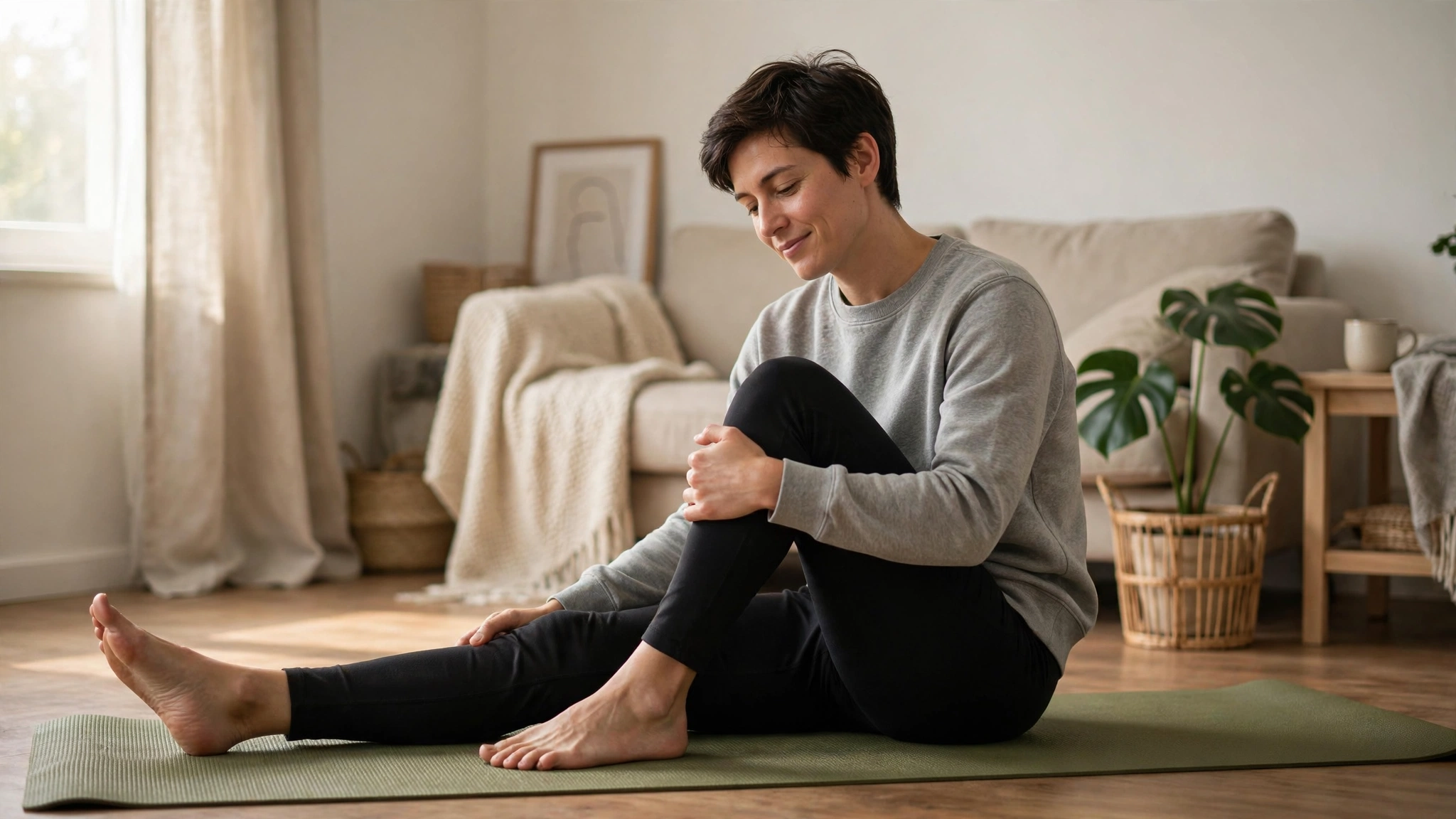
It seems obvious, but the first thing a sore knee usually wants is a break from whatever provoked it. If your knee flared up after a long hike, don’t go for another one the next day. Cut back on the aggravating activity for a few days and see how things settle. That said, total immobilisation is rarely the goal. Complete rest for long stretches can leave the joint stiffer and the surrounding muscles weaker, which often makes the eventual return to activity harder. The sweet spot most people aim for is relative rest: avoid the specific things that clearly aggravate the knee, but keep moving gently in ways that don’t hurt. A short, easy walk on flat ground, for instance, is often fine and even helpful when the knee is mildly sore.
Ice and heat: the general basics
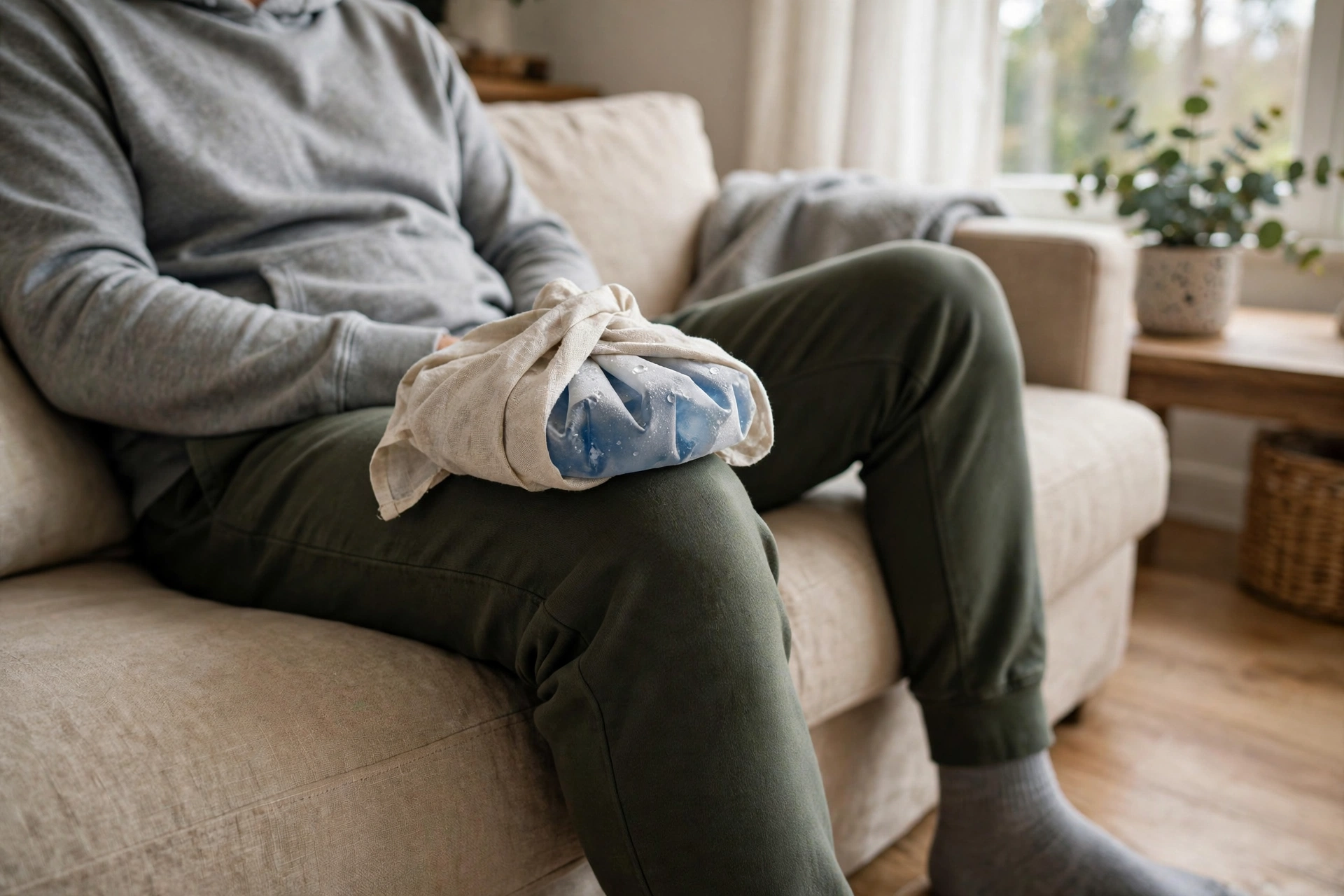
Cold and warmth are two of the oldest home remedies for achy joints, and people tend to develop a strong personal preference for one or the other. As a very general rule of thumb, cold is the one people reach for when the knee feels warm, puffy, or freshly aggravated — say, after an activity that clearly overdid it. A cold pack or a bag of frozen peas wrapped in a thin towel, held against the knee for short periods while you rest, is the usual approach. Don’t apply ice directly to bare skin, and don’t leave it on for very long at a stretch.
Warmth, on the other hand, tends to feel better on stiff, achy knees without much swelling — the kind that grumbles first thing in the morning or after sitting for hours. A warm bath, a warm towel, or a heating pad on a gentle setting can help the area feel looser and more comfortable. Many people find warmth especially pleasant before gentle movement or stretching, since it can make the joint feel less “rusty” going in. If you’re unsure which to try, there’s no strict rule — pay attention to which one feels better and go with that, and skip either one if it clearly makes things worse.
Elevation and gentle support
When you’re resting, propping the sore leg up so the knee sits slightly above heart level is a classic comfort measure — a couple of pillows on the sofa usually does the job. Many people find that combining elevation with a short session of cold feels particularly relieving after an aggravating day. Some people also like a light elastic bandage or a simple knee sleeve for a feeling of support and warmth during daily activities. These aren’t doing any structural repair; they simply make the knee feel more secure and comfortable while you go about your day. If you use one, it should feel snug and supportive, never tight enough to cause numbness, tingling, or extra swelling below the knee.
Practical tip: Keep a reusable cold pack in the freezer so it’s ready whenever your knee flares up — and keep a thin tea towel with it, so you always have a barrier between the pack and your skin. The best home remedy is the one you can reach for without hunting through cupboards.
Low-Impact Exercise and Stretching Basics
It can feel counterintuitive to exercise a sore knee, but gentle, low-impact movement is one of the most consistently recommended habits for keeping knees comfortable over time. The key word is low-impact: activities that get the joint moving without pounding it. The goal isn’t to push through pain — it’s to keep the joint mobile, the surrounding muscles engaged, and the circulation going.
Walking is the simplest place to start. Flat, even surfaces are kinder than hills when your knee is complaining, and shorter, more frequent walks often feel better than one long march. Comfortable, supportive shoes make a real difference here — we’ll come back to footwear shortly.
Cycling, including a stationary bike, is a favourite for sore knees because the joint moves through its range without bearing your full weight with each revolution. Keep the resistance light and the seat high enough that your knee isn’t deeply bent at the bottom of each pedal stroke.
Swimming and gentle water-based movement suit many people because the water supports body weight while letting the joints move freely. Even walking slowly in the shallow end of a pool counts. You don’t need to be a strong swimmer to benefit.
Beyond these, light strengthening of the muscles around the knee is worth considering. The quadriceps (front of the thigh), hamstrings (back of the thigh), and glutes all help the knee track and absorb load properly. Simple bodyweight movements — gentle straight-leg raises while lying down, shallow wall sits held for a few seconds, or slow step-ups on a low step — are common starting points. The guiding principle is straightforward: some effort and mild muscle fatigue are fine, but sharp pain, swelling during the exercise, or pain that lingers well afterwards are signs to back off and, if it keeps happening, to ask a professional.
Stretching matters too, particularly for the muscles that pull on and around the knee. Gentle stretches for the quadriceps, hamstrings, and calves — held comfortably for around twenty to thirty seconds, without bouncing — can help if tightness is part of the picture. Many people find a short stretching routine after a walk, when the muscles are warm, more pleasant than stretching cold. As with strengthening, the stretch should feel like a mild pull, never a sharp or pinching sensation at the knee itself.
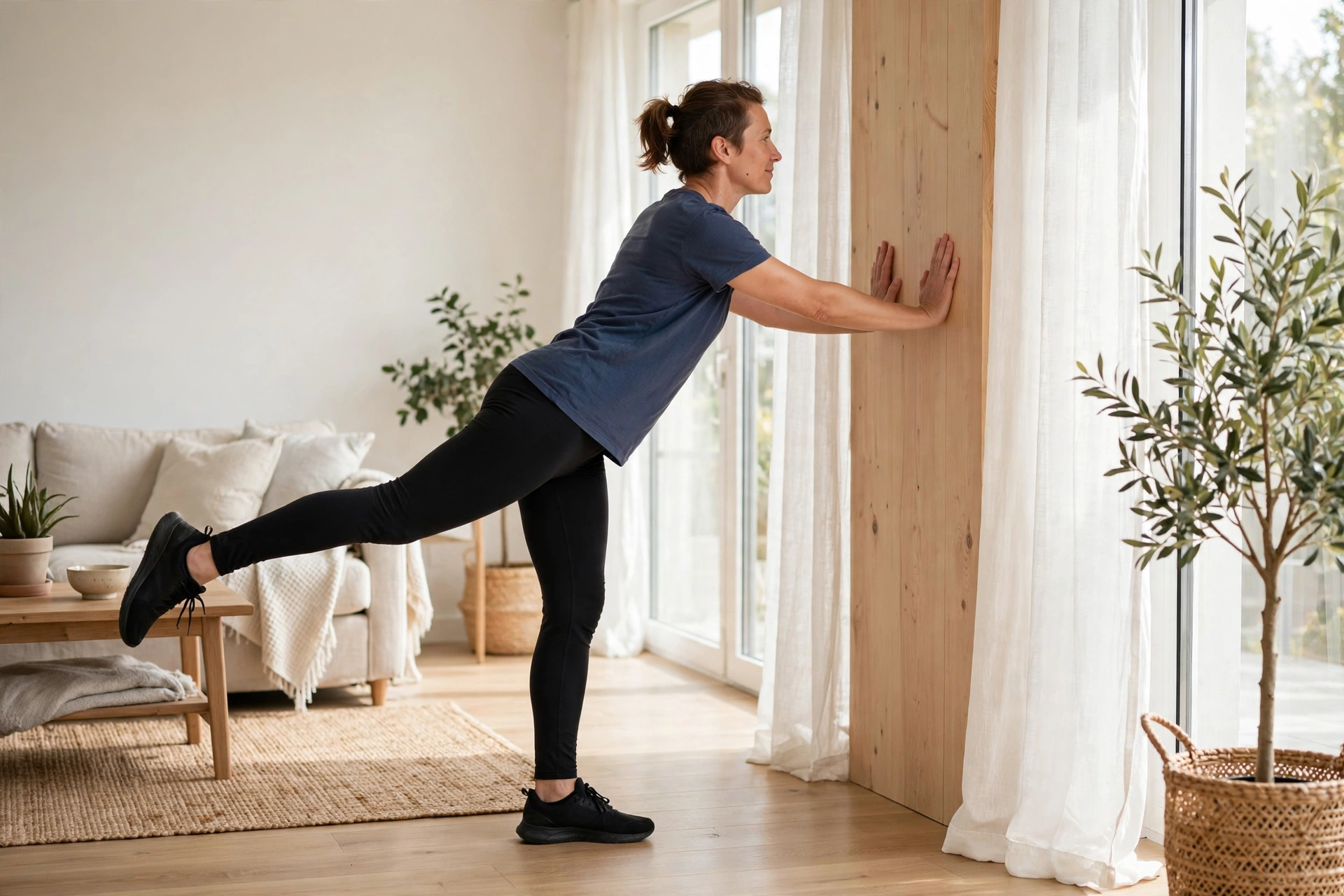
Whatever you choose, build up gradually. A common pattern that works well is to start with a modest amount — a ten-minute walk, a few gentle exercises — and add a little more each week only if the knee stays calm. Progress in knee comfort is usually measured in weeks, not days, so patience is genuinely part of the method.
Everyday Habits That Take Pressure Off Your Knees
Exercises and cold packs get most of the attention, but the quiet background of your daily life — how you move, sit, and stand through an ordinary day — probably matters more over the long run. These are small, unglamorous adjustments, but they add up.
Break up long sits. If your day involves hours at a desk or behind a wheel, your knees spend most of it folded in one position. Getting up every hour or so for a short walk, even just to the kitchen and back, keeps the joint from stiffening up. When you sit, try not to stay in a deeply bent or twisted position for very long; stretching the legs out straight now and then feels surprisingly good.
Keep an eye on overall weight. As mentioned earlier, the knees carry you through every step, and stairs multiply that load. You don’t need dramatic targets or crash diets — steady, sustainable eating and activity habits that gently move weight in the right direction over months are what tend to help knees. Many people are surprised by how much difference even a small, lasting change can make to how their knees feel on stairs.
Warm up before activity and cool down after. Going from zero to a brisk game or a hard workout is rough on every joint, knees included. A few minutes of easy movement — marching in place, gentle leg swings, a slow walk — before the main activity gives the joint time to loosen up. A short, easy wind-down afterwards serves the same purpose in reverse.
Choose kinder surfaces and routes when you can. If your knee is in a sensitive phase, a walk on a flat park path beats a hilly concrete route. It’s a temporary adjustment, not a permanent restriction — but while the knee is complaining, giving it the easiest version of your activity helps it settle faster.
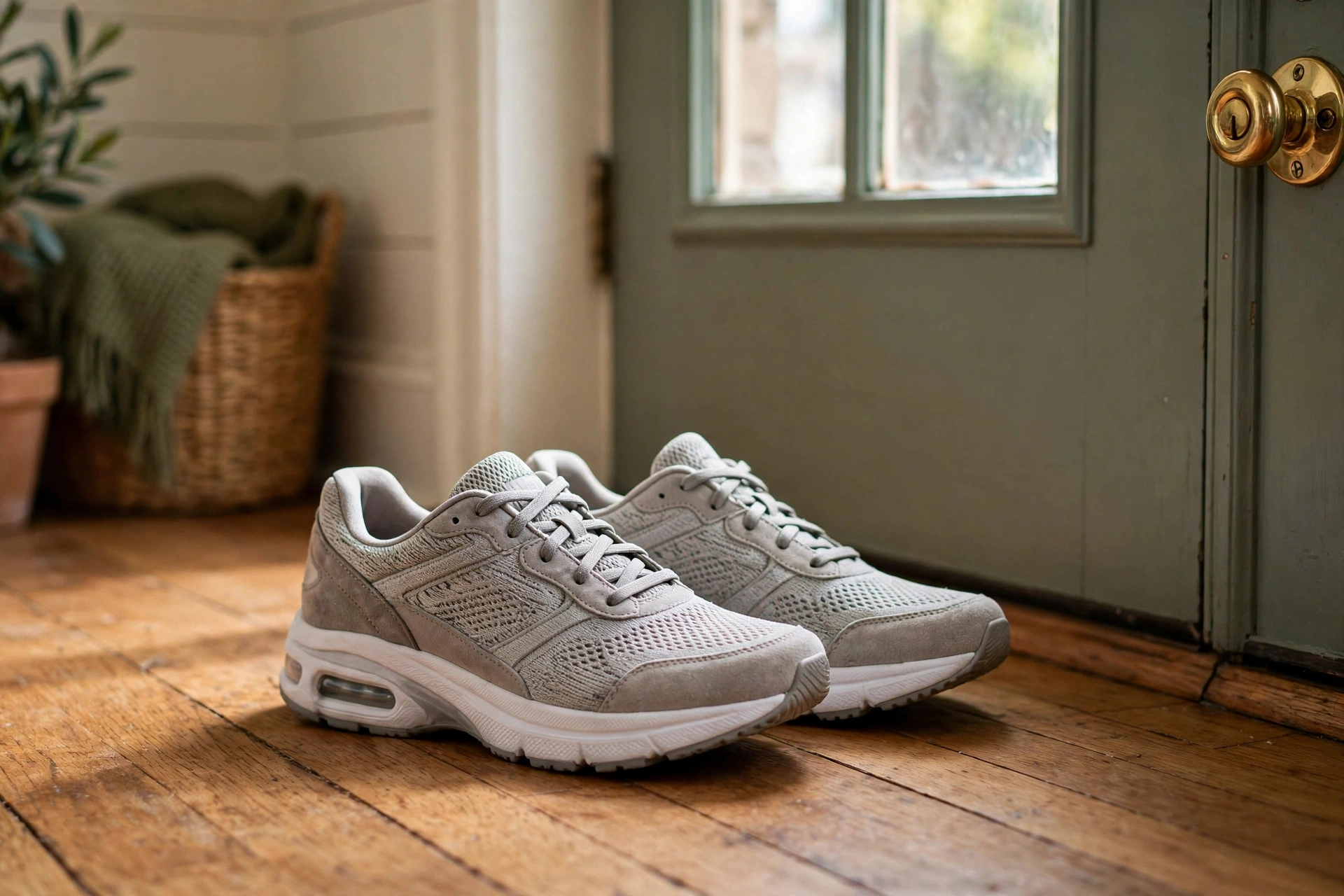
Take footwear seriously. Your shoes are the interface between your body and the ground, and worn-out or unsupportive footwear can subtly change how your knees are loaded with every step. You don’t need anything exotic: comfortable, cushioned shoes that fit well and suit your daily activity are the baseline. If you walk or exercise regularly, check your shoes now and then — soles that are visibly worn down on one side or cushioning that feels flat are signs they’ve done their duty. Very high heels and completely flat, flimsy soles both tend to be harder on knees for long days on your feet. And if you enjoy reading practical everyday health and lifestyle guides like this one, our sister site DailyOrvix covers more topics in the same plain-language style.
Practical tip: Set a quiet hourly reminder on your phone to stand up and move for two minutes if you work at a desk. It’s a tiny habit, but regular movement breaks are one of the simplest things you can do for stiff knees — and your back and shoulders will thank you too.
Comparing Common Relief Approaches at a Glance
With several options on the table, it helps to see them side by side. The table below summarises the approaches covered in this guide in general terms — how each one generally helps and when people typically use it. Nothing here is a prescription; think of it as a quick orientation.
| Method | How it generally helps | When people typically use it |
|---|---|---|
| Relative rest | Removes the aggravating load so irritated tissues can calm down | Right after a flare-up or overdoing it; for a few days, not indefinitely |
| Cold pack | Numbs soreness and can feel soothing on a warm, puffy joint | After activity that clearly overdid it; during rest in the first day or two |
| Elevation | Uses gravity to discourage fluid pooling around the joint | While resting on the sofa, often combined with a cold pack |
| Gentle strengthening | Builds the thigh and hip muscles that support and stabilise the knee | Ongoing, a few times a week, once acute soreness has eased |
| Supportive footwear | Improves how impact travels up the leg with each step | Every day; especially worth checking during sensitive phases |
What to Avoid — and When to See a Professional
Knowing what not to do is nearly as useful as knowing what helps. A few common missteps can turn a minor flare-up into a longer saga.
First, avoid pushing through sharp pain. Mild achiness during gentle movement is one thing; sharp, stabbing, or rapidly worsening pain is your body’s clear signal to stop. The “no pain, no gain” mentality has no place in knee care — working through genuine pain usually just extends the recovery time. Second, try not to go from total inactivity straight back to full intensity. After a few days of rest, ease back in gradually rather than testing the knee with your hardest activity. Third, be cautious with deep, loaded knee bends — very deep squats, lunges, or kneeling on hard surfaces — while the knee is actively sore; you can reintroduce them gently later if and when the knee feels ready.
Also worth avoiding: sitting completely still all day because you’re afraid to move the knee, and conversely, icing or heating for excessive stretches at a time. Short, sensible sessions beat marathon ones for both.
Now the more important part — when to stop self-managing and get a professional opinion. This guide covers general information only, and some situations genuinely warrant medical attention. Consider talking to a healthcare professional if any of the following apply:
- The pain is severe, or you can’t comfortably bear weight on the leg.
- The knee is very swollen, red, or warm to the touch, especially with a fever.
- The knee locks, catches, buckles, or gives way under you.
- There was a clear injury — a fall, a twist, or a direct blow — and the pain isn’t easing.
- The discomfort hasn’t improved after a couple of weeks of sensible self-care, or it keeps coming back.
- The pain regularly wakes you at night or is steadily getting worse rather than better.
A doctor or physiotherapist can assess what’s actually going on, rule out anything that needs specific treatment, but they simply make the knee feel more secure and comfortable while you go about your day.
Read Also: Landman Cast (2026 Guide): Meet the Stars of Taylor Sheridan’s Oil Drama