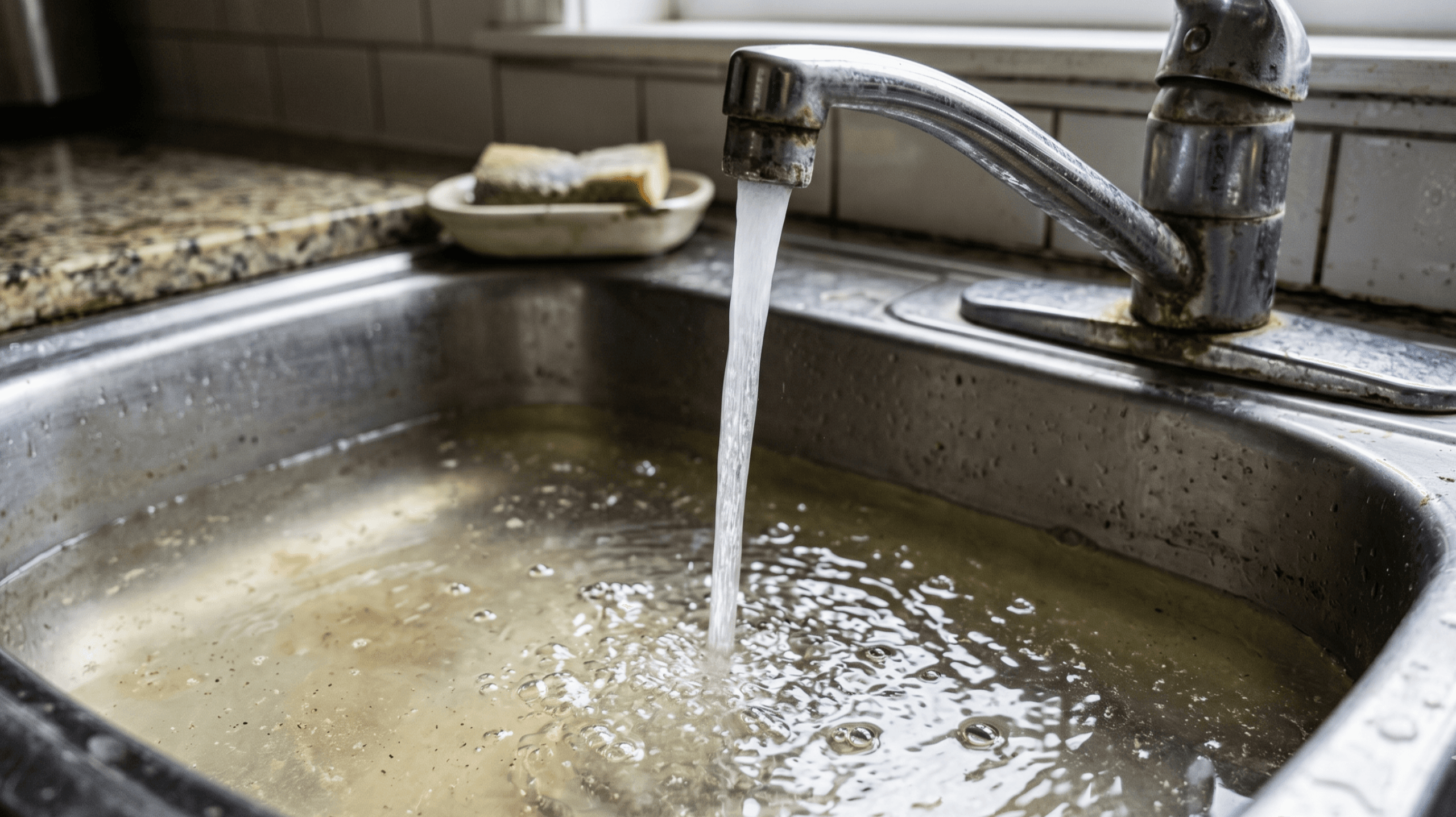
That sulfur smell coming from your tap is one of the most unpleasant water problems homeowners deal with. The cause is almost always hydrogen sulfide gas — a colorless compound that produces a sharp, rotten-egg odor even at very low concentrations (as low as 0.5 parts per billion).
The fix depends on where the smell originates: your water supply, your plumbing, or your water heater. Identifying the source first saves time and money. This article explains each cause and the correct solution for each scenario.
What Causes the Rotten Egg Smell in Water?
The rotten egg odor in water is caused by hydrogen sulfide (H₂S) — a gas that forms when sulfur-reducing bacteria break down organic matter or when sulfur compounds in groundwater react with certain minerals. It can also form inside water heaters under the right conditions.
Three distinct sources account for nearly all cases:
- Groundwater naturally high in sulfur — common in areas with shale or sandstone geology
- Sulfur-reducing bacteria in wells, pipes, or water heaters
- Magnesium anode rods reacting with water inside water heaters
A quick diagnostic: run cold water and hot water separately and smell both. Also smell water from different taps. This tells you whether the problem is system-wide or isolated to one source.
Is Hydrogen Sulfide in Drinking Water Dangerous?
At the concentrations found in most household water supplies, hydrogen sulfide is not acutely toxic. However, the EPA does not currently regulate hydrogen sulfide in public water systems under primary standards — it’s classified as a secondary contaminant affecting taste and odor rather than health.
That said, high concentrations (above 1 mg/L) can cause nausea in sensitive individuals. More practically, hydrogen sulfide is corrosive — it accelerates pipe corrosion and can damage water-using appliances over time. The sulfur smell also often indicates the presence of sulfur bacteria, which, while not inherently dangerous, can create conditions that allow other bacteria to thrive.
If your water smells strongly of sulfur, testing it is a sensible first step regardless of whether a health risk exists.
Source-by-Source Causes and Fixes
Hot Water Only Smells Like Rotten Eggs
If the sulfur smell appears only in hot water, the water heater is almost certainly the source. Specifically, the magnesium anode rod — a component designed to prevent tank corrosion — reacts with sulfate in the water to produce hydrogen sulfide gas.
This is particularly common with water softened using salt, because the ion exchange process increases sulfate concentrations slightly.
Fixes:
- Replace the magnesium anode rod with an aluminum/zinc anode rod. Zinc-alloy rods don’t trigger the same reaction. This eliminates the odor in most cases within days.
- Increase water heater temperature to 140°F (60°C). Sulfur bacteria can’t survive above this temperature. Note: this also raises scalding risk, especially in homes with children. Installing a tempering valve at the outlet is recommended if you raise the temperature.
- Flush and disinfect the water heater with a diluted chlorine bleach solution (roughly 1–2 cups per 40 gallons of tank capacity). Let it sit for 2–3 hours before flushing.
Replacing the anode rod costs $20–$50 for the part and is a straightforward DIY task. A plumber typically charges $100–$200 if you prefer professional service.
Cold and Hot Water Both Smell — Well Water Source
When both hot and cold water carry the odor, the problem is in the water supply itself — most commonly the well. Well water in areas with high mineral content, particularly sulfate-rich geology, often contains naturally occurring hydrogen sulfide or hosts sulfur-reducing bacteria.
Fixes for well water:
- Shock chlorination. Pouring a calculated amount of household bleach into the well, letting it circulate, and then flushing thoroughly kills sulfur bacteria. This is a standard well maintenance procedure recommended by the CDC for private well disinfection. It’s a temporary fix if bacteria keep returning due to an ongoing source.
- Continuous chlorination systems. A chemical feed pump injects a chlorine solution into the water line before a retention tank. Effective but requires regular maintenance and chlorine replenishment.
- Aeration systems. Hydrogen sulfide gas can be physically removed from water by exposing it to air. Aeration units strip the gas out before it enters the home. These work well for moderate H₂S levels.
- Oxidizing filtration (birm or manganese greensand filters). These convert dissolved hydrogen sulfide into solid sulfur particles that are then filtered out. Effective for higher concentrations.
Well owners dealing with persistent sulfur odor should also check for the possibility of a cracked well casing, nearby organic contamination, or surface water intrusion — all of which can introduce sulfur bacteria into the well system. For a broader overview of well water management, the well water and off-grid systems resource covers additional contamination sources and testing approaches.
Municipal (City) Water Smells Like Rotten Eggs
Sulfur odor in treated municipal water is less common but does occur — usually from sulfur bacteria in the distribution pipes, a temporary treatment issue, or naturally occurring sulfur in the source water. City water suppliers are required to test regularly, but pipeline sections between the treatment plant and your home can still harbor bacteria.
Fixes:
- Activated carbon filtration effectively removes low-to-moderate hydrogen sulfide concentrations. A carbon block filter installed at the point of use (under-sink or countertop) handles odors that are noticeable but not severe. For context on how carbon filtration works for other taste and odor issues, see how water filter pitchers remove chlorine — the same adsorption mechanism applies to hydrogen sulfide.
- Whole-house carbon filter. For system-wide odor, a whole-house unit treats all water entering the home.
- Report to your water utility. If the smell is sudden and widespread, your water company should be notified. Sudden sulfur odor in previously odor-free municipal water can indicate a treatment problem or pipe issue.
When the Smell Is Drain-Related, Not Water-Related
One frequently overlooked possibility: the smell isn’t coming from the water at all — it’s coming from the drain. Biofilm buildup inside sink drains produces hydrogen sulfide and other sulfur compounds. When you run the tap, the airflow carries the odor upward.
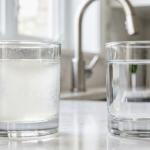
Test: Fill a glass with water from the tap and walk to another room before smelling it. If the glass has no odor, the drain is the source, not the water.
Drain fix: Pour boiling water down the drain, followed by a baking soda and vinegar treatment, then flush again. For persistent drain odor, an enzymatic drain cleaner breaks down the organic biofilm. Cleaning the drain stopper and trap physically also helps.
Choosing the Right Filtration Approach
| Source of odor | Recommended fix |
|---|---|
| Hot water only | Replace anode rod; raise heater temp; flush with bleach |
| Well water (both hot & cold) | Shock chlorination; aeration; oxidizing filter |
| Municipal water | Point-of-use or whole-house carbon filter |
| Drain only | Drain cleaning; enzymatic treatment |
| Isolated tap only | Clean or replace faucet aerator |
Carbon filters rated for hydrogen sulfide removal are labeled specifically — not all carbon filters are equally effective at removing sulfur compounds, so check the manufacturer’s certification (NSF/ANSI Standard 42 covers taste and odor reduction). For more background on water quality issues that affect taste and odor beyond sulfur, the tap water metallic taste guide covers related contaminant scenarios.
Testing Your Water First
Before investing in treatment equipment, a water test confirms what you’re dealing with. For well water, a comprehensive test that includes hydrogen sulfide, sulfate, iron, manganese, and bacteria gives a clear picture. For city water, a basic taste-and-odor panel is usually sufficient.
Water testing labs, local extension offices, and county health departments often offer low-cost or free basic testing for well owners. At-home test kits are available but are less accurate than certified lab analysis for sulfur compounds specifically.
FAQ
Can I shower in water that smells like rotten eggs?
Showering in water with low hydrogen sulfide concentrations is generally safe — the primary concern is the odor itself. Prolonged exposure to high H₂S concentrations through inhalation can cause eye and respiratory irritation, but household water concentrations rarely reach levels that pose this risk. If the smell is very strong or you have respiratory sensitivities, ventilating the bathroom during showers is a reasonable precaution until the problem is resolved.
Why does my water only smell bad first thing in the morning?
Water that sits in pipes overnight allows sulfur bacteria more time to produce hydrogen sulfide. The buildup dissipates after running the tap for 30–60 seconds as fresh water from the main or well replaces the stagnant water. If flushing resolves the odor quickly, the problem is likely in your home’s pipes rather than the primary water source.
Does a water softener cause or worsen sulfur smell?
A water softener doesn’t introduce sulfur, but it can make an existing sulfur problem more noticeable. The softening process slightly increases sulfate concentration, which can accelerate hydrogen sulfide production from the magnesium anode rod in a water heater. Switching to a zinc-alloy anode rod typically solves this specific issue without needing to change the softener setup.
How long does shock chlorination last for well water odor?
Shock chlorination eliminates sulfur bacteria that are present at the time of treatment. How long it lasts depends on whether the bacteria have a recurring source — such as surface water infiltration or organic material in the well. In many cases, the treatment lasts 6–12 months or longer; in others, bacteria recolonize within weeks. Addressing the root cause of bacteria introduction provides a more permanent solution.
Does hydrogen sulfide in water damage pipes or appliances?
Yes — hydrogen sulfide is mildly corrosive. At higher concentrations, it accelerates corrosion in copper and galvanized steel pipes, and can degrade rubber seals in valves and appliances over time. Water heaters, washing machines, and dishwashers are the most commonly affected. Treating the sulfur problem promptly reduces long-term repair costs. Corrosion-related pipe issues can also affect water pressure, making resolution worthwhile on multiple fronts.