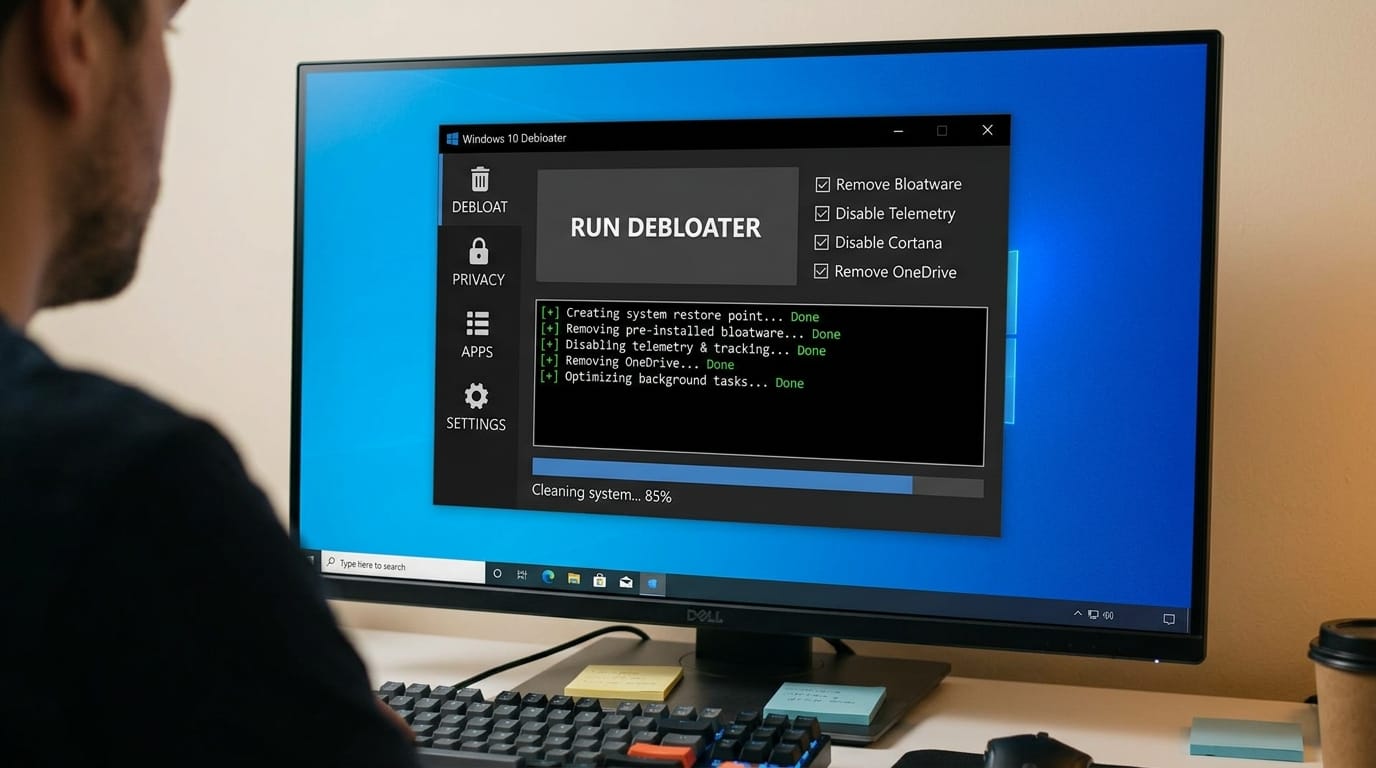
When I first got my windows 10 debloater computer a few years back, I was impressed by how smooth and fast it ran right out of the box. But after a few months of regular use, I noticed something troubling. My system was getting slower, booting took longer, and even simple tasks seemed to lag. I wasn’t downloading heavy applications or storing massive files. So what was slowing everything down? The answer was bloatware, and it completely changed how I think about operating system maintenance.
Bloatware refers to all those unnecessary programs and features that come pre-installed on Windows 10. These are applications you never asked for and probably never use. They sit there quietly in the background, consuming your precious system resources, eating up your storage space, and making your computer feel sluggish. The frustrating part is that Microsoft itself is often the culprit, bundling in apps like Candy Crush, Groove Music, and various other built-in programs that most users simply don’t want or need.
I decided to take action and learn everything I could about removing this bloatware safely. Over time, I discovered various methods ranging from manual deletion to using specialized debloater tools. What I found most interesting is that there’s actually a surprising amount of debate in tech communities about how aggressive you should be when removing these programs. Some people are conservative and only remove what they’re absolutely sure about. Others take a more aggressive approach and strip Windows down to its bare essentials. I fell somewhere in the middle after experiencing a few mishaps.
This guide is based on my personal journey and extensive research into Windows 10 debloating. I want to share what I’ve learned so you can make informed decisions about your own system. Whether you’re experiencing slowness or just want to maintain a cleaner operating system, this article will walk you through everything you need to know.
Understanding Bloatware and Its Impact on Performance
Before jumping into solutions, it’s important to understand what we’re dealing with and why it matters. Bloatware isn’t just annoying. It’s actively harmful to your system’s performance. When I first started investigating why my Windows 10 was slowing down, I ran a system diagnostics tool and discovered that several unnecessary programs were running at startup. These programs were consuming RAM, CPU resources, and even disk space that I could have used for actual work.
The impact of bloatware is often underestimated by casual users. Think of your computer’s resources like money in a bank account. Every application running in the background is essentially spending your system’s currency. When you have multiple unnecessary programs all trying to access your hard drive, processor, and RAM simultaneously, everything grinds to a halt. It’s not that your hardware is inadequate. It’s that your hardware is being forced to do things you don’t want it to do.
One of the most frustrating experiences I had was when my computer would barely respond while I was trying to do important work. Then I discovered that Windows 10 was running background updates for apps I had never even opened. It was like having invisible tenants in my computer, quietly using up bandwidth and processing power without asking permission.
The performance impact varies depending on your system specifications. If you have a high-end computer with lots of RAM and a powerful processor, bloatware might not bother you as much. But if you have a more modest machine with limited resources, bloatware can make the difference between a usable system and a frustratingly slow one. This is especially true for older computers or laptops with limited storage space.
Common Types of Bloatware in Windows 10
Let me be honest with you. When I first looked at the list of bloatware that comes with Windows 10, I was shocked at how much unnecessary stuff Microsoft includes. Here’s what I found on my system and what most Windows 10 users have:
Microsoft Store Apps are numerous and many are completely useless for most people. These include Candy Crush Saga, Microsoft Solitaire Collection, and various other games. I can’t tell you how many times I accidentally opened one of these and wondered why it was even installed.
Media Players and Entertainment Apps like Groove Music and Movies and TV are installed by default. If you use iTunes, VLC, or any other music and video player, these built-in options are redundant and consume system resources.
Feedback Hub is an application designed to send usage data back to Microsoft. While it might be useful for people who want to submit feedback to Microsoft, most users never open it. It runs silently in the background, which annoyed me when I discovered it.
Mixed Reality Portal came pre-installed even though I had no intention of using virtual reality. This application was simply taking up space on my system.
Cortana integration is deeply embedded in Windows 10. Even if you disable it, the underlying processes still consume resources. This was particularly frustrating because I prefer using Google’s search functions.
OneDrive is aggressively integrated into Windows 10. While it’s a useful service for some people, many users prefer other cloud storage solutions. The constant syncing happening in the background was affecting my system performance.
Xbox Game Pass and other gaming-related apps came pre-installed. I don’t game, so having entire applications dedicated to gaming was just wasteful.
Weather, News, and Stock Ticker apps that you might never use but that still appear in your start menu and consume resources.
Beyond these specific applications, there are also numerous background processes and system services that are enabled by default but not necessary for most people. These include various data collection services, compatibility telemetry, and other monitoring systems that Microsoft uses to gather information about how you use your computer.
Manual Methods to Remove Bloatware Safely
The most conservative approach to removing bloatware is doing it manually through Windows settings and the Control Panel. This method gives you complete control and lets you carefully decide what to remove. However, it also requires more time and attention, which is probably why many people prefer automated solutions.
When I started with manual removal, I accessed the Apps and Features section in Windows settings. This is accessible by typing “Add or remove programs” in your Windows search bar. From here, I could see installed applications, their size, and their installation date. This information helped me identify what was actually bloatware and what might be legitimate system components that I actually needed.
Before removing anything, I made sure to research each application. This is crucial because some things that might look unnecessary are actually required for Windows to function properly. I used online resources to verify whether each app was safe to remove. For instance, I learned that removing certain system packages could cause serious problems, so I was very careful about those.
For Microsoft Store apps specifically, I found that right-clicking on them in the Start Menu usually gives you an uninstall option. This is the safest way to remove these applications. I systematically went through my Start Menu and removed every Microsoft Store app I didn’t recognize or didn’t use. This alone freed up a surprising amount of space and reduced background activity.
Another manual method involves using PowerShell with administrator privileges. PowerShell is more powerful than the regular settings app and allows you to remove multiple apps at once using specific commands. However, this method requires more technical knowledge and is riskier if you don’t know what you’re doing. I used this method after I was confident about what I was removing.
The manual approach took me several hours, but it was educational and made me feel confident that I wasn’t breaking anything. By the end of the process, I had removed dozens of unnecessary applications and had a much cleaner system.
Best Automated Debloater Tools
While manual removal is thorough, automated debloater tools can do the job much faster. After my manual cleaning experience, I decided to explore what tools were available. There are several popular options, each with different approaches and levels of aggression.
O and O ShutUp+ is one of the most popular Windows 10 debloaters I found. It provides a user-friendly interface that lets you select exactly what you want to disable or remove. The tool categorizes bloatware and unnecessary services into different sections, making it easy to understand what each item does. I appreciated that it shows the risk level for each change, helping you decide what’s safe to modify.
WPD (Windows Post-Install Wizard) was another tool I tested. It’s specifically designed for post-installation cleaning and provides an automated approach to removing common bloatware. The interface is straightforward, though it requires a bit more technical understanding than some alternatives.
Winaero Tweaker offers debloating functionality alongside various other Windows optimization features. What I liked about this tool is that it provides explanations for each modification it offers, which helps you make informed decisions.
10AppsManager is a specialized tool specifically for Windows 10. It allows you to uninstall modern apps that are difficult to remove through normal Windows settings. This was particularly useful for those stubborn Microsoft Store apps that seemed to resist manual removal.
CCleaner is a well-known system cleaning tool that’s been around for years. While it’s primarily known for cleaning temporary files, it also has features for removing unwanted startup programs and applications. I’ve used CCleaner for years and trust it, though I recommend using the free version first before paying for the pro version.
When choosing an automated tool, I learned that you should always research it thoroughly before using it. Make sure the tool comes from a reputable source and that other users have verified it’s safe. I also made sure to read user reviews and check the developer’s credentials before running any tool on my system.
Important Safety Considerations When Debloating
Before I started removing anything, I learned a hard lesson about the importance of backing up your system. I made a system restore point before removing any bloatware, which turned out to be a lifesaver when I accidentally removed something I shouldn’t have. The restore point allowed me to rollback the changes easily without losing any data.
Creating a system restore point is remarkably simple. You just need to open System Protection in Windows and create a restore point before making any changes. This takes only a few minutes but provides enormous peace of mind. I cannot overemphasize how important this step is, especially if you’re removing things for the first time.
Another critical safety consideration is understanding the difference between applications and system components. Some things that look like bloatware are actually essential system files or drivers. Removing these can cause serious problems or even make Windows unusable. This is why I always research anything before removing it and why I prefer tools that clearly identify what’s safe to remove.
I also learned that some bloatware removal can cause compatibility issues with certain hardware or software. For example, if you remove certain system services related to audio, you might lose sound functionality. This is why gradual removal is better than aggressive removal. Remove things one at a time and test your system to make sure everything still works as expected.
Privacy and security considerations are also important. Some system services that look like bloatware are actually related to Windows security features. Before disabling anything related to Windows Defender or security settings, I made absolutely certain that I understood what I was doing and that I had alternative security measures in place.
What Performance Improvements to Expect
Now comes the good part. After debloating my Windows 10 system, I noticed several concrete improvements. The most obvious was the boot time. My computer used to take about forty-five seconds to fully load after pressing the power button. After removing bloatware, it took about twenty seconds. This might not sound like much, but this difference adds up over time.
The second major improvement I noticed was in overall system responsiveness. Applications launched faster, file operations were quicker, and there was less stuttering when I was multitasking. The operating system felt lighter and more responsive, almost like having a new computer again.
Storage space freed up was another benefit I hadn’t initially considered important. When I removed all the unnecessary Microsoft Store apps, built-in games, and other bloatware, I recovered several gigabytes of storage space. For people with limited hard drive space, this alone can make a significant difference.
Background activity reduction was perhaps the most satisfying improvement. Knowing that my computer wasn’t constantly running background processes I didn’t want or need gave me a sense of control over my own system. I found that the disk and CPU usage were lower when idle, which also helped reduce heat generation and fan noise.
Battery life improvement was another unexpected benefit, especially on my laptop. With fewer background processes consuming power, my laptop’s battery lasted noticeably longer on a single charge. This is particularly valuable if you’re someone who works on the go.
However, I should be honest about expectations. The improvements depend on your starting point. If you already had a relatively clean Windows 10 installation, the changes might be subtle. But if your system came completely bloated like mine did, the improvements can be quite dramatic.
Addressing Risks and Common Problems
I want to be completely honest about the risks involved with debloating. The biggest risk is removing something important and breaking your system. This happened to me once when I got a bit too aggressive with PowerShell removal commands. I accidentally removed something that caused startup issues. Fortunately, my system restore point saved me, and I was able to roll back the changes.
Another common issue is reactivation of removed apps. Microsoft sometimes reinstalls removed apps during major Windows updates. This happened to me after the Windows 10 anniversary update. I had to go through and remove the bloatware again, which was annoying but manageable.
Some users report issues with specific software compatibility after aggressive debloating. For instance, I heard about someone who removed a system component that certain enterprise software relied on. This is why testing is important after making changes.
There’s also the possibility of missing legitimate programs if you’re not careful. I had to be very cautious to distinguish between actual bloatware and programs I might actually need or want to keep. Taking time to research each item before removing it is the best insurance against this problem.
Finally, removing too much can sometimes cause Windows Update issues or driver installation problems. This is why I recommend a gradual, careful approach rather than nuclear-option debloating where you remove everything that isn’t essential.
Conclusion
After my journey into Windows 10 debloating, I can confidently say that removing bloatware from your system is worthwhile and can provide noticeable improvements. Whether you choose the manual approach or use an automated tool, the key is doing it carefully and methodically.
The performance improvements I experienced justified the time and effort spent. My computer feels faster, more responsive, and more under my control. I’m no longer running applications I didn’t ask for, and I’m not wasting system resources on things I don’t use.
My recommendation is to start conservatively. Create a system restore point, research what you’re removing, and remove things gradually. Test your system after each removal to ensure nothing important broke. If you’re uncomfortable with manual removal, use a reputable automated tool but still create a restore point first.
Windows 10 doesn’t have to come bloated. With the right approach and caution, you can create a lean, efficient system that works the way you want it to. Your computer will thank you with faster performance and more responsive behavior.
Frequently Asked Questions
Q: Is it safe to use debloater tools on Windows 10?
A: Generally yes, but with precautions. Always use reputable tools from trusted sources, create a system restore point first, and research what the tool will remove before running it. Start with less aggressive options and work your way up if needed.
Q: Will removing bloatware void my Windows warranty?
A: No. Microsoft can’t void your Windows license for removing pre-installed applications. However, if your system breaks due to removing something critical, you might have issues getting official support for that specific problem.
Q: Can I reinstall bloatware if I remove it accidentally?
A: Yes. Most Microsoft Store apps can be reinstalled through the Microsoft Store. System apps can usually be restored through system restore points or by reinstalling Windows.
Q: How much storage space can I free up by debloating?
A: This varies widely depending on what comes installed and what you remove. Most people can free up between 5 to 15 gigabytes, though some users have reported freeing up more.
Q: Will debloating Windows 10 make it run like Windows 7?
A: It will make it run better and lighter, but Windows 10’s fundamental architecture is different from Windows 7. You’ll get improvements, but not a complete transformation.
Q: What’s the safest way to debloat Windows 10 for beginners?
A: Start with manually uninstalling Microsoft Store apps through settings. These are the safest to remove. Then move to other obvious bloatware if you feel comfortable.
Q: Can debloating cause Windows Update problems?
A: Potentially, if you remove system components related to updates. This is why using reputable tools that know what’s safe to remove is important.
Q: Do I need to debloat periodically?
A: Occasionally yes, as Windows updates sometimes reintroduce removed apps. However, once you’ve done it once, maintenance debloating is usually minimal.