When I first moved into my current home about seven years ago, I noticed something unusual about our tap water. It had a slight yellow tint to it, and the smell was off. My wife complained about it while taking showers, and I noticed the kids were getting more skin irritations than usual. I thought this was normal until a neighbor mentioned they had installed a whole house water filter and the difference was night and day. I was skeptical at first because I figured water straight from the tap should be fine, right? That’s what I’d been told growing up. But after doing some research and learning more about what’s actually in our municipal water supply, I decided to investigate further.
That decision to look into whole house filtration systems changed how I think about water quality. I discovered that even though water from the municipality meets certain standards, there’s still a lot of stuff in there that you might not want flowing through your home every single day. Sediment, chlorine, various chemicals, and sometimes even bacteria can make it through to your taps. I’m not trying to scare anyone here, but once I understood what was actually happening, I became committed to finding a solution. After months of research, comparisons, and conversations with professionals, I installed a whole house filter system. The difference was remarkable, and that experience is why I want to share what I’ve learned with you.
What Are Whole House Water Filters and How Do They Work?
A whole house water filter is basically a filtration system that’s installed at the main water line where water enters your home. Instead of just filtering water at one tap like a pitcher filter or under sink system, a whole house filter treats all the water coming into your home at once. This means every faucet, shower, toilet, and appliance in your house gets filtered water. I think this is one of the coolest things about these systems, because you’re not just improving water for drinking and cooking. You’re improving water for bathing, laundry, dishwashing, and everything else.
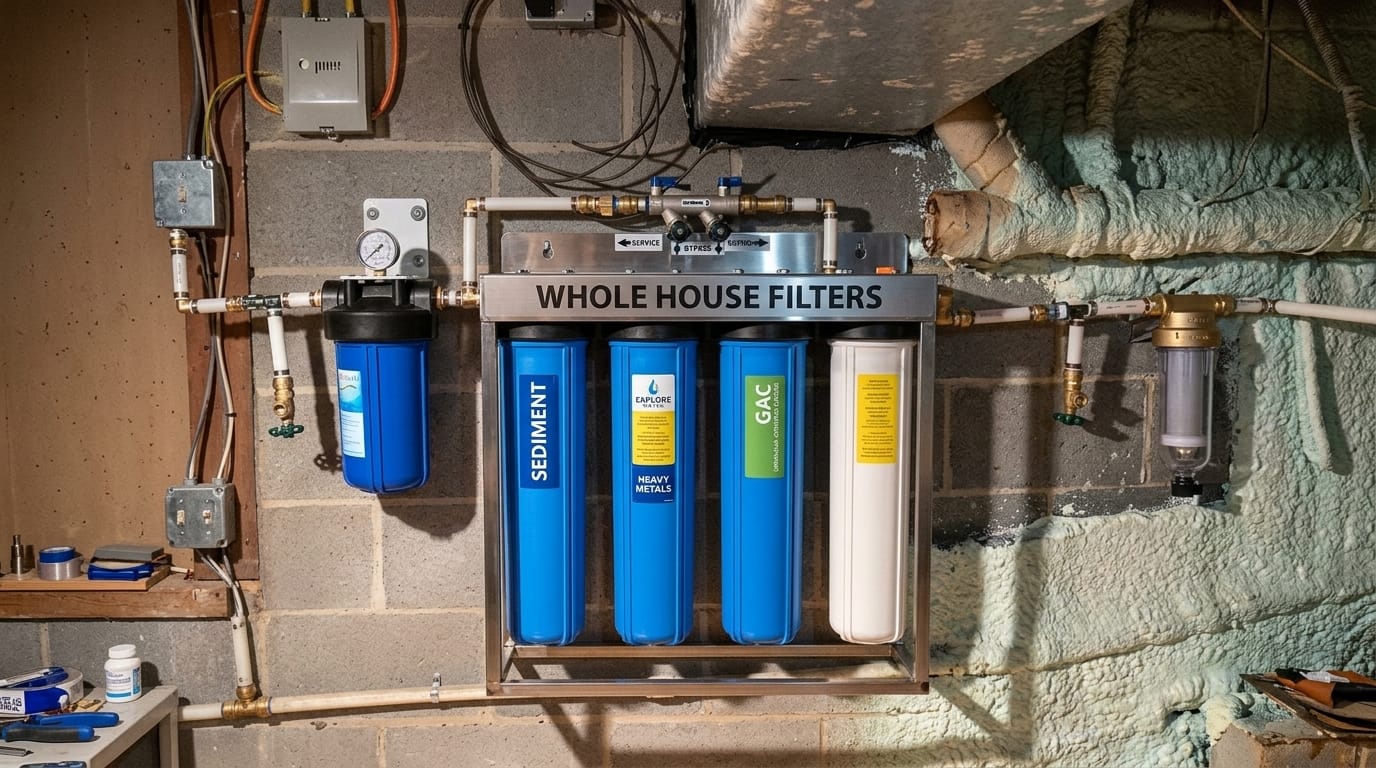
The way these systems work is pretty straightforward when you break it down. Water comes into your home through a main line. Before it gets distributed to different areas of your house, it passes through one or more filtration stages. These stages typically include a sediment filter that catches particles like dirt, rust, and debris, followed by carbon filters that remove chlorine, odors, and some chemicals. Some advanced systems add additional stages like reverse osmosis or specialized filters for specific contaminants.
When I had my system installed, the technician explained that the whole process happens automatically and continuously. You don’t have to do anything special. Water flows through the filter as you use it, and the filter media gradually fills with whatever it’s capturing. This is why replacement is necessary periodically. Without maintenance and cartridge changes, the filters become saturated and stop working effectively. But I’ll get into that more later.
Different Types of Whole House Filtration Systems
Not all whole house filters are the same, and that’s something I learned pretty quickly when I started shopping around. There are several different types, and which one is right for you depends on what contaminants you’re dealing with and your specific water quality issues.
The most common type is the sediment filter system. This one targets particles and debris. If your water comes from a well or if you notice a lot of visible particles or discoloration in your water, sediment filters are often the first line of defense. When I first tested our water, we found quite a bit of sediment, especially after heavy rains when the water would get noticeably cloudier. A sediment filter helped immediately with that issue.
Carbon filters are another popular option, and honestly, they’re probably the most versatile. These capture chlorine, which gives water that chemical taste and smell. They also reduce odors and can remove some organic compounds. Many people don’t realize how much chlorine affects their water until they use a carbon filter. After I installed mine, I noticed the water from every tap tasted fresher. My wife said the shower water didn’t make her hair feel as dry anymore.
Some homes have more complex needs, which is where multi-stage systems come in. These combine different types of filtration to handle multiple contaminants. We have sediment, then carbon, then sometimes additional stages for harder problems. If you have well water or really problematic tap water, this might be what you need.
There are also specialized systems for specific issues. Some people need water softeners to handle hard water. Others need filters specifically designed to reduce fluoride or other specific chemicals. I’ve talked to people with arsenic issues in their well water who needed specialized treatment. The point is, there’s usually a solution that matches your specific problem.
The Real Benefits You Actually Notice
When I was researching, I read a lot about the benefits of whole house filters, but I wanted to experience them myself before getting too excited about anything. Here’s what I’ve genuinely noticed since installing our system:
First, the water tastes noticeably better. I know that sounds simple, but it’s actually pretty life-changing when it’s constant throughout your home. We drink more water now because it actually tastes good. The kids don’t complain about filling their water bottles before school anymore.
Second, I’ve seen a real difference in household appliances. Before installing the filter, our washing machine seemed to need descaling more often, and our dishwasher had mineral buildup inside. After filtration, maintenance on these appliances has decreased. That’s money in my pocket right there since I’m not replacing parts as often or calling repair people as frequently.
Third, our skin and hair are genuinely better. I’m not just saying this because I spent money on the system. My wife mentioned it first, and the kids noticed too. Showers feel softer on the skin, and my wife’s hair is more manageable. She always blamed chlorine in the water, and once we filtered it out, she was right.
Fourth, there’s a peace of mind factor that’s worth something. Knowing that contaminants are being removed from the water we’re drinking, cooking with, and bathing in every single day gives me confidence in our family’s health. I can’t put a dollar value on that.
How to Choose the Right System for Your Home
This is where it gets practical, and I want to help you avoid the mistake I almost made. Before buying any system, you need to know what’s actually in your water. I tested ours and recommend you do the same. You can get a basic test kit online for pretty cheap, or your local health department might offer testing. Some municipalities also have water quality reports available online.
Once you know what you’re dealing with, you can narrow down your options. If it’s just sediment and chlorine, a standard two-stage system might work perfectly. If you have multiple contaminants, you might need something more advanced.
Consider your water source too. Well water usually needs different treatment than municipal water. I have a friend with a well who needed a much more robust system because well water can have all sorts of surprises in it.
Think about flow rate as well. If you have a large family and multiple showers running at once, you need a system that can handle that water volume. I learned this because our original research led us toward a smaller system, but the technician pointed out that with four people in our household, we needed better flow rate capacity.
Budget matters, obviously. These systems range from a couple hundred dollars to several thousand depending on what you need. Don’t just go with the cheapest option because you’ll end up replacing cartridges more often and getting less effective filtration. But you also don’t need the most expensive system if your water issues are simple.
Installation: DIY or Professional?
Here’s where I have to be honest with you. I considered installing my system myself to save money. After looking at the process and talking to a few people, I decided to hire a professional, and I’m glad I did.
Installing a whole house filter requires working with your main water line, which means you need to shut off your water supply and potentially cut pipes. If something goes wrong, you could have water damage in your home. It requires specific tools and knowledge about your home’s plumbing setup. Some homes have complex setups where installation is more difficult.
That said, if you’re comfortable with plumbing and your setup is straightforward, it’s not impossible. I’ve known people who’ve done it successfully. There are plenty of videos and guides online that can help if you go that route.
Professional installation typically costs between two hundred to five hundred dollars, but it usually comes with a warranty and peace of mind. The technician can also give you personalized advice about your specific water quality issues. For me, that consultation time was worth the cost alone.
Maintenance and Cartridge Replacement
This is something I didn’t fully appreciate until I was actually using the system. Whole house filters require regular maintenance, and understanding this beforehand is important.
Cartridge replacement frequency depends on your water quality and how much water you use. Generally, sediment filters might last three to six months, while carbon filters might last six months to a year. We replace ours about twice a year for the sediment filter and annually for the carbon. It costs us maybe a hundred fifty dollars per year total, which isn’t bad when I think about all the benefits.
The replacement process is pretty simple. You shut off the water, release the pressure, twist out the old cartridge, and twist in the new one. The first time my wife did it, she was surprised how easy it was. Now we do it together as part of our home maintenance routine.
I recommend setting a calendar reminder because it’s easy to forget. When cartridges get too full, they stop filtering effectively, and you might not notice the difference immediately. Some systems have indicator lights that tell you when replacement is needed, which is super helpful.
Cost Analysis and Long-Term Value
Let me break down the actual costs so you can make an informed decision. Our system cost around eight hundred dollars installed. Cartridge replacement runs about one hundred fifty dollars per year. That’s about eleven hundred fifty dollars over the first year and then one hundred fifty dollars annually afterward.
Compare that to what we were probably spending before. Buying bottled water alone would’ve been more than that if we bought enough for our whole family. We were also probably spending more on appliance maintenance and plumbing issues related to water quality. Plus, the costs of potential health issues from contaminated water are basically impossible to calculate.
I’ve seen statistics suggesting that whole house filters pay for themselves within a year or two through reduced bottled water purchases, fewer appliance repairs, and decreased plumbing issues. That doesn’t even account for the health and quality of life benefits.
When you break it down month by month, we’re spending less than twenty dollars monthly on filtration for our entire house. That’s less than most people spend on a couple of fancy coffee drinks per week.
Common Misconceptions About Whole House Filters
I’ve heard some objections to whole house filters that I want to address because they might be keeping you from getting one.
Some people think these systems remove essential minerals from water. That’s not entirely accurate. Most whole house filters don’t do that. They remove contaminants like chlorine and sediment, but they leave beneficial minerals in place. If you’re worried about mineral content, you can get your water tested to see if minerals are actually an issue.
Others believe that filters remove all the bad stuff and make water completely pure. That’s not realistic. Whole house filters improve water quality significantly, but they’re not creating distilled water. They’re removing common contaminants that cause taste, odor, and quality issues. For extremely pure water, you might need additional treatment, but for most homes, whole house filtration is more than adequate.
Some people think they’re too complicated to maintain. As I mentioned, cartridge replacement is actually quite simple. It’s less complicated than maintaining a car or most other home systems.
Real-World Experience and Personal Observations
I want to share some specific examples from my own experience and from conversations I’ve had with others who’ve installed these systems.
My neighbor installed a system specifically because his wife’s eczema flared up from showering in unfiltered water. After the installation, her symptoms improved noticeably. She’s not saying it cured her eczema, but the filtered water definitely helped.
My brother-in-law had persistent issues with his water heater getting mineral buildup and failing prematurely. After installing a filter, his water heater has been problem-free for three years. He’s saved thousands in replacement costs.
I know a couple with a well who discovered their water had high levels of iron. A specialized filter solved the problem, and now their water runs clear instead of having that rusty tint.
These aren’t miracle stories, but they’re real improvements in quality of life and household finances that come from proper water filtration.
Whole House Filters vs. Other Filtration Methods
You might be wondering why you should choose a whole house system over other options like pitcher filters, faucet filters, or reverse osmosis systems.
Pitcher filters are cheap and easy but only filter a small amount of water at a time. You have to remember to refill them and replace cartridges frequently. They’re helpful but not a comprehensive solution.
Faucet or refrigerator filters treat water at single points. They’re better than nothing, but they don’t treat water for your shower, laundry, or other needs.
Reverse osmosis systems provide very pure water but are expensive, require significant space, and can waste water. They work well for drinking water specifically, but using them for your entire house isn’t practical.
A whole house system treats everything at once, makes all water better, and is more cost-effective in the long run. It’s the most comprehensive solution for most homes.
Conclusion and Action Steps
After seven years with our whole house filter system, I can confidently say it’s been one of the best home improvements we’ve made. It’s not flashy like a new kitchen or a renovated bathroom, but it impacts our daily lives more than many upgrades do.
If you’re considering installing a whole house filter, start by testing your water. Contact your local health department or order an online test kit. Once you know what you’re dealing with, research systems that address your specific issues. Compare prices and features, then decide whether to DIY or hire a professional. Most importantly, don’t put it off indefinitely. Your family’s water quality affects their health every single day.
FAQ Section
Q: How long does a whole house water filter system last?
A: The system itself typically lasts ten to twenty years, but cartridges need replacement every few months to a year depending on water quality.
Q: Does a whole house filter reduce water pressure?
A: Quality systems shouldn’t significantly reduce pressure, but very clogged cartridges might. This is why regular maintenance matters.
Q: Can I install a whole house filter on well water?
A: Yes, well water often benefits more from filtration than municipal water. Well water typically has more sediment and other contaminants.
Q: Do whole house filters remove fluoride?
A: Most standard carbon filters don’t remove fluoride effectively. You’d need a specialized filter if fluoride removal is important to you.
Q: What’s the difference between point of entry and point of use filters?
A: Point of entry (whole house) treats all water entering your home. Point of use treats water at specific faucets. Whole house is more comprehensive.
Q: How often should I replace cartridges?
A: Typically every three to twelve months depending on cartridge type, water quality, and household water usage.
Q: Will a whole house filter help with hard water?
A: A whole house filter can help with some hardness issues, but if you have very hard water, you might need a water softener system in addition to filtration.
Q: Is professional installation necessary?
A: It’s not absolutely necessary if you’re handy with plumbing, but professional installation provides warranty protection and expert setup.