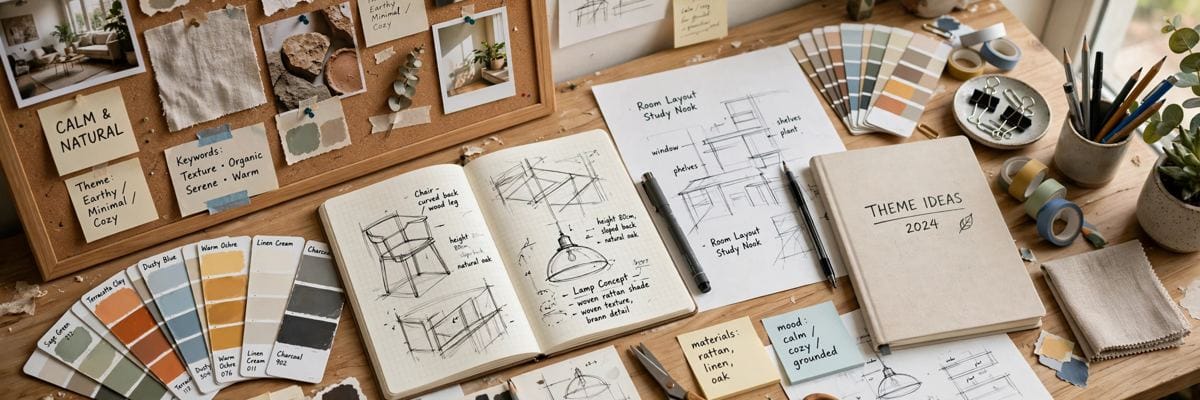
What is t h e m e? This guide answers what is t h e m e in writing, design, software and events, and explains what is t h e m e for parties and projects.
IN THIS GUIDE
- What is t h e m e? The short answer
- Why the letters are spaced out
- Theme as a word and a concept
- Theme in writing and storytelling
- Theme in design and visual style
- Theme in software, apps and websites
- Theme for parties and events
- Theme vs. topic vs. motif: what is the difference?
- How to choose the right theme
- Common mistakes people make with themes
- Frequently asked questions
- Conclusion
The Short Answer: What Is T H E M E
The short answer: “t h e m e” is the word “theme” written with spaces between its letters. There is no widely recognised product, organisation or standard acronym called T H E M E that a general searcher would need to know about, and this guide does not invent one. When people type the letters separately, they are usually dealing with a typing quirk, a voice-to-text error, a search suggestion, a spelling exercise, or a screen that has broken a word apart for display.
Once the spaces are removed, the meaning is straightforward. A theme is a central idea, subject, style or unifying pattern that runs through something. In a story, the theme is the idea the story explores. In a room, a website or a party, the theme is the look, mood or subject that ties the choices together. The word is used in many different fields, but the core idea stays the same: a theme gives separate parts a shared direction, so the whole feels intentional rather than random.
That shared direction is why the word matters so much. Without a theme, a story can wander, a design can clash, and an event can feel like a collection of unrelated decisions. With a theme, each choice has a reason behind it. A colour, a song, a character or a decoration is not there by accident; it supports the same central idea. This guide walks through each common use of the word, explains how themes work in practice, and helps you choose one that fits what you are doing.
Practical tip: If you arrived here because you saw “t h e m e” somewhere specific, such as a worksheet, a game, a settings menu or a piece of software, look at the surrounding words for context. The nearby heading or menu label will usually tell you which kind of theme is meant: a story theme, a visual theme, a party theme or a software theme.
Why the Letters Are Spaced Out
Spaced-out letters are more common than they first appear, and they usually have a simple explanation. One common cause is a search engine or a keyboard that has inserted spaces while a person was typing slowly, dictating, or using an on-screen keyboard. Another is a learning activity: teachers and language apps sometimes present words letter by letter so learners can practise spelling, pronunciation or recognition. A third cause is formatting. Some websites, posters and social media posts space letters out for visual emphasis, so a word reads as a design choice rather than ordinary text.
Voice typing can also produce this effect. If a speaker pauses between letters, or if the software mishears a spelled-out word, the result can look like “t h e m e” instead of “theme.” The same thing can happen when text is copied from a PDF, a scanned document or an image, where the original spacing has been preserved in an unusual way. In each of these cases, the spaced version is not a different word; it is the same word, displayed differently.
It is also worth being honest about ambiguity. Search terms with spaced letters can sometimes point to several different things, and a responsible guide should not pretend otherwise. Here, the most plausible and most useful reading is simply “theme.” That reading explains the search, matches the letters exactly, and leads to practical information that a searcher can actually use. If you meant something else entirely, such as a brand name or a code that happens to share these letters, the context where you saw it will be the best clue, because the letters alone do not identify a single product or organisation.
Practical tip: When you search with spaced letters and get unclear results, try searching the unspaced word together with one extra word for context, such as “theme story,” “theme party” or “theme website.” That one extra word usually narrows the results to the meaning you need.
Theme as a Word and a Concept
At its simplest, a theme is a recurring idea or pattern. The word comes from an old Greek root connected to something placed or set down, and in modern English it has kept that sense of a foundation: a theme is what a piece of work is built around. It is not necessarily the plot, the subject or the decoration. It is the thread that connects them.
Think of a theme as an answer to the question, “What is this really about?” A film about a long journey might really be about courage, or about home, or about growing up. A bedroom decorated in soft blues and natural wood might really be about calm. A birthday party with maps, compasses and travel games might really be about adventure. In each case, the theme is the idea underneath the surface details, and the details are chosen because they express that idea.
Themes can be broad or narrow. “Love,” “freedom” and “friendship” are broad themes that appear in countless stories, songs and designs. A narrower theme might be “learning to ask for help” or “a quiet coastal morning.” Broad themes are flexible and easy to recognise, but they can feel vague if nothing specific supports them. Narrow themes are more distinctive, but they need to be carried through consistently, or they fade into the background. The best choice depends on the purpose: a school essay may suit a broad theme, while a wedding or a brand design may suit something more specific.
A theme can also be stated directly or left for the audience to discover. Some writers state their theme openly, through a character’s words or a narrator’s comment. Others let the theme emerge through repeated images, choices and outcomes, trusting the reader or viewer to notice the pattern. Neither approach is automatically better. A stated theme is clearer, but it can feel heavy-handed if it is repeated too often. An implied theme feels more natural, but it risks being missed if the pattern is too faint. Good work usually finds a balance, giving enough clues that the theme is recognisable without spelling it out at every turn.
Theme in Writing and Storytelling
In writing, a theme is the central idea a story explores. It is different from the plot, which is what happens, and from the subject, which is what the story is about on the surface. A story about two friends opening a bakery might have the theme of trust, or ambition, or starting over. The plot gives the events; the theme gives those events meaning.
Writers often work with more than one theme, but one is usually dominant. A novel might explore family as its main theme, with honesty and forgiveness as supporting themes. Short stories often focus on a single theme, because there is less room to develop several ideas. Essays and speeches use themes too, even when they are not telling a fictional story. A personal essay about moving to a new city might be organised around the theme of belonging, with each anecdote showing a different side of that idea.
Readers find themes by looking for patterns. What ideas come up again and again? What choices do characters face repeatedly? What images or phrases recur? What changes by the end, and what does that change suggest? These questions are more useful than trying to guess a single “correct” theme, because a good story can support more than one reasonable reading. Teachers and critics may disagree about a story’s theme, and that disagreement is normal; it shows the story has enough depth to reward different interpretations.
Practical tip: If you are writing a story and struggling to name its theme, finish a draft first and then ask what the main character learns, loses or changes their mind about. That change often points directly to the theme, and you can then strengthen it in revision by adjusting scenes, dialogue and imagery to support it.
For students, identifying a theme is a common assignment, and the clearest answers are usually phrased as full ideas rather than single words. “Friendship” alone is a topic, not a theme. “Friendship requires honesty, even when honesty is difficult” is a theme, because it says something about friendship. That distinction — between naming a subject and making a claim about it — is one of the most useful things to learn about themes, and it applies well beyond school assignments.
Theme in Design and Visual Style
In design, a theme is the consistent visual style that ties a space, a product or a set of materials together. It shows up in colour choices, typefaces, shapes, textures, images and spacing. A designer who chooses a theme is making a promise to the viewer: these elements belong together, and they will keep behaving in the same way throughout the design.
Interior design offers a clear example. A coastal theme might use pale blues, sandy neutrals, natural wood and light fabrics. A modern minimal theme might use clean lines, a limited palette and open space. The theme does not dictate every single object in the room, but it gives a filter for decisions. When a new item is considered, the question is whether it fits the theme or fights against it. Items that fit strengthen the room; items that clash weaken it, even if they are attractive on their own.
Graphic design works the same way. A poster series, a presentation or a brand identity usually follows one theme across all its pieces, so the audience recognises the work even before reading it. That consistency is why themes matter commercially as well as aesthetically. A business that changes its colours, fonts and imagery with every post looks unsettled. A business that keeps a steady theme looks organised and trustworthy, because the audience learns what to expect.
It is important to note that a design theme is not the same as decoration for its own sake. Decoration adds beauty; a theme adds meaning and order. A room full of attractive objects with no shared idea can still feel messy, while a room with a clear theme can feel calm even with very few objects. The theme is doing quiet work in the background, guiding the eye and shaping the mood.
Theme in Software, Apps and Websites
In software, a theme usually means a set of visual settings that changes how an app or website looks. A light theme uses bright backgrounds and dark text; a dark theme uses dark backgrounds and light text. Many apps also offer colour themes, where the user can pick an accent colour, or seasonal themes, where the appearance changes for a holiday or special event.
Website themes work at a larger scale. A website theme, sometimes called a template, controls the layout, colours, fonts, menus and overall structure of a site. Changing a theme can transform a site’s appearance without changing its written content. That is why website owners often talk about “installing a theme” or “switching themes” when they redesign. The content stays the same, but the presentation changes, and that change can affect how easy the site is to read and navigate.
Themes in software also raise practical questions about readability and comfort. A dark theme can feel easier on the eyes in a dim room, while a light theme can feel clearer in bright daylight. Some users choose a theme for accessibility, because higher contrast or larger text helps them read more comfortably. Others choose a theme simply because they prefer how it looks. Either way, the best software themes keep the interface usable: buttons remain recognisable, text remains readable, and important information does not disappear into the background.
Practical tip: If you are choosing a theme for a website or app you run, test it on a phone as well as a computer, and check it in both bright and dim light. A theme that looks elegant on a large screen can become hard to read on a small one, and readability matters more than novelty.
Theme for Parties and Events
For parties and events, a theme is the subject or style that shapes the invitations, decorations, food, music, activities and sometimes even the dress code. Common party themes include travel, the seaside, a particular decade, a favourite film or book, a season, or a colour. The theme gives guests a sense of what to expect, and it gives the host a framework for planning.
A good party theme is specific enough to guide decisions but flexible enough to allow variety. “Travel” is a workable theme because it suggests maps, passports, foods from different places and journey games, while still leaving room for personal touches. A theme that is too narrow, such as a single scene from a single film, can be harder to plan and may leave guests unsure how to participate. A theme that is too broad, such as “fun,” gives almost no guidance at all, because almost anything could fit.
Event themes also work for weddings, school events, fundraisers and community gatherings. In those settings, the theme often carries an emotional purpose as well as a visual one. A fundraiser theme might highlight the cause it supports. A school event theme might celebrate a milestone or a shared value. The decorations matter, but the theme is also expressed through speeches, music, activities and the way guests are welcomed. When all of those elements point in the same direction, the event feels coherent and memorable.
Planning around a theme also helps with budgeting, because it narrows the range of choices. Instead of considering every possible decoration or activity, the host can ask whether each option fits the theme and whether it adds something the event does not already have. That simple filter prevents duplicate purchases and keeps the event focused, which is especially useful when time and money are limited.
Theme vs. Topic vs. Motif: What Is the Difference?
These three words are often confused, and sorting them out makes the idea of a theme much clearer. A topic is a subject: what something is about on the surface. A theme is an idea or claim about that subject: what the work says about it. A motif is a repeated element, such as an image, sound, phrase or object, that appears more than once and helps to express the theme.
Consider a story about a lighthouse keeper. The topic is lighthouse keeping. A motif might be the repeated image of a light turning in the dark, appearing at key moments in the story. The theme might be that guiding others requires staying steady through difficult conditions. The topic names the subject, the motif provides the recurring detail, and the theme gives the meaning. All three work together, but they are not interchangeable.
This distinction is useful for writing, for study and for design. If someone asks for the theme of a book and you answer with a topic, the answer will feel incomplete, because it names the subject without saying anything about it. If you answer with a motif, the answer will feel too narrow, because it points to one detail rather than the whole idea. A strong theme statement is usually a full sentence that could be debated or explored, not just a single word or image.
A Simple Comparison
| Concept | What it answers | Example with a lighthouse story |
|---|---|---|
| Topic | What is this about? | Life as a lighthouse keeper. |
| Motif | What keeps repeating? | A light turning in the dark. |
| Theme | What does it say about the subject? | Guiding others requires steadiness in hard times. |
Practical tip: When you are unsure whether you have found a theme or just a topic, try turning your answer into a sentence. If you cannot add a verb and a claim, you probably have a topic. Add what the work suggests about that topic, and you are much closer to a theme.
How to Choose the Right Theme
Choosing a theme starts with purpose. Ask what the story, design, website or event is for, and who it is for. A theme for children will usually be brighter, simpler and more playful than a theme for a formal business event. A theme for a personal blog can be more experimental than a theme for a company website, where clarity and trust matter most. Purpose and audience narrow the options before any colours or decorations are chosen.
Next, consider the feeling you want to create. Themes carry moods: calm, excitement, nostalgia, elegance, adventure, humour, seriousness. Naming the mood first makes later choices easier, because each option can be tested against it. A calm theme will favour soft colours, gentle music and uncluttered layouts. An adventurous theme will favour bold colours, energetic music and dynamic images. When the mood is unclear, the result often looks busy, because competing moods are pulling the design in different directions.
Then, test the theme for staying power. A theme should work across the whole project, not just in one striking moment. Ask whether it can stretch across an opening and a conclusion, across a homepage and a contact page, or across invitations and a farewell. If a theme only works for one scene or one decoration, it may be better as a detail within a broader theme, rather than as the theme itself. A theme that survives this test will make the project feel complete rather than patched together.
Finally, keep the theme simple enough to remember. If you cannot explain it in one sentence, other people — readers, guests, visitors or collaborators — will struggle to follow it too. A one-sentence theme statement is a practical tool, not just a definition. Write it down, share it with anyone helping you, and return to it whenever a new decision comes up. That sentence becomes the standard against which new ideas are measured.
Common Mistakes People Make with Themes
One common mistake is choosing too many themes at once. A story that tries to explore five major ideas, a website that mixes three visual styles, or a party that combines four unrelated subjects will usually feel scattered. It is better to choose one main theme and let other ideas support it, rather than giving every idea equal weight. Supporting ideas add richness; competing themes create confusion.
Another mistake is stating the theme too often or too bluntly. In writing, this can make a story feel like a lesson rather than a story. In design, it can make a theme feel like a costume rather than a style, because every element is shouting the same idea. A theme works best when it is present but not exhausting: repeated enough to be recognised, but varied enough to stay interesting. Small, thoughtful details often carry a theme more effectively than large, repeated slogans.
A third mistake is choosing a theme that does not fit the audience or the occasion. A playful theme may feel wrong at a serious event, while a formal theme may feel stiff at a relaxed gathering. A dark, dramatic website theme may suit a creative portfolio but feel unwelcoming for a community service. Fit matters more than personal taste alone, because a theme is a form of communication. It should speak to the people who will encounter it, not only to the person who chose it.
A fourth mistake is confusing a theme with a trend. Trends change quickly, and a theme chosen only because it is fashionable can feel dated within a short time. A theme rooted in purpose, audience and mood lasts longer, because it is based on what the project needs rather than what is currently popular. Trends can inspire details within a theme, but they make a shaky foundation for the theme itself.
Practical tip: Before committing to a theme, live with it for a short while. Sketch it, describe it to someone else, or test it in a small part of the project. If it still feels right after that trial, it is probably a good choice. If it already feels tiring or confusing, it is better to adjust it now than to rebuild the whole project later.
Frequently Asked Questions
Is “t h e m e” a different word from “theme”?
No. If you ask what is t h e m e, the answer is that the spaced version contains the same five letters in the same order, and the most reasonable reading is that it is “theme” with spaces added by typing, dictation, formatting or copying. It is not a separate dictionary word.
What is the simplest definition of a theme?
A theme is a central idea, subject or style that runs through a story, design, piece of software or event and ties its parts together. It answers the question, “What is this really about, or what feeling and idea does it share throughout?”
Can something have more than one theme?
Yes. Many stories, designs and events have one main theme and several supporting themes. The main theme should still be clear, though, or the work can feel unfocused. Supporting themes work best when they relate to the main theme rather than competing with it.
How is a theme different from a plot?
Plot is what happens: the sequence of events. Theme is what those events mean: the idea they explore. Two stories can share a similar plot but have very different themes, because the characters, choices and outcomes point to different ideas.
Do I need a theme for a small project?
Not every small project needs a formal theme statement, but even a simple project benefits from a shared idea. A short post, a single room or a small gathering will feel more coherent if its choices share a colour, mood or subject, even if nobody names the theme out loud.
What makes a good party theme?
A good party theme is easy to understand, easy for guests to join in with, and flexible enough to guide invitations, decorations, food, music and activities without forcing every detail. It should also fit the guests, the occasion and the budget.
Conclusion
What is t h e m e? “t h e m e” is, in almost every practical case, simply “theme” with spaces between its letters. Once that is clear, the word opens up into a useful and flexible idea: a central theme that gives a story meaning, a design consistency, a piece of software a recognisable look, and an event a shared atmosphere. The fields are different, but the principle is the same. A theme turns separate choices into a coherent whole, and that coherence is what makes work feel intentional, memorable and easy to understand.
If you take one idea from this guide, let it be this: start with purpose and mood, choose one main theme you can explain in a sentence, and let every later choice support it. Whether you are writing, designing, planning an event or customising an app, that approach will save time, reduce confusion and produce a result that feels finished rather than assembled. And if you ever meet the spaced spelling again, you will know exactly what it means — and why the spaces do not change the idea underneath them.
For more general guides on everyday topics, you might also enjoy browsing the general lifestyle articles on our sister site, which cover a wide range of practical subjects in the same plain style.
Read Also: T Shirt Hulkamania (2026 Guide): Styles, Sizing & How to Wear It