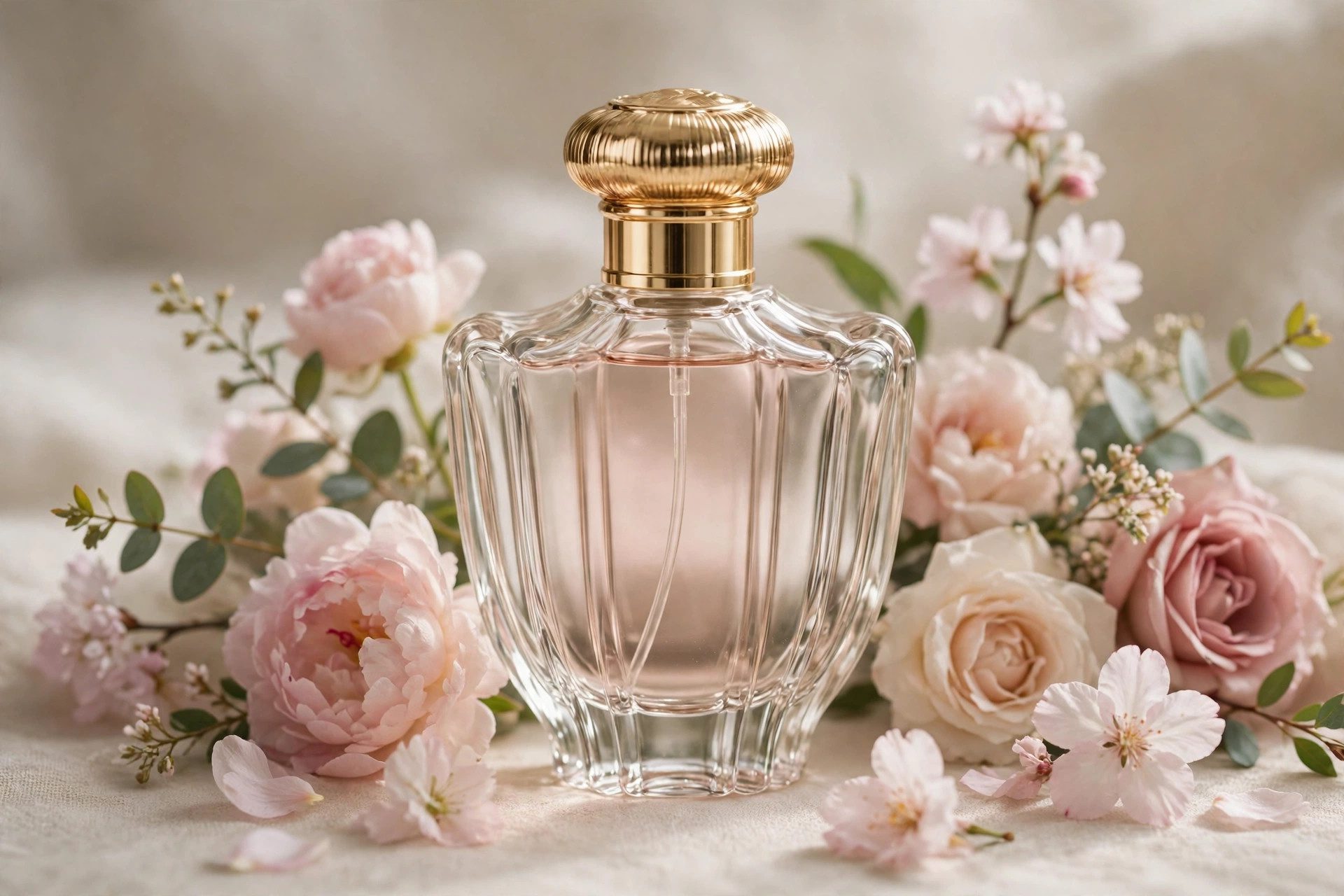
The Short Answer
The short answer: a floral women’s perfume is any fragrance built mainly around flower notes, and the right one for you depends less on the brand name and more on which flowers you enjoy, how strong you like a scent to be, and where and when you plan to wear it. A light peony scent that feels perfect on a warm afternoon can disappear completely by evening, while a deep jasmine and rose blend that feels beautiful for a dinner out can feel far too heavy at the office.
Knowing the difference before you buy saves you from a bottle that sits untouched on the shelf.
That sounds obvious, but floral women’s perfume shopping rarely works that way in practice. Most of us spray something in a store, like it for about thirty seconds, and then either buy it on impulse or walk away confused because every tester starts to smell the same after the third or fourth try.
The trick is to slow the process down just a little. Understand what is actually in the bottle, give a scent time to settle on your skin, and think about your real life rather than an imagined one. This guide walks through all of that in plain language, so you can choose with confidence instead of guesswork.
What Counts as a Floral Women’s Perfume?
Floral is the largest and oldest fragrance family, and it covers a very wide range. At one end you have single-flower scents, sometimes called soliflores, that aim to smell like one bloom above all else: a rose, a lily, a gardenia.
At the other end you have full bouquets, where several flowers are blended together along with fruits, woods, or soft musks to create something that does not exist in nature at all. Both count as floral, and neither is better than the other. They simply suit different tastes and different moments.
It helps to know that a floral women’s perfume is not automatically light, sweet, or old-fashioned. Those are common assumptions, and they put a lot of people off before they have even tried anything. A rose scent can be fresh and green, like walking past a rose bush after rain, or it can be dark and velvety, closer to dried petals and spice. Jasmine can smell clean and almost soapy, or it can smell warm, heady, and almost tropical.
Lavender, which many people think of as a sleepy, herbal smell, can be bright and crisp in a daytime fragrance. The flower on the label tells you only part of the story. The way it is blended, and what it is blended with, matters just as much.
Another useful distinction is between a floral women’s perfume that smells like flowers and a floral women’s perfume that smells like a garden. Garden-style scents often include green leaves, stems, and a bit of earthiness alongside the blooms, which makes them feel more natural and less polished. Bouquet-style scents tend to be smoother and more rounded, with the edges softened by musk or woods.
If you have ever tried a floral women’s perfume and thought it smelled too much like a soap or a candle, chances are it was a polished bouquet style, and a greener, fresher floral might suit you far better.
The Main Floral Notes, and What Each One Smells Like
Not every flower behaves the same way in a bottle, and learning a handful of the most common notes will make shopping much easier. You do not need to memorise a long list. Start with these, notice which ones you keep coming back to, and build from there.
Rose is the classic. Depending on the blend it can be fresh, jammy, powdery, or spicy, and it pairs well with almost everything, which is why it shows up so often. Jasmine is warmer and richer, with a sweetness that can feel almost creamy. It is a common choice for evening scents because it has real presence without needing to be loud. Peony is lighter and airier, often described as soft and slightly rosy, and it tends to suit people who want something pretty without a strong trail.
Lily is clean and a little green, with a cool elegance that works well in warmer weather. Gardenia is creamy and lush, and it can feel quite full, so a little usually goes a long way. Lavender brings a fresh, herbal brightness, while violet adds a powdery, slightly sweet softness that many people associate with classic, gentle fragrances.
Practical tip: when you test a floral women’s perfume, pay attention to the note you notice after the first few minutes, not the first spray. The opening is often the brightest and most attention-grabbing part, but it fades quickly. The flower heart underneath is what you will actually live with for hours.
Comparing Popular Floral Styles
The table below gives a rough sense of how the most common floral styles tend to behave. Keep in mind that every brand blends differently, so treat this as a starting point for testing, not a rule.
| Floral style | General character | Best suited to | Strength and presence |
|---|---|---|---|
| Fresh rose and peony | Light, clean, airy | Daytime, office, warm weather | Usually soft to moderate |
| Jasmine and tuberose blends | Warm, rich, creamy | Evenings, cooler weather, special occasions | Often moderate to strong |
| Lavender and violet blends | Fresh, powdery, calm | Everyday wear, relaxed settings | Usually soft to moderate |
| Gardenia and lily bouquets | Lush, smooth, elegant | Dinners, events, formal days | Often moderate to strong |
| Green garden florals | Natural, leafy, crisp | Outdoor days, spring and summer | Usually soft to moderate |
If you already know you dislike strong scents, start at the lighter end of this table and work your way up only if you want more presence. If you find that light scents vanish on you within an hour, a richer jasmine or gardenia blend may be a better match than buying a bigger bottle of something faint.
How a Floral Women’s Perfume Is Built
Perfume is usually described in three layers, and understanding them explains why a scent changes so much over the course of a day. The top notes are what you smell first: often citrus, light fruits, or green leaves. They are bright and immediate, but they fade fastest, sometimes within the first hour.
The heart notes come next, and in a floral women’s perfume this is where the flowers live. This is the main character of the scent, and it is what other people will mostly notice on you. The base notes arrive last and linger longest: soft woods, musk, vanilla, or amber-style warmth that hold the flowers in place and give the scent its staying power.
This structure is why testing matters so much. A floral women’s perfume that smells sharp or overly sweet in the first minute can settle into something lovely once the top notes fade. Equally, a floral women’s perfume that smells wonderful on a paper strip in the store can turn flat or strange on your skin once your body warmth brings out the base notes. Skin chemistry is real, though it is often overstated.
Your skin does not completely transform a floral women’s perfume, but warmth, natural oils, and even what lotion you used that morning can shift how a scent comes across. That is why the same floral women’s perfume can smell slightly different on two people, and why testing on your own skin beats testing on paper every time.
Practical tip: spray once on your wrist, not all over, and then leave it alone. Rubbing your wrists together is a common habit, but it crushes the top notes and can make the scent smell flatter than it should. Let it dry naturally and check back after an hour, then again after several hours, before deciding.
Choosing a Floral Women’s Perfume for Your Real Life
Start with when you will wear it most. A daily office scent should be something you can wear close to your own skin without filling a room, while a scent for evenings out can afford to have more presence. Think about the season too. Lighter floral women’s perfumes tend to feel more comfortable in heat, when warmth makes any scent project more strongly, while richer floral women’s perfumes often feel more at home in cooler weather, when they have room to unfold slowly.
You do not need a different perfume for every occasion, but having a sense of your main use will narrow the choices fast.
Next, think about strength, which is usually shown by terms like eau de toilette and eau de parfum. In general, an eau de parfum is more concentrated and tends to last longer than an eau de toilette of the same scent, but the difference varies a lot from one fragrance to another.
Do not buy purely on that label. A light eau de parfum can still be softer than a punchy eau de toilette. Use concentration as a rough guide, then trust your own nose.
Budget is the other honest factor. A higher price does not guarantee you will love a scent, and some very pleasant floral women’s perfumes sit at modest prices.
What usually changes with price is the quality and complexity of the ingredients, and sometimes the packaging, rather than whether the scent suits you personally. If you are trying a new floral family for the first time, a smaller bottle or a sample set is a sensible way to explore without committing to a large bottle you may not finish.
How to Make a Floral Women’s Perfume Last Longer
Longevity is the complaint that comes up most often with a floral women’s perfume, and a few simple habits genuinely help. First, apply to warm points where blood flow is close to the skin, such as the wrists, the neck, and behind the ears, and let the scent settle there rather than spraying into the air and walking through it. Second, moisturise first. A floral women’s perfume tends to hold better on hydrated skin than on very dry skin, so an unscented lotion applied beforehand gives the scent something to cling to.
Third, do not keep reapplying every hour out of habit. You stop noticing your own floral women’s perfume much faster than other people do, a normal effect called nose fatigue, so if you can still smell it faintly after several hours, others probably can too.
Storage matters as well. Heat, light, and humidity break perfume down over time, which is why a bottle kept on a sunny windowsill or in a steamy bathroom can start to smell off long before it is empty. A cool, dark spot, such as a drawer or a closed cabinet, keeps it in better shape.
Keep the cap on when you are not using it, and avoid shaking the bottle. None of this will turn a light scent into a long-lasting one, but it will help you get the full life out of the bottle you already own.
Practical tip: if a floral women’s perfume fades too fast on you, try applying it to clothing as well as skin, but test on an inside seam first. Some scents can mark delicate fabrics, and light-coloured silk in particular is best left alone.
Common Mistakes Worth Avoiding
The most common mistake is testing too many scents at once. After three or four testers, your nose is tired and everything starts to blur together, which is how people end up buying something they do not actually like. Coffee beans, which some stores offer between tests, can help reset your nose briefly, but they are not magic.
A better approach is to test two or three scents in one visit, note which ones you liked, and come back another day for the rest. If you can get samples to take home, even better, because living with a scent for a full day tells you far more than a few minutes in a store.
Another mistake is judging a perfume only by its first spray, or only by how it smells on someone else. A friend’s favourite floral women’s perfume may smell wonderful on her and completely different on you, and that is not a flaw in either of you.
It is simply how scent, warmth, and personal taste interact. Finally, avoid buying a large bottle of an unfamiliar scent just because it is on offer. A bargain is only a bargain if you actually wear it. Start small, wear it several times, and only then commit to the bigger size.
Frequently Asked Questions
Why does my floral women’s perfume smell different on me than in the store?
Because the store test is usually on paper or on skin that has just been sprayed, while the scent you live with is the settled version after the top notes fade and your skin warmth brings out the heart and base notes. Lotions, body chemistry, and even the temperature of the room all play a part. Testing on your own skin and waiting a few hours gives you the truest picture.
How many sprays should I use?
For most everyday situations, a small number is enough, often two to four sprays depending on the strength of the scent. Start with fewer than you think you need, because you can always add one more spray later, but you cannot take a spray back. For a lighter floral women’s perfume, you may want one extra spray compared with a rich evening blend. If people regularly comment that they can smell you from across the room, you are probably using too much.
Do floral women’s perfumes suit all ages?
Yes, in the sense that there is no age limit on enjoying flowers. What changes with age is usually taste rather than suitability. Some people move from very sweet floral women’s perfumes toward greener or woodier blends over time, while others do the opposite. Choose by what you enjoy and what fits your daily life, not by what a label or an advertisement suggests your age group should wear.
Can I wear floral women’s perfume to work?
In most workplaces, yes, provided you keep it light. A soft rose, peony, or violet scent worn close to the skin is usually fine. Strong, heady floral women’s perfumes are better saved for evenings, especially in shared offices or close meeting rooms where a heavy scent can be distracting for colleagues. When in doubt, go lighter and let people notice the scent only when they are near you.
How long does an opened bottle of floral women’s perfume last?
An opened bottle of floral women’s perfume kept in a cool, dark place will usually stay pleasant for a good while, often a few years, though lighter citrus-led floral women’s perfumes can fade sooner than richer blends. If a scent starts to smell sharp, sour, or noticeably different from when you bought it, it has probably turned and is best replaced. Keeping it away from heat and light is the simplest way to slow that process down.
Conclusion
Choosing a floral women’s perfume does not have to be a guessing game. Once you know which flowers you enjoy, how the layers of a scent unfold, and how strong you want it to be for your everyday life, the shelves stop looking overwhelming and start looking like a short list.
Test slowly, give each scent a full day on your skin before deciding, and trust your own nose over trends, packaging, or someone else’s favourite. The best floral women’s perfume is not the most popular one or the most expensive one. It is the one you reach for without thinking, the one that feels like you on an ordinary day, and the one you will actually finish.
Start with a small bottle or a sample, wear it in your real routine, and let that experience, not a first impression in a store, make the decision.
Read Also: C&S Wholesale Grocers Business Explained (2026 Guide)