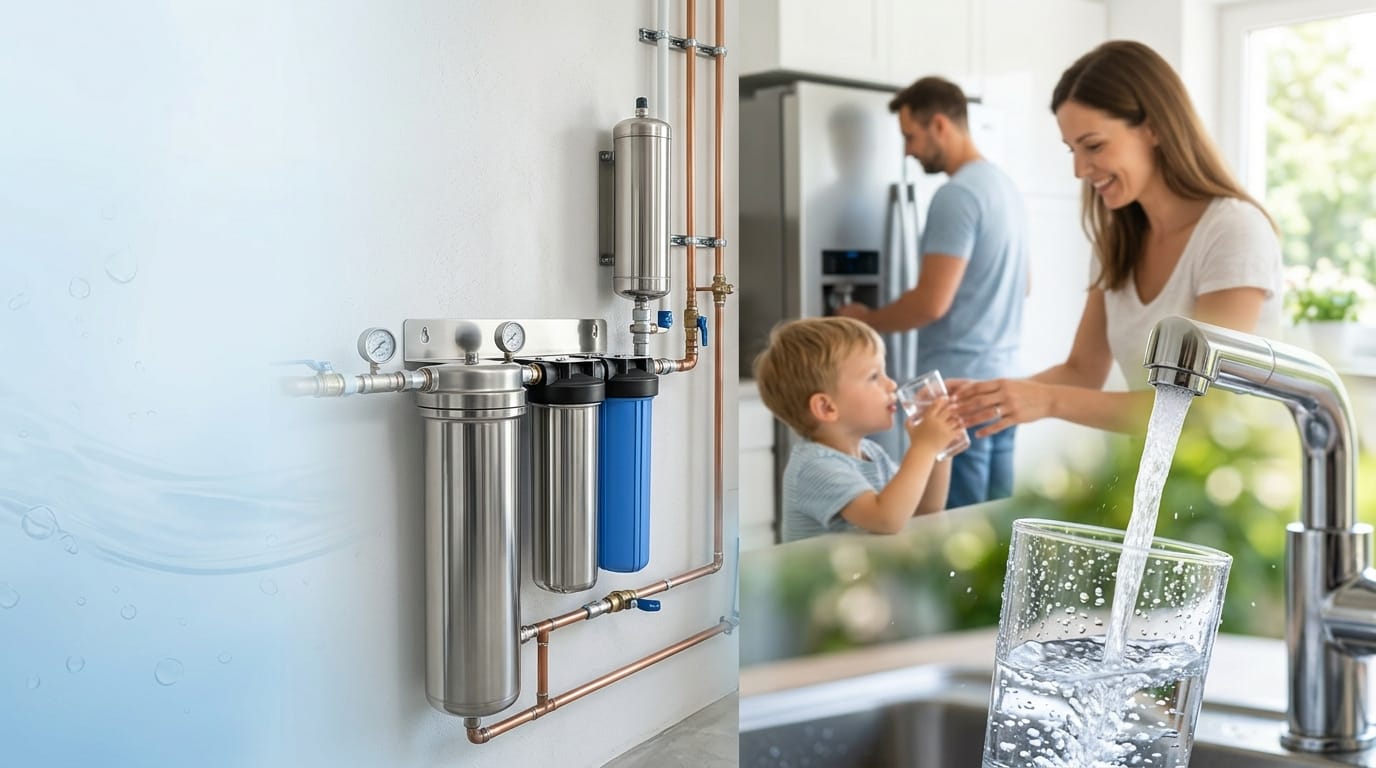
When I first noticed that cloudy residue in our bathroom sink and the weird taste in our tap water, I didn’t immediately think about water filters. Like most people, I just assumed that if water comes from the tap, it must be safe to drink. But after doing some research and talking to my neighbor who had recently installed a whole house water filter system, I realized I was missing something important. The water coming into our homes carries more than we think, and today I want to share everything I’ve learned about whole house water filters so you can make a smart decision for your family.
Introduction: Why Your Home Needs Water Filtration
Let me be honest with you. Most people don’t think much about their water until something goes wrong. Maybe you notice your shower head has reduced water pressure, or the water tastes like chemicals, or you find white residue on your fixtures. These are all signs that your water might need better filtration. Unlike point of use filters that only treat water in one location like your kitchen faucet, a whole house water filter system treats all the water entering your home. This means every shower, every glass of water, every load of laundry, and every dishwashing cycle uses filtered water.
The reason this matters is that tap water isn’t always pure, even in developed countries. Municipal water systems treat water to make it safe enough to drink, but that doesn’t mean it’s perfectly filtered. Well water users face even more challenges because their water isn’t regulated the same way. Sediment, chlorine, heavy metals, bacteria, and other contaminants can all make their way into your home’s plumbing system. When I learned about this, I realized that investing in a good whole house water filter wasn’t just about better tasting water. It was about protecting my family’s health and extending the life of my plumbing and appliances.
Understanding Whole House Water Filters: The Basics
A whole house water filter, sometimes called a point of entry filter, is essentially a large filtration unit installed where the main water line enters your home. Think of it as the first line of defense before water reaches any faucet, toilet, or appliance in your entire house. Unlike small pitcher filters or faucet-mounted options, whole house systems can handle the volume and pressure of your entire home’s water supply while maintaining adequate water pressure for normal use.
The basic idea is straightforward but effective. As water flows through the system, it passes through one or more filter stages that remove various contaminants. Different systems use different technologies and materials, which I’ll explain in detail, but they all serve the same purpose: making your water cleaner, safer, and often better tasting and smelling. What really impressed me when I researched these systems is how much they can improve water quality without requiring you to do anything differently. You don’t have to remember to refill a pitcher or change the filter at your sink. The system works automatically for every water outlet in your home.
How Whole House Water Filters Actually Work
Understanding how these systems work helped me appreciate why they’re worth the investment. The basic process involves water flowing through a filtration medium that catches contaminants through several mechanisms. Some contaminants are physically trapped like you’d trap dirt in a net. Others are chemically attracted to the filter material and stick to it. Some systems even use multiple stages so that different types of contaminants are removed at different levels.
Most whole house systems start with a sediment filter stage. This catches the large particles like sand, dirt, rust, and debris that can make water cloudy and damage your plumbing. It’s like the gross stuff you can almost see sometimes. Then water moves through additional stages that might include activated carbon, which is fantastic at removing chlorine, chemicals, and odors, giving water a much better taste and smell. Some advanced systems add additional technologies like reverse osmosis membranes for extremely fine filtration or specialized media for heavy metal removal.
The whole process happens continuously and automatically. Water pressure from your main line pushes water through the filter stages. Once treated, clean water flows to every faucet and appliance in your home while contaminants are either trapped in the filter or sent to a drain connection. It’s actually quite elegant when you think about it. I like to imagine millions of tiny particles being filtered out every single day, water that would have caused buildup in my pipes and appliances instead being clean and safe.
Different Types of Filtration Technologies
Not all whole house water filter systems are created equal, and that’s where things get interesting. Different technologies excel at removing different types of contaminants, so understanding your options helps you choose the best system for your specific situation.
Sediment filters are the foundation of most systems. They use materials with tiny pores that trap physical particles. Think of them like an extremely fine mesh. These work great for removing sand, rust, and silt but don’t remove dissolved chemicals or contaminants at the molecular level.
Carbon filters come in two varieties. Activated carbon is treated to have a huge surface area with millions of tiny pores. When water passes through, chlorine, pesticides, and volatile organic compounds stick to the carbon. Catalytic carbon is specially treated to work better on different types of contaminants. Carbon filters significantly improve taste and smell and remove many harmful chemicals. However, they’re not effective against minerals like calcium and magnesium that cause hard water, and they have limitations against bacteria.
Reverse osmosis systems use a semipermeable membrane with pores so small that only water molecules can pass through while almost everything else is filtered out. This is extremely thorough but typically reduces water flow, which is why most whole house systems don’t use pure reverse osmosis for all water but might use it for drinking and cooking water only.
Water softeners don’t technically filter but instead use ion exchange to swap calcium and magnesium ions with sodium or potassium ions. This prevents mineral buildup and is essential if you have hard water. Many comprehensive systems combine softening with filtration.
Specialty media has emerged for specific challenges. Some materials target iron removal, others are designed for sulfur smell removal, and some address specific heavy metals like lead. Manufacturers often combine several of these technologies in layers to provide comprehensive treatment.
Common Contaminants Your Filter Should Remove
Understanding what you’re trying to remove from your water helps you choose the right system. The contaminants present in your water depend on whether you use well water or municipal water, your location, and the age of your plumbing infrastructure.
Sediment and turbidity are the most obvious. Cloudy water looks unappetizing and can contain suspended particles that damage appliances and reduce filter lifespan in other systems. Chlorine and chloramines are added to municipal water for disinfection but create unpleasant taste and smell. Carbon filters handle this well.
Heavy metals like lead, copper, and mercury are serious health concerns, especially for children. Lead particularly leaches from old pipes and solder. Some filter systems specifically target heavy metal removal through specially treated media or reverse osmosis.
Pesticides and volatile organic compounds seep into water supplies from agriculture and industrial sources. Activated carbon removes many of these.
Bacteria, viruses, and protozoa are living contaminants that can cause serious illness. Standard filtration doesn’t remove all of these, which is why some whole house systems include UV treatment or have specific technologies designed for biological contaminant removal.
Minerals like calcium and magnesium cause hard water, leading to scale buildup on fixtures, reduced soap effectiveness, and damaged appliances. Water softeners address this problem.
Hydrogen sulfide creates that rotten egg smell. Specialized filter media removes this effectively.
When I tested my own water before installing a system, I was surprised to find sediment, chlorine, and some mineral content. Nothing alarming, but enough to justify filtration. The right system for you depends on what’s actually in your water, which is why testing is so valuable.
Choosing the Right System for Your Needs
Selecting the best whole house water filter for your situation requires thinking about several factors. Let me walk you through the decision process I used and what I learned works best.
First, know what you’re dealing with. If you have well water, you need different filtration than municipal water. Well water isn’t regulated and can contain bacteria, sediment, and minerals that municipal systems don’t typically have. If you’re on municipal water, you mainly need to worry about residual chlorine, some minerals depending on your location, and possibly aging pipe concerns. A water test clarifies exactly what contaminants you need to address. Many water companies will test your water for free, or you can buy an inexpensive testing kit.
Next, consider your household size and water usage. A system that works for a family of two might not have adequate flow rate for a family of six. Flow rate is measured in gallons per minute and determines how fast the system can filter water while maintaining adequate pressure for normal use. Too small a system and you’ll notice reduced pressure when multiple people use water simultaneously.
Budget matters too. Basic sediment and carbon systems are affordable, starting around three hundred dollars. More comprehensive systems with additional filter stages, water softening capabilities, or specialty contaminant removal can cost two thousand dollars or more. Installation adds to this cost unless you’re comfortable doing it yourself. However, the long-term savings from reduced appliance damage, lower bottled water purchases, and extended plumbing life often justify the investment.
Space availability in your home affects system type. Most systems need a location where the main water line enters your home. This is often in a basement, garage, or crawl space. Compact systems exist for homes with limited space. Some people even install systems under the sink if whole house isn’t feasible, though this sacrifices some benefits.
Maintenance requirements vary significantly. Some systems need filter changes every three to six months, while others last a year. Some require professional service while others are DIY friendly. I chose a system with readily available replacement filters and a design simple enough for me to change them myself.
Brand reputation and warranty matter. Established companies often provide better support and more predictable performance. Most good systems come with at least a five-year warranty, and some offer lifetime warranties on the housing unit with only regular filter replacements needed.
Top Performers and What Makes Them Stand Out
While I won’t recommend specific brand names to avoid bias, I can explain what characteristics make the best systems stand out. Through research and talking to people who’ve installed various systems, certain qualities consistently appear in top-rated options.
The best systems handle your specific water challenges effectively. A system might be highly rated overall but wrong for your water, so reading reviews from people in your area helps. Look for systems specifically mentioned as good for well water if that’s your situation, or for handling hard water if that’s your main concern.
Quality construction matters. The best systems use durable materials that won’t degrade over time. Stainless steel tanks and high-quality plastic housings last longer than cheaper alternatives. The internal components should also be built to handle your water pressure without problems.
Filter availability and cost influence long-term satisfaction. A fantastic system that uses unique proprietary filters costing a hundred dollars each becomes expensive to maintain. Systems using readily available, affordable replacement filters that cost thirty to fifty dollars and last six to twelve months work better for most people.
Good customer support distinguishes good companies from great ones. Responsive support, clear documentation, and easy troubleshooting assistance make owning these systems less stressful. Before buying, check online reviews specifically mentioning customer service experiences.
Efficiency is worth considering. Some systems waste significant water in the filtration process. If you’re environmentally conscious or on a meter, systems with low waste ratios make a difference. Modern systems are much better at this than older models.
Installation support matters. Some companies provide excellent installation guides or video support for DIY installation, while others require professionals. Some offer installation service or partnerships with local installers at reasonable rates.
Professional Installation vs DIY: What You Should Know
One of the biggest decisions when getting a whole house filter is whether to hire a professional or install it yourself. This decision depends on your comfort level, the system complexity, and your plumbing knowledge.
Professional installation guarantees proper setup and often comes with system activation support and verification that everything works correctly. A professional ensures correct connection points, proper pressure handling, and correct filter installation. They also identify any issues with your plumbing system that might affect filter performance. The downside is cost, which typically ranges from one hundred to three hundred dollars depending on complexity.
DIY installation is feasible if you’re comfortable with basic plumbing and follow instructions carefully. Most modern systems come with detailed installation guides. The main steps involve shutting off your water supply, finding the appropriate connection point for the filter, connecting inlet and outlet lines, and installing the bypass valve. Many people successfully do this and save the installation cost.
I’ll be honest about my experience. I watched several installation videos and read the manual for my system multiple times before starting. I knew what I was getting into and felt confident after that preparation. The actual installation took me about forty five minutes. However, I have some plumbing knowledge from maintaining my home. If you’re completely unfamiliar with plumbing, hiring a professional might save you frustration and potential mistakes.
One middle ground approach is having a professional do the installation but handling filter replacements yourself, which is straightforward. This gives you the installation confidence of a professional while keeping ongoing costs low.
Maintenance and Filter Replacement Schedules
Keeping your whole house water filter working properly requires regular maintenance. The good news is it’s usually simple and doesn’t demand much time.
Filter replacement frequency depends on your water quality and usage. With heavily contaminated water or large households, filters might need replacement every three months. With cleaner water and smaller households, six to twelve months is common. Most systems include indicators that show when filter replacement is needed. Some use pressure gauges showing reduced flow rate, others use digital monitors, and some require manual checking based on time elapsed.
The replacement process itself is straightforward for most systems. You shut off the water supply, open the filter housing, remove the old filter, clean the housing if needed, insert the new filter, close the housing, and turn the water back on. The whole process takes fifteen to thirty minutes. It’s one of those home maintenance tasks that sounds scarier than it actually is.
Some systems require periodic flushing to maintain optimal performance. This involves running water through a drain line without filtration to clear accumulated sediment. This is maintenance intensive but simple to do.
System checks should happen annually. This means visually inspecting connections for leaks, checking water pressure at various faucets to ensure it hasn’t dropped significantly, and noting any changes in water quality. Early detection of problems prevents water damage and system failure.
Bypass valve maintenance is important for systems that include bypass features. These valves should be checked to ensure they open properly if filter changes interrupt water flow.
Component lifespan varies. While filters need regular replacement, the housing, pump, and other components often last ten years or more with proper maintenance. This is why quality construction matters. You’ll replace filters many times, but the system itself should be a long-term investment.
Cost Analysis: Investment and Long-term Savings
Let me break down the financial reality of whole house water filters because this often determines whether people invest in one.
Initial costs vary dramatically. A basic sediment and carbon filter system might cost three to five hundred dollars plus installation. A more comprehensive system with multiple filter stages and water softening might cost one to three thousand dollars. Installation by a professional typically adds one hundred to three hundred dollars. So total initial investment ranges widely depending on your needs.
Replacement filter costs represent the main ongoing expense. Depending on your system and water quality, expect to spend fifty to two hundred dollars annually on replacement filters. If you do DIY replacement and don’t need professional maintenance, this is your primary operating cost.
Savings come from several sources. Reduced bottled water purchases is immediate. If your family buys bottled water because tap water tastes bad, a good filter eliminates this expense. Most households spend fifty to a hundred dollars monthly on bottled water, adding up to six hundred to twelve hundred dollars yearly. A filter paying for itself in just months.
Appliance lifespan extension saves money over time. Water heaters, dishwashers, coffee makers, and washing machines all degrade faster with unfiltered water containing sediment and minerals. Replacing a water heater costs one to three thousand dollars. A filter system paying for itself many times over by extending water heater life.
Plumbing maintenance costs decrease. Sediment and mineral buildup in pipes leads to reduced flow, corrosion, and eventual replacement. Filtered water means fewer plumbing emergencies and repairs.
Reduced soap and detergent use occurs with softened water. Hard water requires more soap to be effective. Over years, the savings add up.
When I calculated my own situation, the system cost was offset by eliminated bottled water purchases within one year. Factor in avoided appliance repairs and extended plumbing life, and the financial case is strong.
Real-World Benefits: Health and Lifestyle Improvements
Beyond the numbers, installing a whole house water filter creates tangible lifestyle improvements that quality of life numbers don’t capture.
My family immediately noticed better tasting water. This means my kids actually drink more water instead of asking for juice or soda. That’s a health win that I notice every day.
Shower water feels different. The chlorine smell is gone, and skin feels less dry. My wife mentioned her hair feels softer and manages better than before.
Appliances work better and last longer. Our dishwasher no longer leaves spots on glasses, and our showerhead maintains full pressure instead of gradually reducing. These small quality of life improvements accumulate.
Clothes wash cleaner and feel softer when filtered water contains fewer minerals and chlorine. The detergent works more effectively, so we actually use less.
Cooking tastes better. Coffee, tea, and soups all taste noticeably better with filtered water. This might seem like a small thing, but when you enjoy cooking and eating, it matters.
Peace of mind is genuinely valuable. Knowing that every glass of water, every shower, and every bit of water used in the home is filtered removes a nagging concern many people have. Especially for families with young children, this confidence in water safety is worth something.
Conclusion: Making Your Decision
After thoroughly researching whole house water filters and installing one in my own home, I can tell you with confidence that they’re a worthwhile investment for most homeowners. The combination of health benefits, lifestyle improvements, cost savings, and peace of mind makes a strong case.
The best whole house water filter for your home depends on your specific water quality, household size, budget, and preferences. Take time to test your water, research options that address your specific contaminants, and carefully evaluate the total cost of ownership including replacement filters.
Whether you choose a professional or DIY installation, prioritize getting a quality system from an established manufacturer. The additional upfront cost is minimal compared to long-term performance and reliability. Commit to regular maintenance including timely filter replacement, and you’ll enjoy years of superior water quality.
Water is one of the most essential things your family consumes. Investing in quality filtration isn’t an indulgence; it’s fundamental home maintenance like a good roof or functional plumbing. I’m genuinely glad we made this investment and recommend seriously considering one for your home.
Frequently Asked Questions
Q: Do I really need a whole house water filter if my city says water is safe?
A: Municipal water meets regulatory minimums but isn’t necessarily pure. Chlorine, some minerals, and potentially some contaminants can remain. A filter improves taste, smell, and provides extra protection. Whether it’s necessary depends on your water quality and preferences.
Q: How often do I really need to replace filters?
A: This varies based on water quality and household size, typically ranging from three to twelve months. Most systems have indicators showing when replacement is due. Don’t ignore these indicators as clogged filters reduce effectiveness and water pressure.
Q: Can I install a whole house filter myself?
A: Most modern systems are designed for DIY installation and include detailed instructions. If you’re uncomfortable with basic plumbing, hiring a professional is worthwhile. Many people successfully install these systems themselves.
Q: What’s the difference between a whole house filter and a pitcher filter?
A: Whole house filters treat all water entering your home while pitcher filters only treat water you actively pour. Whole house systems protect all appliances and fixtures and require less active effort, while pitcher filters are cheaper and offer flexibility for renters.
Q: Will a water filter reduce water pressure?
A: Quality systems maintain adequate pressure, though a slight reduction is normal. Reduced pressure indicates clogged filters needing replacement. If pressure reduction is significant, your system might be undersized for your household’s water usage.
Q: How long does a whole house water filter last?
A: The housing and main components typically last ten to fifteen years. Filters themselves last three to twelve months depending on water quality and usage.
Q: Is it worth getting a water test before buying a filter?
A: Absolutely. Testing shows exactly what you need to remove, helping you choose the right system instead of paying for unnecessary features or getting inadequate filtration. Many municipalities offer free testing, or you can buy affordable test kits.