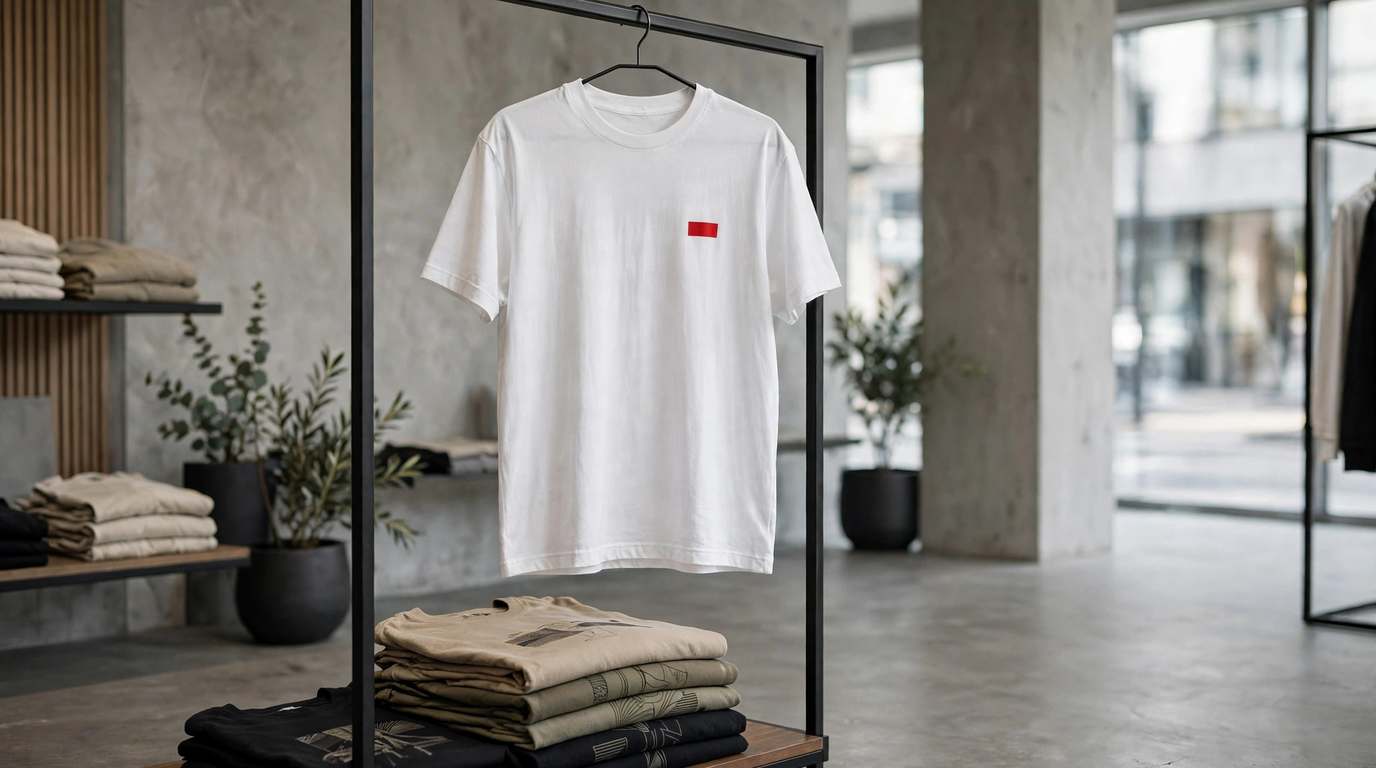
A Supreme t-shirt is, on paper, one of the simplest garments in fashion: a plain cotton tee with a small red rectangle printed on the chest. Yet few garments inspire the kind of devotion that Supreme t shirts do — that little red box turned a downtown New York skate shop into one of the most talked-about brands on the planet, made Thursday mornings a ritual for streetwear fans worldwide, and proved that scarcity can be a more powerful marketing tool than any advertising budget.
Whether you’re thinking of buying your first one, wondering why they sell out in seconds, or trying to tell a real box logo from a fake, this guide covers the full story — the history, the hype, how to buy, and how to avoid getting burned.
IN THIS GUIDE
- The short answer: what Supreme t-shirts are and why they matter
- The history of the Supreme box logo tee
- What makes Supreme t-shirts so popular
- Supreme box logo vs. graphic tees: what’s the difference
- How to buy a Supreme t-shirt at retail (the weekly drop)
- How much Supreme t-shirts cost in 2026
- How to spot a fake Supreme t-shirt
- How to style a Supreme t-shirt
- Caring for your tee so it lasts
- FAQs
- Conclusion
The Short Answer: What Makes Supreme T Shirts Special
The short answer: Supreme t-shirts are special because of what surrounds them, not just what’s on them. The brand was founded in 1994 by James Jebbia as a New York skate shop, and its red box logo — a white “Supreme” in Futura type on a red rectangle, inspired by the artist Barbara Kruger — became a status symbol through limited weekly releases, famous collaborations, and genuine roots in skate and hip-hop culture. The shirts themselves are well-made heavyweight cotton tees; the cultural weight they carry is what made them iconic.
The History of the Supreme Box Logo Tee
To understand the t-shirt, you have to understand the shop. In April 1994, James Jebbia opened the first Supreme store on Lafayette Street in downtown Manhattan. Jebbia had worked around skateboarding and streetwear retail before, and he designed the store for skaters first — the middle of the floor was left open so people could ride through it. It was a skate shop with an attitude, and it needed an identity.
Jebbia had three t-shirts printed for the opening. One of them carried the shop’s logo: a bright red rectangle with the word “Supreme” in white Futura Heavy Oblique type. A friend of Jebbia’s designed it, and the look was heavily influenced by the work of Barbara Kruger, the American conceptual artist known for her red-and-white text graphics and political messaging. It was bold, minimal, and completely unlike the loud, garish graphics most skate shops were selling at the time.
The box logo tee was an instant hit with the downtown crowd. The white version with the red logo — which retailed for about $20 back then — became the uniform of skaters who were in the know about New York street culture. From there the logo spread: first to more colorways, then to hoodies, jackets, hats, and eventually to just about anything the brand could put it on.
Practical tip: When people say “box logo,” they specifically mean the red-rectangle design. Supreme makes hundreds of graphic tees, but only the box logo carries the mythology — and the resale premiums — of the original.
From skate shop to global brand
What started as a few tees and sweats for NYC skaters grew steadily through the late ’90s and 2000s. Jebbia took cues from the skaters hanging around the shop — what they wore, what music they listened to, what they cared about — and the brand absorbed influences from hip-hop, punk, and downtown art scenes. High-profile collaborations accelerated things: working with Nike, The North Face, and Levi’s brought Supreme to wider audiences, while collaborations with luxury houses like Louis Vuitton pushed the brand into the fashion mainstream.
Ownership changed hands along the way. VF Corporation — the company behind Vans, The North Face, and Timberland — bought Supreme in 2020 for $2.1 billion. Then, in October 2024, VF sold the brand to EssilorLuxottica, the eyewear giant behind Ray-Ban and Oakley, for $1.5 billion. An unusual owner for a streetwear label, but Supreme has kept operating with its own direct-to-consumer model intact.
What Makes Supreme T Shirts So Popular
It’s never been just one thing. The popularity of Supreme t-shirts is a stack of factors that reinforced each other over three decades:
- Scarcity by design. Supreme pioneered the weekly “drop” model: new product released every Thursday at 11 a.m. Eastern, in limited quantities, with no restocks. Miss it and it’s gone. That engineered scarcity turned buying a t-shirt into an event — and turned the shirts into collectibles.
- Genuine cultural roots. Unlike brands that manufacture an image, Supreme grew out of an actual scene: downtown New York skateboarding in the ’90s, then hip-hop, then global street culture. The credibility was earned before the hype arrived.
- The logo itself. The box logo is a masterclass in minimal design. It’s instantly recognizable from across the street, it works on any colorway, and its Kruger-inspired look gives it an art-world edge that plain text logos don’t have.
- Collaborations. Supreme’s willingness to work with everyone from underground artists to luxury fashion houses — and to slap the box logo on wildly unexpected items — keeps the brand in constant conversation.
- Reasonable retail prices. Here’s the part people forget: at retail, Supreme t-shirts have always been fairly priced compared to designer brands. The eye-watering prices you see are resale prices, paid by people who missed the drop. Buy direct and a Supreme tee costs about the same as a good mid-range t-shirt.
- Celebrity and community validation. From skaters to rappers to fashion insiders, three decades of influential people wearing the box logo did more than any campaign could.
Supreme Box Logo vs. Graphic Tees: What’s the Difference
Not every Supreme t-shirt is a box logo tee, and the distinction matters — for price, for collectibility, and for what you’re actually buying:
| Feature | Box logo tee | Graphic / photo tee |
|---|---|---|
| Design | The red rectangle logo, sometimes in special colorways or collab versions | Artwork, photos, or illustrations — from classic films to artist collaborations |
| How often released | Rarely — box logos drop only occasionally, which is the whole point | Regularly, across most seasons |
| Retail price | Moderate at retail, like other Supreme tees | Similar moderate retail pricing |
| Resale market | Strong — sought-after colorways resell for several times retail | Varies; most trade near retail, a few grails go higher |
| Best for | Collectors and anyone chasing the icon | People who just want a great-looking Supreme shirt to wear |
| Authenticity | Most counterfeited — check tags and print carefully | Also faked, but less aggressively |
Practical tip: If you love the brand but don’t care about the box logo mythology, graphic tees are the smarter buy. You get the quality and the design without competing in the most cutthroat drops.
How to Buy a Supreme T Shirt at Retail
Buying direct from Supreme is the only way to pay retail price. Here’s how the process works:
- Know the schedule. Supreme releases new product every Thursday at 11 a.m. Eastern, both in stores and online. Box logo tees don’t drop every week — they appear a few times a year — so follow reliable release calendars or Supreme news pages to know when one is coming.
- Make an account in advance. Set up your account on Supreme’s website with your shipping and payment details saved before drop day. Seconds matter.
- Be on the site before 11. Have the product page open and be ready to check out immediately. Popular sizes sell out within minutes — sometimes faster.
- Don’t refresh aggressively. Hammering refresh can get you flagged. Load the page once and act.
- Have a backup plan. If your size sells out, reputable resale marketplaces like StockX, GOAT, and eBay carry authenticated pairs — but expect to pay above retail for box logos.
One honest warning: bots and resellers compete for the same stock you do. Losing a drop to a sellout isn’t a reflection of your effort — it’s just how the system works. Decide in advance what a shirt is worth to you on the resale market so you don’t overpay in the heat of the moment.
How Much Supreme T Shirts Cost
Prices split into two worlds. At retail, Supreme t-shirts are priced like quality mid-range tees — the brand has always kept retail pricing accessible relative to designer fashion, which is part of why the drops feel worth chasing. The original box logo tee sold for about $20 in 1994, and while prices have risen since, retail has stayed grounded.
Resale is the other world. Because box logos are released in small quantities and never restocked, sought-after colorways and collaboration versions routinely trade for several times their retail price. Rare pieces — especially ones made in tiny quantities or never released publicly — can reach four figures among serious collectors. For a broader look at what’s worth reading and collecting in street culture, check out the features on 9bio.
Practical tip: Before paying resale, check the sold listings — not the asking prices — on a marketplace. Asking prices are fantasy; sold prices tell you what people actually pay.
How to Spot a Fake Supreme T Shirt
Where there’s hype, there are fakes, and Supreme is one of the most counterfeited streetwear brands in the world. No single check is foolproof, but these are the tells experienced buyers look at first:
- The box logo print. On a real box logo, the rectangle is crisp, the red is a specific bright shade, and the “Supreme” lettering in Futura Heavy Oblique is sharp with clean edges. Fakes often get the font slightly wrong — letter spacing, the slant, or the weight — or print the box with fuzzy edges.
- Neck and wash tags. Real Supreme tees have clean, precisely stitched tags with correct spelling and consistent fonts. Crooked stitching, blurry text, or misspellings are immediate red flags.
- Fabric and construction. Supreme tees are made from substantial, quality cotton with tight, even stitching. A shirt that feels thin, flimsy, or has loose threads everywhere deserves suspicion.
- The price. A brand-new box logo tee selling for a fraction of the going resale rate is almost certainly fake. If the deal looks impossible, it is.
- The seller. Buy from Supreme directly, or from resale platforms that authenticate items before they reach you. Random social media sellers with no authentication process are where most fakes change hands.
When in doubt, compare against photos of confirmed-authentic pieces from the same release, or pay the small authentication fee on a marketplace that offers it. It’s cheap insurance on a purchase that might cost hundreds.
How to Style a Supreme T Shirt
The beauty of the box logo tee is that it does the talking, so the rest of the outfit can stay simple:
- Classic street: white or black box logo tee, slim dark jeans, clean sneakers. This is the look that made the shirt famous, and it still works.
- Layered: an open overshirt, flannel, or lightweight jacket over the tee, with the box logo peeking through. Works especially well with the white tee.
- Relaxed: the tee with cargo pants or joggers and sneakers for an easy everyday fit.
- Dressed up (slightly): a black box logo tee under a blazer or with tailored trousers — the high-low mix is a streetwear staple.
Fit matters more than anything: Supreme tees generally run true to size with a classic (not overly slim, not boxy) cut. If you’re between sizes and prefer a relaxed look, sizing up works; if you want it sharp, stay with your normal size.
Caring for Your Tee So It Lasts
A box logo tee you plan to keep — or resell — deserves better than the bottom of a laundry pile:
- Wash cold, inside out, with similar colors. Hot water fades the red box faster than anything.
- Skip the dryer when you can; hang dry to protect the print and the cotton.
- Never iron directly on the box logo — the heat can crack or melt the print. Iron inside out or use a pressing cloth.
- Store folded rather than on a hanger if you want to avoid stretched-out necklines over time.
FAQs
Who founded Supreme?
James Jebbia founded Supreme in 1994, opening the first store on Lafayette Street in New York City. He had previously worked in skateboarding and streetwear retail, and he built the brand around the downtown NYC skate scene.
What does the Supreme box logo look like?
It’s a bright red rectangle with the word “Supreme” printed in white Futura Heavy Oblique type. The design was created by a friend of founder James Jebbia and was inspired by the red-and-white text art of conceptual artist Barbara Kruger.
Who owns Supreme now?
EssilorLuxottica — the eyewear company behind Ray-Ban and Oakley — has owned Supreme since October 2024, when it bought the brand from VF Corporation for $1.5 billion. VF had purchased Supreme in 2020 for $2.1 billion.
When does Supreme restock t-shirts?
It doesn’t, in the traditional sense. Supreme releases new product in weekly drops every Thursday at 11 a.m. Eastern, and once an item sells out it’s gone — there are no restocks. Box logo tees only appear in select drops, not every week.
Are Supreme t-shirts worth the money?
At retail, yes for most fans — you’re getting a well-made tee from a culturally significant brand at a fair price. At resale prices, it depends on how much the specific design matters to you. Set a budget before you shop the resale market and stick to it.
How can I tell if my Supreme shirt is real?
Check the crispness of the box logo print, the accuracy of the Futura lettering, the quality of the neck and wash tags, and the overall fabric and stitching. Buy from Supreme directly or from authenticated resale platforms to be safe.
What is the most expensive Supreme t-shirt ever sold?
Ultra-rare box logo tees — particularly one-off or extremely limited versions — have sold for thousands of dollars on the resale market. Standard box logo colorways typically resell for several hundred, depending on the release and condition.
Conclusion
The Supreme t-shirt endures because it sits at the intersection of three things that rarely meet: genuinely good design, real cultural credibility, and a distribution model that turned buying clothes into a weekly event. The red box that James Jebbia printed for a skate shop opening in 1994 became a global status symbol without ever losing its downtown attitude — and three decades, two ownership changes, and countless imitations later, it’s still the most recognizable tee in streetwear.
If you want one, the path is simple: buy at retail on drop day if you can, pay a fair resale price if you can’t, and learn the authenticity basics before you spend real money. The shirt is just cotton and ink. What you’re really buying is a piece of the story — so make sure the piece you get is genuine.
Read Also: T-Mobile Fiber Outage Compensation (2026 Guide): How to Get Bill Credits