Yes, boiling water removes chlorine. When water reaches 212°F (100°C), chlorine — a volatile gas dissolved in water — escapes into the air through evaporation. The process works, but the time required and the conditions involved matter more than most people realize.
This article covers how quickly boiling removes chlorine, what variables affect that speed, why chloramine behaves differently, and when boiling is the right method versus when something else makes more sense.
How Boiling Removes Chlorine from Water
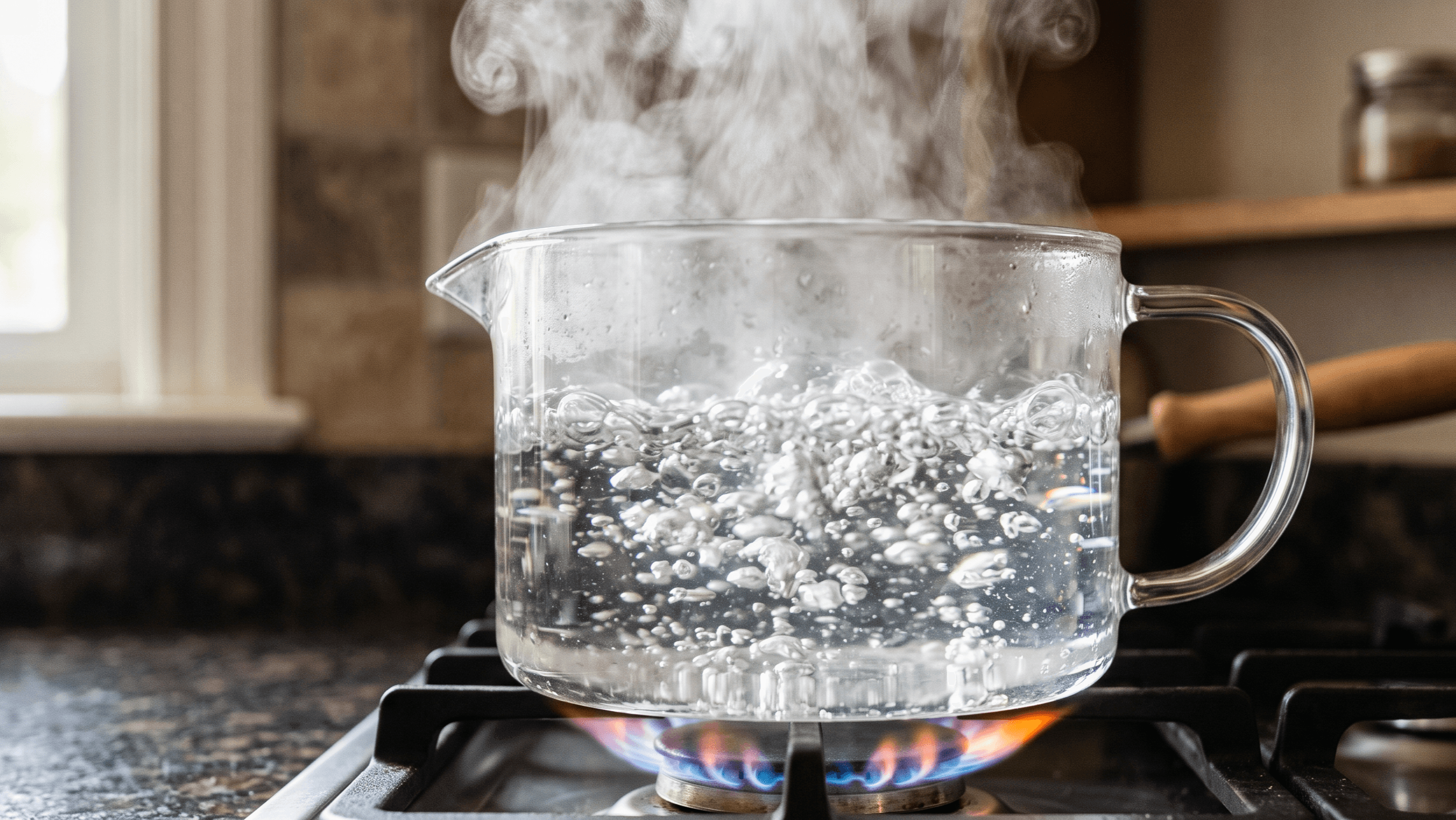
Chlorine in tap water exists as a dissolved gas, not a compound bound to the water molecules themselves. When water is heated to a rolling boil, agitation at the surface accelerates the release of dissolved gases — including chlorine — into the surrounding air.
Studies on chlorine volatilization from water show that boiling water at a full, vigorous boil for 1–2 minutes removes most of the free chlorine from a standard municipal supply. Water with typical chlorine levels of 0.5–2 mg/L loses chlorine rapidly once it reaches boiling temperature.
The process is straightforward chemistry: increased temperature raises the vapor pressure of dissolved gases, and the physical agitation of boiling creates additional surface area for gas escape. Leaving the pot uncovered allows the chlorine vapor to dissipate rather than condense back into the water.
How Long Does It Take to Boil Chlorine Out of Water?
The answer depends on starting chlorine concentration and volume, but a practical framework looks like this:
| Water Volume | Boil Time to Remove Most Chlorine |
|---|---|
| 1 cup (240 mL) | 30–60 seconds at a rolling boil |
| 1 liter (4 cups) | 1–2 minutes at a rolling boil |
| 1 gallon (3.8 L) | 3–5 minutes at a rolling boil |
| Larger volumes | Add 1–2 minutes per additional liter |
These figures apply to water with free chlorine in the typical municipal range of 0.5–2 mg/L. Water with higher chlorine concentrations — such as water from a system that recently shock-chlorinated after a main break — may require 3–5 minutes at a rolling boil even in smaller volumes.
A gentle simmer does not produce the same result. The water must be at a vigorous, full boil to generate enough surface agitation for rapid chlorine release.
Does Boiling Remove Chloramine Too?
No — and this is where many people run into problems.
Many municipal water systems have switched from chlorine to chloramine (chlorine bonded with ammonia) as their primary disinfectant. Chloramine is far more stable in water than free chlorine and does not dissipate easily with boiling.
Boiling water for 20+ minutes reduces chloramine by a small percentage, but it does not remove it reliably or efficiently. For water treated with chloramine, boiling is not a practical method.
To check which disinfectant your utility uses, review your annual water quality report — it will specify whether the system uses chlorine, chloramine, or a combination.
What Happens to Chlorine If You Let Water Sit?
Chlorine also escapes from water at room temperature over time — this is called off-gassing or natural volatilization. The process is much slower than boiling.
At room temperature:
- A glass of chlorinated water left uncovered loses most of its chlorine within 24–48 hours
- A large open container at room temperature may take 3–5 days for significant reduction
- Stirring or aerating the water speeds up the process
Boiling compresses this process from hours into minutes. Both methods work for free chlorine, but neither works well for chloramine.
When Boiling Makes Sense for Chlorine Removal
Boiling is a practical chlorine-removal method in specific situations:
- Emergency scenarios where a filter isn’t available and you want chlorine-free water quickly
- Cooking applications where chlorine may affect fermentation (bread, yogurt, home brewing)
- Off-grid situations where electricity for UV or filtration isn’t accessible — in these cases, reviewing well water and off-grid water management strategies may also be worth your time
- One-time needs that don’t justify buying a filter
Boiling is not a practical daily solution for drinking water in most households. It consumes energy, requires cooling time before the water is drinkable, and doesn’t address other contaminants beyond volatile compounds.
Better Alternatives for Removing Chlorine from Drinking Water
If consistent chlorine removal is the goal, filtration is more efficient than boiling in most situations.
Activated Carbon Filters
Activated carbon (whether in a pitcher, faucet attachment, or under-sink unit) removes free chlorine through adsorption — chlorine molecules bind to the carbon surface as water passes through.
- Pitcher filters remove chlorine in a single pour and improve taste noticeably. A comparison of water filter pitcher vs. faucet filter for taste improvement shows both work well for chlorine, with faucet filters offering faster flow rates
- Faucet-mounted carbon filters handle chlorine and basic sediment without the wait time of a pitcher
- Activated carbon also reduces chloramine more effectively than boiling — catalytic activated carbon specifically targets chloramine, which standard carbon does not address as well
Vitamin C (Ascorbic Acid)
One gram of ascorbic acid neutralizes approximately 1 mg/L of chlorine in 100 liters of water. This method is used by homebrewers and aquarium owners and works for both chlorine and chloramine. It adds a slight acidic taste at higher concentrations.
Reverse Osmosis Systems
Reverse osmosis (RO) systems remove chlorine alongside dissolved solids, heavy metals, and a broad range of contaminants. They’re more expensive to install but address far more than chlorine alone. These are most appropriate for households with multiple water quality concerns beyond taste alone — including situations where tap water contaminants are a broader concern.
Does Boiling Improve Water Taste If It Contains Chlorine?
Yes, but temporarily and conditionally.
Chlorine is responsible for the chemical, bleach-like taste and smell that many people notice in municipal tap water, especially after rain events. Boiling removes that taste by removing the chlorine. If water tastes like chlorine after rain, a brief boil and cool-down will typically resolve it.
However, if the water has a metallic taste unrelated to chlorine, boiling will not help. Metallic-tasting tap water typically traces back to pipe corrosion, pH imbalance, or minerals — not disinfectant levels.
FAQ
Does boiling water remove all contaminants, or just chlorine?
Boiling removes chlorine and other volatile compounds, and it kills bacteria, viruses, and protozoa through heat. However, it does not remove heavy metals (lead, arsenic), nitrates, fluoride, pharmaceutical residues, or dissolved mineral compounds. For contaminants that don’t evaporate or die from heat, filtration or reverse osmosis is required.
Can you boil water to remove chlorine for fish tanks or aquariums?
Boiling removes free chlorine but is not reliable for chloramine, which most modern municipal systems use. Fish are highly sensitive to both compounds. The aquarium hobby standard is sodium thiosulfate dechlorinator or ascorbic acid — both work faster than boiling, handle chloramine, and don’t require heating large volumes of water.
Does refrigerating water make chlorine dissipate faster?
No — cold temperatures slow chlorine off-gassing, not accelerate it. Refrigerated water retains chlorine longer than water stored at room temperature in an open container. If the goal is chlorine removal without boiling, leaving the container open at room temperature — or stirring it — dissipates chlorine faster than refrigerating it.
How do I know if my tap water has chlorine or chloramine?
Check your municipality’s annual water quality report (also called a Consumer Confidence Report). It will list the disinfectant type and measured concentration. If the report lists “chloramines” or “combined chlorine,” your system uses chloramine — and boiling is not an effective removal method for your water.
Is it safe to drink water that still has some chlorine in it?
Yes. The EPA sets a maximum residual disinfectant level for chlorine in drinking water at 4 mg/L, and most utilities maintain levels between 0.2–1 mg/L at the tap — well within safety limits. Chlorine in water at these levels is not a health risk for most people. The primary reason to remove it is taste and odor, not safety.