In This Guide
Here is what this guide covers, in order:
- What the women’s On Cloudstratus 3 is, in plain terms
- How the cushioning works and what it feels like underfoot
- Fit and sizing, including the questions women ask most
- Comfort on longer runs and all-day wear
- Who this shoe suits best, and who should look elsewhere
- How it compares with other everyday running shoes
- Using it for running versus daily wear
- How to care for it so it lasts
- A buying checklist and the mistakes to avoid
- Frequently asked questions
The short answer: the women’s On Cloudstratus 3 is a well-cushioned, comfortable road running shoe from the Swiss brand On, designed for runners who want a soft, supportive feel over longer distances rather than a featherlight racing shoe. It suits steady daily training, long easy runs, and walking-heavy days, and it fits most women true to size with a secure midfoot and a roomy enough toe box for natural toe movement. If you want maximum cushioning without a harsh or unstable ride, it is a strong option. If you want a fast, minimal shoe for racing or short speed work, it is probably more shoe than you need.
What Is the Women’s On Cloudstratus 3?
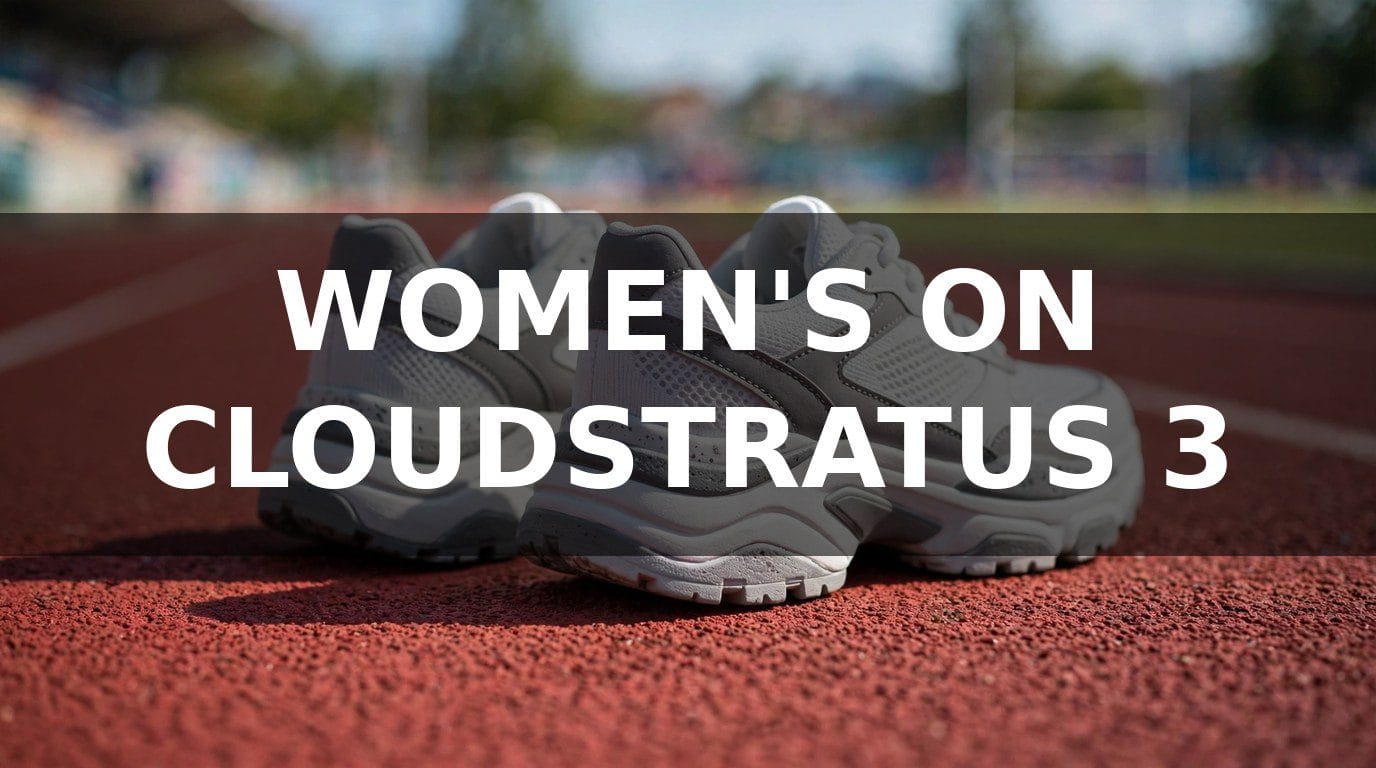
The women’s On Cloudstratus 3 is a women’s road running shoe made by On, the Swiss running brand recognisable by its CloudTec cushioning — the hollow pods, or “clouds”, visible in the sole. The Cloudstratus sits in the brand’s cushioned training range. Its job is simple: to make longer runs feel easier on the legs by giving you a deep, soft landing and a smooth transition through each step.
Where some running shoes chase lightness above all else, this one is built around comfort and protection. It is a shoe for the runner who heads out for a steady hour, for the person building up weekly distance, and for anyone whose feet feel tired after a long day. It is equally at home on pavements, park paths, and the treadmill, and many owners end up wearing it well beyond their runs, simply because it is comfortable to stand and walk in.
The women’s version is built on a women’s last, which means the shape of the shoe is designed around the proportions of a woman’s foot rather than being a scaled-down men’s shoe. That shows up in the fit around the heel and midfoot, where the shoe tends to feel more secure, and in the overall shape, which suits a narrower heel with a forefoot that still has room to spread. It is a small detail, but it is one of the reasons the fit works well for so many women.
Practical tip: try this shoe on at the end of the day if you can. Feet swell slightly as the day goes on, and a shoe that feels perfect in the morning can feel tight by the evening. If you are ordering online, try it on in the evening and walk around the house on carpet before deciding.
Women’s On Cloudstratus 3: Design and Cushioning Explained
The defining feature of the women’s On Cloudstratus 3 is its double layer of CloudTec cushioning. In plain terms, there are two layers of the hollow cloud pods stacked in the midsole, one above the other, with a foam layer in between. The idea is that the two layers work together: the upper layer gives a soft landing when your foot first hits the ground, and the lower layer adds support and a stable push-off as you roll forward. It is the cushioning equivalent of a mattress with a soft top and a firmer base — comfortable at first contact, but not so soft that you sink through it.
The foam used between the cloud layers is On’s Helion foam, a blend designed to be both soft and responsive. It gives the shoe a little energy return without feeling bouncy or unstable, and it holds up well over repeated use. Cushioning foams can feel very different from one brand to another, but the honest way to describe this one is that it feels smooth and even. There is no sharp edge to the landing, and no feeling that the shoe is fighting your stride.
Above the midsole sits an engineered mesh upper. Mesh uppers are standard on road running shoes because they are light, they breathe, and they flex with the foot. The mesh here is designed to hold the midfoot securely while letting air move through the shoe, which helps on warmer days and longer runs. The tongue and collar are padded enough to sit comfortably against the ankle without rubbing, and the heel counter — the firm structure around the back of the shoe — keeps the heel in place without feeling rigid.
Underneath, the outsole uses rubber in the areas that take the most wear, such as the heel and forefoot, while leaving the cloud pods exposed elsewhere. That keeps grip sensible on wet pavements without adding unnecessary weight. It is a road shoe, though, not a trail shoe, so it is happiest on firm, even surfaces. Loose gravel, mud, and wet grass are not its natural ground, and the gaps between the cloud pods can pick up small stones on rough paths.
One thing worth knowing is that this shoe has a noticeably thick sole. That is deliberate — it is where the cushioning lives — but it does change how the shoe feels. You sit higher off the ground than in a low-profile shoe, and the ride is softer and more insulated from the road. Some runners love that feeling immediately. Others, especially runners used to firmer, closer-to-the-ground shoes, need a run or two to get used to it. Neither reaction is wrong; it is a matter of what your feet are used to.
Women’s On Cloudstratus 3: Fit and Sizing
Fit is where a shoe either earns its place in your rotation or ends up at the back of the cupboard, so it deserves more attention than the colour options. The women’s On Cloudstratus 3 generally fits true to size for most women, which means starting with your usual running shoe size is a sensible first step. If you are between sizes, or you like a little extra room in the toe box for longer runs, going up half a size is a common choice.
The length of the shoe is the first thing to check. You want roughly a thumb’s width of space between your longest toe and the end of the shoe when you are standing. That sounds like a lot when the shoe is new, but feet spread and swell during a run, and that space is what stops your toes hitting the front on downhills and long outings. If your toes are touching the end when you try the shoe on, the size is too small, however good the rest of the fit feels.
Around the midfoot, the shoe holds securely without squeezing. The lacing runs over the middle of the foot, and the mesh and overlays work together to lock the foot down when you pull the laces snug. The heel is shaped to grip without slipping, which matters more than it sounds — heel slip causes blisters, and blisters end runs early. If the heel feels loose, try the runner’s loop lacing technique, threading the laces through the top eyelet to create a small loop on each side and pulling the lace ends through the opposite loops before tying. It takes ten seconds and often fixes heel slip completely.
The toe box is roomy without being wide in the sloppy sense. Your toes should be able to spread and move a little, especially on longer runs, and the mesh has enough give to accommodate feet that widen slightly with use. Women with wider feet often find this shoe workable in their normal size, though if you consistently need a wide fitting in other brands, it is worth trying before committing or checking the retailer’s returns policy first.
Practical tip: wear the socks you actually run in when you try the shoe on. A thick cushioned running sock changes the fit noticeably compared with a thin everyday sock, and trying the shoe in the wrong socks is one of the most common reasons a shoe feels different on the first real run than it did in the shop.
Breaking the shoe in is straightforward. There is no long or painful period of wearing it in, but it is still wise to do a couple of shorter runs or long walks before taking it out for your longest run of the week. That gives the foam and mesh a chance to settle to your foot, and it gives you a chance to notice any rubbing or pressure points while you are still close to home.
Comfort on Longer Runs and All-Day Wear
Comfort is the reason most people buy this shoe, and it is also where it is at its best. On a longer run, the cushioning does its quiet work: each landing is softened, the transition from heel to toe feels smooth, and the shoe does not demand much attention. That is a compliment. The best cushioned trainers are the ones you forget about mid-run, and this one is easy to forget in that sense.
Over longer distances, the double layer of cushioning earns its keep. Single-layer cushioning can start to feel flat as a run goes on, particularly for heavier runners or on hard pavements, but the two layers here share the work, so the ride stays consistent for longer. Your legs feel less battered at the end of a long run than they would in a firmer shoe, and that is often the difference between finishing a run feeling strong and finishing it feeling beaten up.
The shoe also works well for all-day wear, and plenty of owners use it that way. If you are on your feet all day — teaching, nursing, retail, travelling, or simply walking a lot — the cushioning and support make a real difference by the afternoon. It is not a formal shoe and it does not pretend to be, but with dark colours it looks tidy enough for casual workplaces and travel days. The comfort is the same whether you are running or walking, which is why it often becomes the default shoe by the door.
There are limits, of course. No cushioned shoe makes a bad running surface comfortable, and no shoe fixes poor running form on its own. If your knees or feet hurt on every run regardless of the shoe, the shoe is probably not the whole answer, and it is worth looking at training load, surfaces, and strength work as well. But for the normal tiredness that comes from miles on hard ground, this is a shoe that genuinely helps.
Who the Women’s On Cloudstratus 3 Suits Best
This shoe suits runners who prioritise comfort and protection over speed. If your runs are mostly steady, conversational pace — the kind of running where you could talk in full sentences — this is your territory. It suits people building up to longer distances, returning to running after a break, or training for a half marathon or marathon where the long run matters more than the fast finish. It also suits heavier runners, who put more force through a shoe with every step and benefit most from deeper cushioning.
It suits walkers, too. Long walks, all-day city days, and jobs that keep you standing put the same demands on a shoe as easy running, and the cushioning and secure fit work just as well at walking pace. If you want one comfortable shoe that covers running, walking, and travelling, this is a sensible choice.
It is less suited to runners chasing personal bests over short distances. If your training is mostly intervals, tempo runs, and races up to 10K, a lighter, firmer shoe will feel faster and more responsive. It is also not the right tool for trail running, fell running, or anything involving mud and loose ground — the outsole and the open cloud pods are made for roads and pavements. And if you love the feeling of a low, firm, close-to-the-ground shoe, the thick cushioned sole here may feel too removed from the road for your taste.
Practical tip: think about your slowest, longest run of the week, not your fastest. Buy the shoe for the run you do most often. If most of your running is easy and steady, a comfort-first shoe like this one will serve you better than a racing shoe you only enjoy for twenty minutes a week.
Women’s On Cloudstratus 3 vs Other Everyday Running Shoes
Comparing shoes is easier when you look at what each one is built to do, rather than just the brand name. The table below sets the women’s On Cloudstratus 3 against two common types of everyday running shoe, so you can see where it sits and what you would be trading if you chose something else.
| Feature | Women’s On Cloudstratus 3 | Lightweight daily trainer |
|---|---|---|
| Main strength | Deep, soft cushioning for long, comfortable miles | Light, lively feel for everyday running |
| Best for | Long runs, easy pace, all-day wear | Mixed training and shorter runs |
| Cushioning feel | Soft and smooth, with a stable push-off | Firmer and closer to the ground |
| Weight and bulk | Noticeably cushioned and higher off the ground | Lighter and lower profile |
| Speed work | Comfortable but not built for racing | Better suited to faster sessions |
| Everyday walking | Excellent for long days on your feet | Good, but less cushioned over long hours |
| Surfaces | Roads, pavements, treadmill, park paths | Roads, pavements, treadmill |
The honest summary is that the Cloudstratus trades a little speed and lightness for a lot of comfort. If you only own one pair of running shoes and most of your miles are easy, that is a good trade. If you already own a cushioned shoe and want something faster for tempo days, this one would overlap with what you have rather than adding something new.
Running vs Daily Wear: Getting the Most From Them
One pair of shoes can cover both running and daily wear, but it helps to know the trade-off. Running shoes wear out through a combination of miles and time on foot, and every hour of walking adds to that total. If you run in the same pair you walk in all day, the cushioning will lose its spring sooner than if the pair were reserved for running. That does not mean you should not wear them all day — comfort is the point — but it does mean you should expect to replace them sooner if they are doing double duty.
A practical approach is to use them as your main running shoe first and let daily wear follow naturally. Wear them for your runs, your long walks, and your travel days, and keep a second, cheaper pair for gardening, errands in the rain, or anything messy. That way the Cloudstratus stays in good shape for the runs that matter, and you still get the comfort on the days when your feet need it most.
Rotation is worth considering if you run most days. Having two pairs of running shoes and alternating them gives the foam in each pair time to recover between runs, and it spreads the wear. You do not need two expensive pairs — a cushioned shoe like this one for long runs and a lighter, cheaper pair for shorter days works well. But if you only run a few times a week, one good pair is plenty, and this one is a fine choice for that single pair.
For daily wear, the same fit rules apply as for running. Wear proper socks, lace them snugly but not tightly, and give your feet a break from any shoe that rubs, however comfortable it feels at first. A shoe that is comfortable for an hour can still cause a blister by hour six if there is a pressure point you have not noticed.
How to Care for Your Women’s On Cloudstratus 3
Looking after running shoes is mostly about avoiding the things that damage them. The single most useful rule is to let them dry naturally. After a wet run, take out the insoles, loosen the laces, and leave the shoes somewhere with good airflow, away from direct heat. Radiators, hair dryers, and tumble dryers break down the foam and glue far faster than rain ever will, and a shoe dried on a radiator rarely feels the same afterwards.
For cleaning, a soft brush and lukewarm water with a little mild soap is enough for most marks. Brush off dried mud first, then wipe the mesh gently rather than scrubbing it hard. Avoid harsh detergents and bleach, which can weaken the mesh and fade the colours. If the shoes get very wet or muddy, stuffing them loosely with newspaper or old towels helps them hold their shape while they dry, but remember to take the paper out once it is damp and replace it if needed.
Do not put running shoes in the washing machine as a habit. A single gentle wash may not ruin them, but repeated machine washing loosens the bonding between the sole and the upper and compresses the cushioning. Hand cleaning takes a few minutes and keeps the shoe in far better condition over its life.
Practical tip: check the outsole every month or so. When the rubber in the heel and forefoot is worn smooth, or the cloud pods are visibly compressed and no longer spring back, the shoe has given you most of what it has to give. Carrying on past that point usually means sore feet and tired legs, and a new pair will feel noticeably better within the first run.
As a rough guide, most cushioned road shoes last for several hundred miles of running, but that varies a lot with the runner’s weight, running style, and surfaces. Heavier runners and those who run mostly on hard pavements will wear the cushioning out sooner than lighter runners on softer ground. Listen to your legs as much as the calendar — when runs that used to feel easy start to feel hard on the joints, the shoes are often the first thing to check.
Buying Checklist and Common Mistakes
Before you buy, run through this checklist. It takes two minutes and saves the annoyance of a return.
- Know your size in running shoes, not just your everyday size. Many women go up half a size in running shoes compared with their normal shoes, because feet swell during a run. If you already know your running shoe size, start there.
- Check the returns policy before ordering online. A good retailer lets you try the shoe indoors and return it if the fit is wrong. Keep the box and receipt until you have done a proper try-on.
- Try both shoes on, not just one. Feet are rarely exactly the same size, and the fit of the larger foot is the one that matters.
- Walk, jog on the spot, and go up and down stairs if you can. A shoe that feels fine standing still can feel very different in motion.
- Buy for the running you actually do. If most of your miles are slow and steady, buy comfort. If most of your running is fast, buy light. Be honest about which one that is.
- Compare prices across a few retailers, but be wary of deals that look too good. Very cheap listings from unfamiliar sellers are a common source of counterfeit shoes, and a fake pair will not have the same cushioning or build.
- Keep the receipt and the box. If a fault appears early, a receipt makes a warranty claim straightforward.
The most common mistake is buying the wrong size because the shoe looked right. A shoe that is too small causes black toenails and blisters; a shoe that is too big causes heel slip and instability. Both are avoidable with a careful try-on. The second most common mistake is choosing a shoe for how it looks rather than how it fits. Colour is a nice bonus, but it should never be the deciding factor. The third is expecting one shoe to do everything — a cushioned shoe is wonderful for long runs and not the best choice for racing, and that is fine. Buy the shoe for its strengths and accept its limits.
Finally, remember that price and quality are related but not identical. A more expensive shoe is not automatically better for you, and a cheaper shoe is not automatically worse. The right shoe is the one that fits your foot, suits your running, and feels good after an hour on your feet. The women’s On Cloudstratus 3 is priced as a premium cushioned trainer, so it is worth being sure about the fit and the purpose before you buy — and worth trying on properly once it arrives.
Frequently Asked Questions About the Women’s On Cloudstratus 3
Is the women’s On Cloudstratus 3 true to size?
Q: Is the women’s On Cloudstratus 3 true to size?
A: For most women, yes — it fits true to size, so your usual running shoe size is the best place to start. If you are between sizes or you like extra room for longer runs, going up half a size is a common and sensible choice. Always check the fit with your running socks on, and make sure there is about a thumb’s width of space in front of your longest toe.
Is the women’s On Cloudstratus 3 good for long runs?
Q: Is the women’s On Cloudstratus 3 good for long runs?
A: Yes, long runs are where this shoe is at its best. The double layer of cushioning is designed to stay comfortable over longer distances, and the smooth transition from heel to toe helps your legs feel fresher at the end of a long run. It is a natural choice for half marathon and marathon training, as well as for steady long walks.
Can I wear the women’s On Cloudstratus 3 every day?
Q: Can I wear the women’s On Cloudstratus 3 every day?
A: Yes. Many owners wear it as an everyday shoe because the cushioning makes long days on your feet much more comfortable. Just remember that daily wear adds to the shoe’s total mileage, so the cushioning will wear out sooner than if the pair were used only for running. If you wear it daily and run in it too, expect to replace it sooner.
Is the women’s On Cloudstratus 3 good for walking?
Q: Is the women’s On Cloudstratus 3 good for walking?
A: Yes, it is a very good walking shoe. The cushioning, secure fit, and smooth rolling feel work just as well at walking pace as they do when running, and the support is helpful on long walks and all-day city days. It is best on firm, even surfaces such as pavements and park paths rather than muddy or uneven trails.
Does the women’s On Cloudstratus 3 suit flat feet?
Q: Does the women’s On Cloudstratus 3 suit flat feet?
A: It can suit many runners with flat feet, because the cushioning is stable and the midfoot holds securely, but it is a neutral cushioned shoe rather than a dedicated stability shoe. If you have flat feet and you overpronate noticeably, or you have been advised to wear a stability shoe, it is worth trying this one carefully and comparing it with a stability option before deciding. If in doubt, a specialist running shop can watch you run and advise.
How do I clean the women’s On Cloudstratus 3?
Q: How do I clean the women’s On Cloudstratus 3?
A: Brush off dried mud, then clean the mesh gently with a soft brush or cloth, lukewarm water, and a little mild soap. Let the shoes dry naturally with the insoles removed and the laces loosened, away from direct heat. Avoid the washing machine as a habit and never dry them on a radiator, as heat damages the foam and the bonding between the sole and the upper.
Conclusion
The women’s On Cloudstratus 3 is a shoe that knows what it is for. It is not trying to be the fastest shoe in the shop or the lightest, and it is better for that honesty. It is built for comfort over distance: soft landings, a smooth ride, a secure fit, and cushioning that keeps working when the miles add up. For steady daily training, long runs, long walks, and long days on your feet, it is a genuinely strong choice.
The decision comes down to your running. If most of your miles are easy and steady, and you want a shoe that looks after your legs, this one deserves a place on your shortlist. Try it on in your running socks, check the fit with a thumb’s width at the toes, and give it a couple of shorter outings before your longest run. If it fits well and feels right, you will know within the first few runs — and your feet will thank you for it.
Read Also: Women’s Holiday Jumper: Styles, How to Wear and Where to Buy