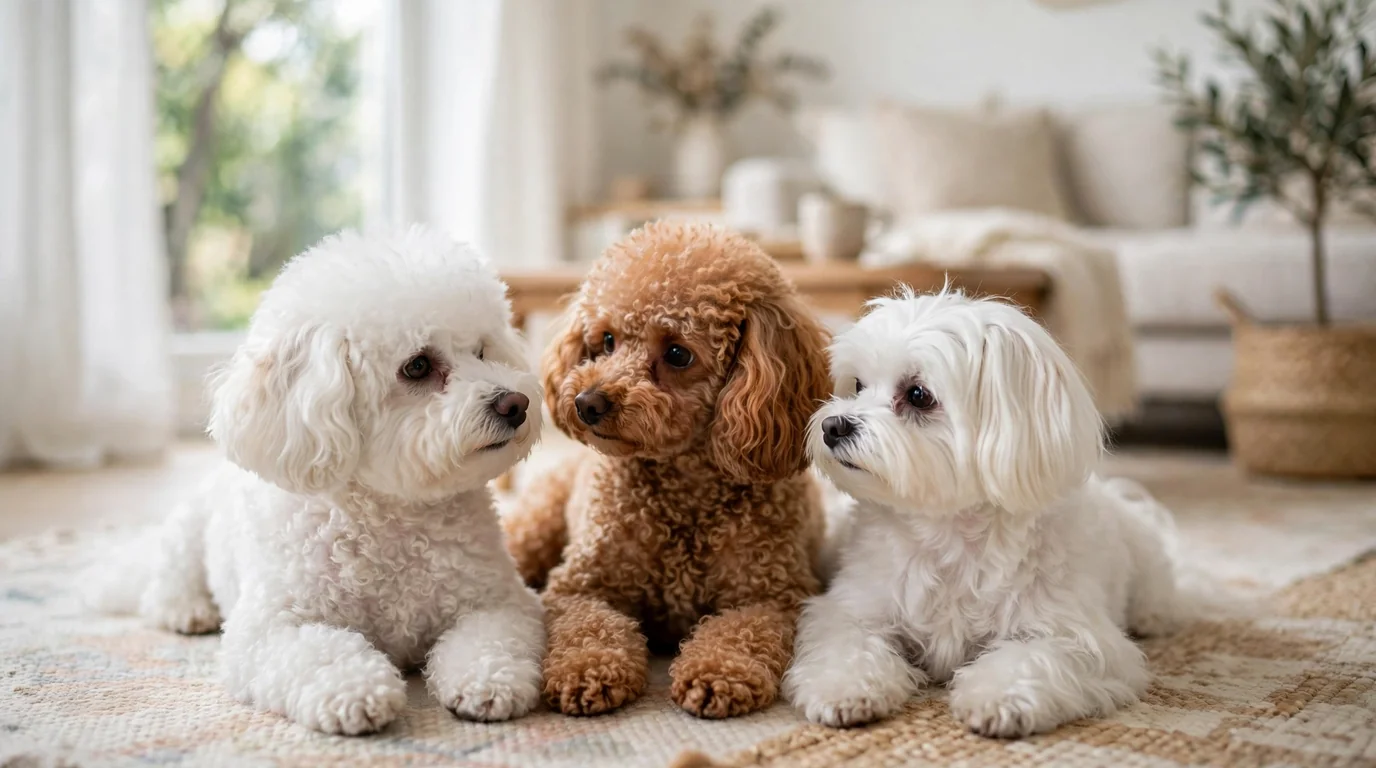
If you’re dreaming of a small dog but dreading the fur on every jumper, the tumbleweeds drifting across the hallway, and the constant hoovering, this guide is for you. The search for “small dogs that don’t moult” is really a search for a cleaner, calmer home life — and the good news is that plenty of small breeds shed so little you’ll barely notice.
There is one honest caveat up front: no dog is completely shed-free. Every dog loses some hair, the same way we lose a few hairs a day. What makes a breed “non-moulting” is that the hair it loses is so minimal it never becomes a problem — no seasonal coat blow, no clouds of undercoat, no sofa permanently covered in fur.
Below you’ll find 12 small breeds that genuinely fit that description, what living with each one is actually like, and how to keep shedding low once your new companion moves in.
IN THIS GUIDE
- The short answer: which small dogs that don’t moult?
- What “moulting” really means (and why it matters)
- 12 small dog breeds that barely shed
- Quick comparison: the 12 breeds at a glance
- How to choose the right low-moult breed for your life
- Keeping shedding low: grooming, diet and home habits
- What about allergies and “hypoallergenic” dogs?
- Frequently asked questions
- Conclusion
The short answer: which small dogs that don’t moult?
The short answer: the breeds most often described as non-moulting small dogs are the Poodle (Toy and Miniature), Bichon Frise, Shih Tzu, Yorkshire Terrier, Maltese, Miniature Schnauzer and Havanese. All shed very little, produce little dander relative to other breeds, and don’t go through heavy seasonal moults. The trade-off is grooming: most of them need a professional trim every 4 to 6 weeks plus regular brushing at home. If you want low shedding with minimal grooming, the Basenji and Chinese Crested are worth a serious look.
What “moulting” really means (and why it matters)
“Moulting” and “shedding” describe the same thing: a dog losing older fur so new fur can grow through. Every dog does it to some degree. The difference is in how much and how noticeably.
Heavy moulters — think Labrador, Husky, German Shepherd — have dense double coats and blow that undercoat once or twice a year. You know when it’s happening. Low-moulting breeds, by contrast, tend to have hair-type coats (fine and continuously growing, a bit like human hair), curly coats that trap loose hairs before they fall, or wiry coats where dead hairs stay put until brushed or clipped out.
This matters for two reasons. First, less shed hair in the home means less cleaning. Second, and more importantly for many owners, loose hair carries dander — the dead skin flakes that are the main trigger for dog allergies. Fewer loose hairs floating around means fewer airborne allergens. That’s why low-moulting breeds and allergy-friendly breeds are so often the same list.
One thing low-moulting does not mean is low maintenance. It’s a classic mix-up. A breed that doesn’t shed still grows hair, and that hair has to go somewhere — usually to the groomer’s. If you want a dog that sheds little and needs little brushing, you want a short-coated breed like the Basenji, not a Poodle. Go in with the right expectation and you’ll never be disappointed.
12 small dog breeds that barely shed
1. Toy Poodle
The Toy Poodle is the poster dog of low-moulting breeds for good reason. Its dense, curly coat sheds very little; loose hairs get caught in the curls instead of landing on your furniture. It’s also one of the smartest breeds around, which makes it a dream to train — housetraining, recall, and even fiddly things like walking nicely on the lead all come more easily than with most small breeds.
The catch is the grooming bill. A Poodle’s coat grows continuously and mats if neglected, so it needs a professional clip every 4 to 6 weeks, plus brushing at home in between. Kept short in a “pet clip” it’s much easier to manage than the showy show trims you see at Crufts. Toy Poodles are lively, affectionate and travel-sized, and they do well in flats as long as they get a proper daily walk and some brain work.
2. Bichon Frise
Bichon Frises look like little clouds and behave like cheerful toddlers. Their soft, curly double coat sheds minimally and produces relatively little dander, which is why Bichons turn up on almost every allergy-friendly breed list. They’re playful without being hyper, they love people, and they have a genuinely sunny temperament that makes them one of the easiest small breeds to live with.
Like the Poodle, they need regular grooming — the coat mats if left, and many owners keep it in a short, rounded trim. They also need company: Bichons are companion dogs through and through and can get miserable if left alone for long working days. If someone’s home most of the time, they’re hard to beat.
3. Shih Tzu
Shih Tzus were bred purely for companionship — this is a dog whose entire job description is sitting on laps and being adored. Their long, silky coat sheds very little, though it demands daily brushing if you keep it long. Many pet owners opt for a short “puppy cut” that slashes the maintenance while keeping the low-moult benefit.
Temperament-wise, they’re the calmest breed on this list. A Shih Tzu is perfectly content with short walks and long naps, which makes them a superb choice for flats, older owners, or anyone who wants a dog that matches a quiet lifestyle. They can be a touch stubborn in training, so gentle consistency from day one pays off.
4. Yorkshire Terrier
Don’t let the bow in the hair fool you — the Yorkshire Terrier has a terrier brain in a toy-dog body. Its fine, silky coat is more like human hair than dog fur, and it sheds very little indeed. Many owners keep Yorkies in a short trim rather than the floor-length show coat, which makes them one of the easiest low-moulters to look after.
Personality-wise, expect big-dog confidence. Yorkies are bold, vocal, and fiercely loyal to their people. They make excellent watchdogs — nothing gets past a Yorkie unannounced — but they do need training to keep the barking and the bossiness in check. They’re better with older children than with toddlers, simply because they’re small and fragile under rough play.
5. Maltese
The Maltese is one of the oldest toy breeds in existence, and it’s barely changed in centuries: a tiny, elegant dog with a long, silky white coat that sheds remarkably little. Maltese are playful and sweet-natured, and they adapt brilliantly to flat living thanks to their size and modest exercise needs.
Their single coat is easier to manage than it looks — a short trim keeps brushing sessions brief — but the white coat shows every speck of dirt, so muddy autumn walks mean more baths. Tear staining around the eyes is common in the breed; daily wiping with a damp cloth keeps it under control. Like Bichons, they bond hard with their people and prefer not to be left alone all day.
6. Miniature Schnauzer
If you want a small dog that doesn’t moult but still feels like a proper dog, the Miniature Schnauzer is your breed. Wiry-coated, sturdy, and full of character, Schnauzers shed very little — dead hairs stay trapped in the wiry coat until they’re brushed or stripped out. They’re smart, spirited, and make genuinely good watchdogs.
The coat needs either hand-stripping (pulling out dead hairs by hand or with a stripping tool) or regular clipping to stay tidy and low-shedding. Clipping is easier and cheaper but softens the wiry texture over time; stripping keeps the classic harsh coat. Schnauzers are higher-energy than the lapdog breeds here and need proper daily exercise and mental stimulation, or they’ll invent their own entertainment.
7. Havanese
The Havanese is Cuba’s national dog and one of the friendliest small breeds you’ll meet. Its soft, wavy coat sheds very little and — unusually for a long-coated breed — rarely mats badly, though regular brushing is still needed. Havanese are famously good with children and other pets, which puts them near the top of any family shortlist.
They’re also one of the more trainable toy breeds and genuinely enjoy learning tricks, which is a lovely way to keep them busy. Like most companion breeds, they want to be with you — a Havanese will follow you from room to room and is happiest as part of the daily routine rather than as a garden ornament.
8. Basenji
Here’s the low-maintenance option. The Basenji is an ancient African hunting breed with a very short, fine coat that sheds little and needs almost no grooming — an occasional brush and that’s it. It’s famously quiet: Basenjis don’t bark like other dogs (they make a distinctive yodelling sound instead), which is a blessing in flats.
The trade-off is temperament. Basenjis are independent, clever, and cat-like — they do things on their own terms and are not the easiest breed to train. They’re also escape artists with a strong prey drive, so a secure garden and a lead on walks are non-negotiable. For an experienced owner who wants a clean, quiet, low-shedding dog and can handle a free spirit, they’re wonderful.
9. Chinese Crested
If “doesn’t moult” is your absolute top priority, meet the Chinese Crested. The hairless variety has hair only on its head, feet and tail, which means there is essentially nothing to shed. It’s as close to a truly non-shedding dog as exists. (There’s also a fully-coated “powderpuff” variety, which sheds very little too.)
Hairless Cresteds need a different kind of care: their exposed skin needs sun protection in summer, a jumper in winter, and regular moisturising. But grooming is minimal and the house stays fur-free. Personality-wise, they’re affectionate “velcro dogs” who love cuddling and do well with gentle, consistent owners. Definitely a breed to meet in person before committing — they’re not everyone’s cup of tea, but devotees are obsessed.
10. Coton de Tulear
Named for its cotton-soft coat (coton means cotton in French), the Coton de Tulear is a small, cheerful companion breed from Madagascar. The coat is fluffy and low-shedding, and the breed has a reputation for being easy-going, funny, and good with other animals — cats included, more often than not.
The soft coat does mat if neglected, so regular brushing is essential, and a professional trim every few weeks keeps it manageable. Cotons are adaptable and travel well, making them a good pick for owners who want a dog that fits into an active, social life. They’re still a relatively uncommon breed, so expect to wait for a well-bred puppy.
11. Lhasa Apso
The Lhasa Apso guarded Tibetan monasteries for centuries, and it still takes the job of watching your home very seriously. Despite the long, flowing coat, Lhasas shed very little — but the coat needs serious commitment if kept long. Most pet owners keep them in a short clip, which preserves the low-moult benefit with a fraction of the work.
Temperament is the thing to know: Lhasas are independent, dignified, and a little aloof with strangers. They’re not push-button easy like a Bichon, and they need confident, consistent training. But they’re also hardy, long-lived, and deeply loyal to their families. If you like a dog with opinions, you’ll get on famously.
12. West Highland White Terrier
Rounding out the list is the Westie — the sturdy little white terrier with the wiry double coat. Westies shed less than most terriers, and regular brushing plus a trim or hand-strip every couple of months keeps the coat (and your floors) in good shape. They’re tough, merry little dogs with plenty of personality.
Westies have more energy and more attitude than the lapdog breeds on this list. They were bred to work, and they still enjoy digging, exploring, and generally being busy. They’re great for owners who want a low-moulting dog that’s also up for long walks and adventures. They can be strong-willed, so early training matters.
Quick comparison: the 12 breeds at a glance
Here’s a side-by-side summary to help you narrow things down. “Grooming effort” reflects what the coat needs to stay low-shedding and healthy, not just the occasional bath.
| Breed | Coat type | Grooming effort |
|---|---|---|
| Toy Poodle | Curly, dense | High — clip every 4–6 weeks |
| Bichon Frise | Curly, soft | High — clip every 4–6 weeks |
| Shih Tzu | Long, silky | High if long; low with puppy cut |
| Yorkshire Terrier | Fine, silky | Medium — regular trims |
| Maltese | Long, silky, single | Medium — easier with short trim |
| Miniature Schnauzer | Wiry | Medium — strip or clip regularly |
| Havanese | Soft, wavy | Medium — brush often, trim regularly |
| Basenji | Very short, fine | Low — occasional brush |
| Chinese Crested (hairless) | Almost none | Low — but skin needs care |
| Coton de Tulear | Soft, cottony | Medium-high — brush often |
| Lhasa Apso | Long, dense | High if long; low with short clip |
| West Highland White Terrier | Wiry, double | Medium — brush and strip/clip |
How to choose the right low-moult breed for your life
A breed list is only useful if it leads to the right dog for your circumstances. Here’s how to think through the decision.
Match the energy, not just the coat. This is the number-one mistake people make. A Miniature Schnauzer barely sheds, but it will drive a sedentary owner mad — and an under-exercised Schnauzer becomes a noisy, destructive Schnauzer. A Shih Tzu barely sheds too, and it will be perfectly happy with your quiet routine. Be honest about your activity level.
Kids in the house? The Bichon Frise and Havanese are the standouts for younger children — sturdy enough, patient, and genuinely fond of family chaos. Yorkshire Terriers and Chinese Cresteds are more fragile and better suited to homes with older, gentler children.
How much time do you have for grooming? If the answer is “not much,” cross the Poodle, Bichon and long-coated Shih Tzu off the list, or commit to keeping them in short clips. The Basenji is the true low-effort option; the Chinese Crested (hairless) trades grooming for skincare.
How much time is the dog alone? The companion breeds — Bichon, Maltese, Havanese — were bred to be with people and can develop separation anxiety if left alone for full working days. The Lhasa Apso and Miniature Schnauzer are somewhat more independent. No small breed thrives on 8+ hours alone every day, but some cope better than others.
Other pets? Bichons, Cotons and Havanese usually slot in well with cats and other dogs. The terrier types — Yorkies, Westies — have stronger prey drives and need careful introductions around small animals.
Practical tip: whatever breed you shortlist, spend time with adult dogs of that breed before committing. Shedding, dander levels and temperament vary between individual dogs, and an hour with the real thing tells you more than any article (including this one).
Keeping shedding low: grooming, diet and home habits
Choosing a low-moulting breed is only half the battle. A few habits keep shedding at its absolute minimum:
Stick to a grooming schedule. For curly and silky-coated breeds, that means a professional groom every 4 to 6 weeks and brushing at home in between — daily for long coats, a few times a week for short clips. Matted hair doesn’t just look bad; mats trap moisture against the skin and can cause sores.
Brush correctly. A slicker brush or a steel comb (not a cheap bristle brush) is what actually reaches through a low-shedding coat to the skin. Brush in layers, section by section, and work tangles out gently — yanking through mats hurts and teaches the dog to hate grooming.
Feed well. A balanced diet rich in omega-3 fatty acids, vitamins and minerals supports a healthy coat and can reduce excess shedding. If your dog’s coat looks dull or brittle despite good grooming, talk to your vet about dietary tweaks before buying supplements on your own.
Bathe sensibly. Most small low-moulters do well with a bath every 4 to 8 weeks using a gentle dog shampoo. Over-bathing dries the skin, and dry skin flakes — which is dander, the very thing you’re trying to minimise.
Practical tip: a quick daily wipe-down with a damp microfibre cloth picks up loose surface hairs and dander before they reach your sofa. It takes two minutes and makes a visible difference, especially on white-coated breeds.
What about allergies and “hypoallergenic” dogs?
You’ll often see the breeds on this list described as “hypoallergenic.” It’s worth understanding what that word actually promises — because it’s less than most people think.
Dog allergies are mostly triggered by dander (dead skin cells) and proteins in saliva and urine, not by the hair itself. Hair is just the delivery vehicle. Low-shedding breeds spread less dander around the house because they drop less hair, and several — the Poodle, Bichon Frise and Maltese in particular — are also considered low in dander. So they often work better for allergy sufferers. But no dog is 100% allergy-proof, and individual reactions vary enormously.
If allergies are your reason for choosing a low-moulting breed, do two things: spend extended time with the specific dog you’re considering (not just the breed — the individual), and talk to your GP or allergist about managing symptoms. The right breed plus realistic expectations is a combination that works for plenty of allergy-prone owners.
Frequently asked questions
Is there a small dog that truly doesn’t shed at all?
No. Every dog sheds some hair — it’s a natural process. The Chinese Crested (hairless variety) comes closest, since there’s barely any coat to lose. Among coated breeds, the Poodle, Bichon Frise and Maltese shed so little that most owners never notice it.
Which low-shedding small dog is best for apartments?
The Maltese, Bichon Frise and Shih Tzu are all excellent flat dogs: small, quiet-ish, and content with short walks. The Basenji is also worth considering if you want minimal grooming and a quiet dog, though it’s more independent than the others.
Do non-moulting dogs need more grooming?
Usually, yes. Breeds that don’t shed still grow hair, so the coat has to be managed with brushing and regular trims — typically a professional groom every 4 to 6 weeks for curly and silky coats. The exceptions are the very short-coated breeds like the Basenji.
Are small non-shedding dogs good with children?
Many are. The Bichon Frise and Havanese are the best bets for younger children thanks to their sturdy, patient temperaments. Very tiny or delicate breeds — Yorkshire Terriers, Maltese, Chinese Cresteds — do better with older children who understand how to handle a small dog gently.
Can diet really reduce my dog’s shedding?
A balanced diet supports a healthy coat, and omega-3 fatty acids in particular are associated with better coat condition. Good nutrition won’t turn a heavy shedder into a non-shedder, but poor nutrition can definitely make shedding worse. Your vet can advise on what’s right for your dog.
What is the calmest small dog that doesn’t shed?
The Shih Tzu is the standout for calmness — bred purely as a companion, it’s content with short walks and long naps. The Maltese is a close second. Both shed very little and suit quieter households.
Conclusion
The search for small dogs that don’t moult has a genuinely happy ending: from the clever Toy Poodle to the cloud-soft Bichon Frise, the dignified Lhasa Apso to the nearly hair-free Chinese Crested, there’s a low-shedding small breed for almost every lifestyle. The key is to choose with your eyes open — match the breed’s energy and grooming needs to your real life, not just your cleaning preferences, and you’ll get a companion who keeps both your home and your heart in good shape.
For more lifestyle and home guides, you’ll find plenty of practical everyday coverage on dailyscope67.com, and petir108win.com also publishes general-interest guides worth a browse.
Read Also: Comfort Colors 6030 Pocket Tee (2026 Guide): Garment-Dyed Heavyweight Review