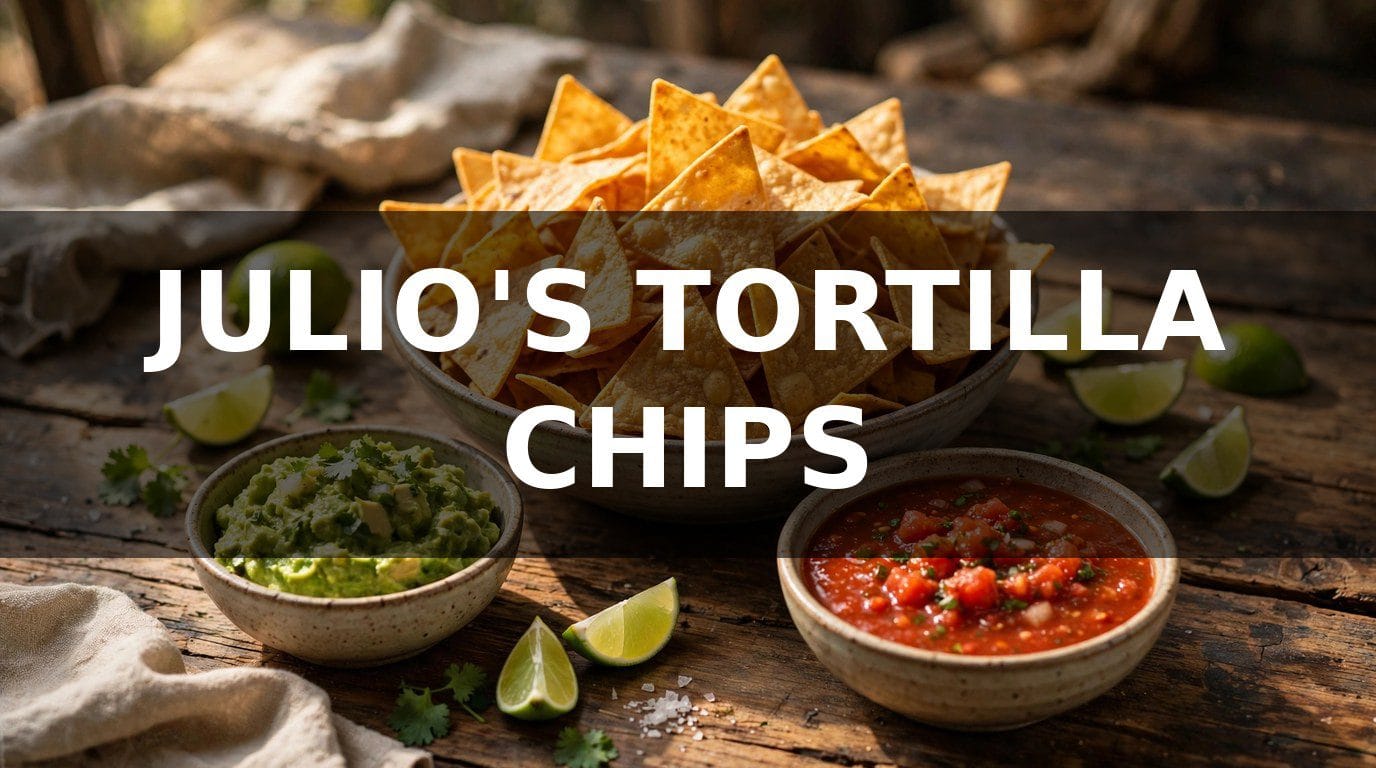
If you have ever sat down at a Tex-Mex restaurant, reached for the chip basket, and thought, “Why can’t the chips I buy at the store taste like this?” — that is exactly the gap Julio’s Tortilla Chips are trying to fill. They are a Texas-based tortilla chip brand with a loyal following, especially among people who grew up eating them in Texas and now look for that same thin, crispy, restaurant-style chip wherever they live.
The short answer: Julio’s Tortilla Chips are thin, crisp, restaurant-style tortilla chips from Texas, known for a light salty flavour and a crunch that holds up well to salsa, queso, and guacamole. They are a solid pick if you like your chips on the lighter, crispier side rather than thick and heavy, though availability outside Texas can be hit or miss, so it is worth checking local stores or online sellers before making a special trip.
In this guide, we will walk through what Julio’s Tortilla Chips actually are, where they come from, what they taste like, which flavours you are likely to find, what goes into the bag, how they compare with other tortilla chips, and the best ways to enjoy them.
IN THIS GUIDE
- What Are Julio’s Tortilla Chips?
- Where Do Julio’s Tortilla Chips Come From?
- What Do They Taste Like?
- Julio’s Tortilla Chips Flavors
- What Is in the Bag? Ingredients Explained
- Are Julio’s Tortilla Chips Gluten-Free?
- Julio’s vs Other Tortilla Chips
- The Best Ways to Eat Julio’s Tortilla Chips
- Where to Buy Julio’s Tortilla Chips
- How to Keep Them Fresh
- Are Julio’s Tortilla Chips Worth Trying?
- FAQs
- Conclusion
What Are Julio’s Tortilla Chips?
Julio’s Tortilla Chips are a brand of corn tortilla chips made in the restaurant style — thin, golden, and crisp, with a light dusting of salt. They are the kind of chip that reminds people of the warm basket that arrives at the table before the meal at a Tex-Mex restaurant: not too thick, not too greasy, and sturdy enough to scoop up a proper spoonful of salsa without snapping in half.
The brand has built its name largely by word of mouth. People who grew up in Texas often know Julio’s from local grocery shelves, and people who moved away from Texas tend to be the ones searching for them online, trying to track down a taste they remember. That kind of loyalty says something. Tortilla chips are a crowded shelf — there are dozens of brands competing for the same space — so a chip that people actively hunt down has to be doing something right.
What sets Julio’s apart, in plain terms, is restraint. The chips are not overloaded with seasoning, they are not fried to a dark, heavy crunch, and they do not try to be a dozen things at once. They are a straightforward corn chip, done well, and that simplicity is a big part of the appeal.
Practical tip: If you are trying Julio’s for the first time, eat a few chips plain before you reach for the dip. You will get a much better sense of the chip itself — the corn flavour, the salt level, and the crunch — and then you can judge how it pairs with salsa or queso.
Where Do Julio’s Tortilla Chips Come From?
Julio’s is a Texas brand, and that matters more than it might seem. Texas has its own tortilla chip culture, shaped by decades of Tex-Mex restaurants, family taquerias, and local tortilla factories. Chips in Texas tend to be thinner and crisper than the thick, scoop-shaped chips that dominate some other parts of the country, and Julio’s fits squarely in that Texas tradition.
The chips are associated with Del Rio, Texas, a border town where Tex-Mex food is not a trend but a way of life. That background shows in the product: these are chips made by people who understand what a good restaurant chip should be, because they have been eating them their whole lives.
Over time, the brand has spread beyond its home region, showing up in grocery stores across Texas and in neighbouring states, and reaching the rest of the country through online sellers. Even so, it still feels like a regional brand rather than a national giant, and for many fans that is part of the charm. Finding a bag can feel like a small discovery rather than a routine purchase.
It is worth saying plainly that availability varies a lot by location. If you live in Texas, you will probably spot Julio’s without much trouble. If you live elsewhere, you may need to look online or ask a local grocer whether they can stock them. We will cover where to look in more detail further down.
What Do They Taste Like?
Taste is personal, so let us describe it in concrete terms rather than hype.
The first thing you notice is the crunch. Julio’s chips are thin, so the bite is crisp and light rather than dense. They shatter cleanly instead of bending or crumbling into dust, which is what you want from a chip that is going into a bowl of salsa. A chip that is too thick can overpower a dip; a chip that is too thin falls apart. Julio’s sit in a comfortable middle ground — thin enough to feel light, thick enough to hold a scoop.
The corn flavour is present but not overpowering. You can taste the toasted corn, especially if you eat a chip on its own, but it does not taste raw or starchy. The salt level is moderate. The chips are salted enough to taste seasoned, but they do not leave that heavy, salty film on your fingers that some brands do. If you are someone who finds most chips too salty, these are worth a try.
The finish is clean. There is no strong oily aftertaste, and the chips do not feel greasy in the hand. That matters more than people realise, because a greasy chip makes everything after it taste like oil. Julio’s chips let the dip do the talking, which is exactly what a good tortilla chip should do.
One honest note: because the chips are thin, they are not the best choice for very heavy, chunky dips if you load them up aggressively. A reasonable scoop of salsa, queso, or guacamole is fine. A giant, overloaded scoop of a thick seven-layer dip might test them. That is a trade-off of the thin restaurant style, and it is the same trade-off you get with the chip basket at a restaurant.
Julio’s Tortilla Chips Flavors
The flavour range for Julio’s is narrower than the big national brands, and that is actually a strength. Instead of twenty varieties, you will generally find a small handful of options, centred on the classic chip with a few seasoned variations.
Availability of specific flavours varies by store and region, and the lineup can change over time, so the best way to know what is on the shelf near you is to check the chip aisle or the brand’s own listings. That said, here is what shoppers commonly encounter.
| Flavor Style | What to Expect | Best With |
|---|---|---|
| Original / Lightly Salted | The classic chip — toasted corn flavour, light salt, thin and crisp | Salsa, queso, guacamole, or on its own |
| Seasoned | The same crisp chip with an extra layer of seasoning for more flavour | Salsa verde, bean dip, or as a snack on its own |
| Hot / Spicy | A warmer, spicier version for people who like heat with their crunch | Queso, creamy dips, or alongside grilled food |
A few things worth noting about the flavours. First, the seasoned and spicy versions are variations on the same chip, not completely different products — the base crunch and corn flavour stay familiar, and the seasoning adds a layer on top. Second, heat levels are subjective. What one person calls “hot” another calls “mildly warm,” so if you are sensitive to spice, try a small amount first. Third, not every store carries every flavour, so if you only see the original variety, that is normal. The original is the one the brand is best known for, and it is the best place to start.
Practical tip: If you are buying Julio’s for a party or a gathering, the original flavour is the safest choice. It pairs with the widest range of dips and suits the most tastes. Save the spicier versions for when you know your guests enjoy heat.
What Is in the Bag? Ingredients Explained
One of the things people like about Julio’s is that the ingredient list is short and straightforward. A classic tortilla chip does not need a long list of additives, and Julio’s keeps it simple.
A typical bag of plain tortilla chips like these is made from corn, oil, and salt. The corn is ground into masa, formed into thin tortillas, cut, and fried until crisp. That is the whole idea. Seasoned varieties add flavourings on top of that base, which is where the ingredient list gets a little longer.
Because recipes and suppliers can change, and because different flavours have different ingredients, the label on the bag you are holding is always the final word. Check it before you buy if you have a food allergy, a dietary restriction, or a sensitivity to a particular ingredient. That is good practice with any packaged food, and it is especially important with flavoured chips, where seasoning blends can include ingredients you might not expect.
A few general points that shoppers often ask about:
- Corn: The base of the chip is corn, which is what gives it that toasted, slightly sweet corn flavour. Most tortilla chips, including Julio’s, are made from corn rather than flour.
- Oil: The chips are fried in oil, which is what creates the crisp texture. The type of oil can vary, so check the label if this matters to you.
- Salt: Salt is part of the flavour, and the level is moderate compared with many snack chips. If you are watching your sodium intake, the nutrition label on the bag will give you the exact figure for the bag you buy, and it is the only reliable source for that number.
We are deliberately not listing specific nutrition numbers here, because those numbers belong to a specific bag, flavour, and serving size, and they can change. The label is the reliable source. What we can say generally is that tortilla chips are a snack food — enjoyable, but best eaten in sensible portions as part of a balanced diet, like any chip.
Are Julio’s Tortilla Chips Gluten-Free?
This is one of the most common questions about any tortilla chip, and it deserves a careful answer.
Corn tortilla chips are often naturally gluten-free in the sense that their main ingredient is corn, not wheat. Many brands of corn tortilla chips are labelled gluten-free, and many people who avoid gluten eat them without a problem. However, “often” is not the same as “always.”
Whether a specific bag of Julio’s Tortilla Chips is gluten-free depends on the recipe for that flavour, how it is made, and whether the bag carries a gluten-free label. Seasoned varieties, in particular, can include flavourings that change the picture, and manufacturing practices matter too.
So here is the honest guidance: if you need to avoid gluten for medical reasons, check the bag for a gluten-free label and read the ingredient and allergen statements before eating. Do not rely on a general article — including this one — to make that call. The label on the bag you actually buy is the only source that counts. If the bag does not say gluten-free and you need certainty, it is safer to choose a product that is clearly labelled.
The same advice applies to other dietary questions, whether you are avoiding dairy, soy, or anything else. The plain original chip is the simplest version and the least likely to contain unexpected ingredients, but again, the label is the authority.
Julio’s vs Other Tortilla Chips
How does Julio’s stack up against the other chips on the shelf? It helps to compare by style, because “best tortilla chip” depends on what you are using it for.
| Chip Style | Thickness | Crunch | Best Use |
|---|---|---|---|
| Julio’s (restaurant style) | Thin | Light, crisp | Salsa, queso, guacamole, snacking |
| Thick scoop / restaurant scoop chips | Thick | Dense, sturdy | Heavy dips, seven-layer dip, loaded nachos |
| Cantina-style chips | Medium-thin | Crisp with a slightly chewy centre | Everyday dipping, parties |
| Multigrain / flavoured chips | Varies | Varies by brand | Snacking on their own |
Julio’s competes best in the restaurant-style category, and that is where it shines. Against other thin, crisp chips, it holds its own on flavour and texture, and fans would argue it beats most of them. Against thick scoop chips, it is a different tool for a different job — Julio’s will not win a contest for the sturdiest chip, but a thick scoop chip will not match Julio’s for lightness and clean flavour either.
Compared with the big national brands, Julio’s feels less mass-produced. The chips are not identical clones of each other, the seasoning feels lighter, and the overall impression is closer to something from a local tortilla factory than a national snack line. That is a matter of taste, of course, and some people prefer the consistency of a big brand. But if you have ever thought that supermarket chips taste a little flat or a little too uniform, Julio’s is a good brand to try.
Price is another thing people ask about, and it varies enough by store and region that quoting a specific price here would be misleading. In general, regional brands like Julio’s tend to be priced in the same range as other premium tortilla chips — sometimes a little more than the cheapest store brand, sometimes a little less than the big national names. The fairest way to judge value is to compare the price per bag with the other chips on the same shelf, on the same day, in your store.
The Best Ways to Eat Julio’s Tortilla Chips
A good tortilla chip is versatile, and Julio’s is no exception. Here are the ways it works best, based on how the chip is built.
With salsa. This is the natural pairing. The thin, crisp chip and a fresh tomato salsa are a classic combination. The chip is sturdy enough for a normal scoop, and its light salt lets the salsa’s flavour come through. Try it with a chunky pico de gallo as well as a smoother restaurant-style salsa — both work.
With queso. Warm cheese dip and a crisp chip are a hard combination to beat. The chip’s light crunch contrasts nicely with the smooth, rich queso. This is where the thin style really earns its keep, because a heavy chip plus a heavy dip can feel like too much.
With guacamole. Guacamole is creamy and rich, so it benefits from a chip with a clean, light crunch. Scoop gently rather than digging aggressively, and the chip will hold up fine.
As nachos. Julio’s work well for nachos, especially if you build them in layers rather than piling everything on top at once. Spread the chips in a single layer on a tray, add cheese and toppings evenly, and warm them just until the cheese melts. The chips stay crisper if they are not overloaded with wet toppings.
As a snack on their own. Honestly, this is where you find out whether you like a chip. A good tortilla chip should be enjoyable plain, and Julio’s are. A handful with a cold drink, no dip required, is a perfectly good way to eat them.
Crushed as a topping. Crushed tortilla chips make a great crunchy topping for soups, salads, and chilli. Keep a bag in the cupboard for this purpose — it is a simple way to add texture to a meal.
Practical tip: Serve the chips in a bowl rather than eating from the bag at a gathering. It slows everyone down a little, keeps the chips fresher, and just looks better on the table. Refill the bowl as needed instead of putting out the whole bag at once.
Where to Buy Julio’s Tortilla Chips
This is the question that brings most people to an article like this one, so let us answer it directly.
In Texas, Julio’s Tortilla Chips are a grocery store item. You are likely to find them in the chip aisle of larger supermarkets and regional grocery chains, alongside the other tortilla chips. Availability in a particular store can vary, and smaller stores may not carry them, so it is worth checking the bigger stores first if you are hunting for a bag.
Outside Texas, the picture is mixed. Some grocery stores in neighbouring states carry them, especially in areas with a large Tex-Mex food culture. Further away, they become harder to find on a regular shelf. That is where online sellers come in. A number of online grocery and snack retailers list Julio’s, and ordering online is often the most reliable way to get a bag if you do not live near a store that stocks them. Prices and shipping costs vary, so compare a couple of sellers before you order, and check how the chips are packed — tortilla chips travel best when they are packed with care.
A few practical suggestions for tracking them down:
- Check the tortilla chip aisle first, not the general snack aisle, since some stores shelve them with the tortillas.
- Ask at the customer service desk of your local grocery store whether they can order them. Stores often respond to customer requests, especially if more than one person asks.
- Look for them in stores that specialise in Mexican or Tex-Mex groceries, which are more likely to carry regional Texas brands.
- If you are ordering online, consider ordering more than one bag at a time to make the shipping cost worthwhile, and store the extra bags properly so they stay fresh.
One caution: because Julio’s is a regional brand, you may occasionally find listings from third-party sellers at inflated prices. Compare the price with what the chips sell for in Texas before you pay a large markup. A modest premium for shipping is normal; a price several times the shelf price is not.
How to Keep Them Fresh
Tortilla chips go stale faster than people expect, and a bag of Julio’s is no exception. The enemy is air and moisture, so the goal is simple: keep the bag sealed and keep it dry.
Once you open a bag, fold the top down tightly and clip it shut, or transfer the chips to an airtight container. A chip clip works fine; a sealed container works even better. Store the bag in a cool, dry place — a pantry or cupboard is ideal. Avoid storing chips near the stove or anywhere warm and humid.
If your chips do go a little soft, there is a simple fix. Spread them in a single layer on a baking tray and warm them in the oven for a few minutes at a low temperature until they crisp up again. Let them cool for a minute before eating. This works surprisingly well and can rescue a bag that has been open a day or two too long. Just watch them closely, because thin chips can go from crisp to burnt quickly.
Unopened bags will keep for as long as the date printed on the bag allows, as long as they are stored properly. Once opened, try to finish them within a few days for the best texture. That is rarely a problem in practice — an open bag of good chips does not tend to last long.
Are Julio’s Tortilla Chips Worth Trying?
Here is an honest verdict, without the hype.
Julio’s Tortilla Chips are worth trying if you like thin, crisp, restaurant-style chips and you enjoy Tex-Mex food. They are a well-made, straightforward chip with a clean corn flavour, a light crunch, and a moderate salt level. They pair beautifully with salsa, queso, and guacamole, and they are enjoyable on their own too.
They are not the right chip for everyone. If you prefer thick, heavy scoop chips for loaded dips, or if you want a chip that is heavily seasoned, you may find Julio’s a little understated. And if you do not live in Texas, you may have to put in some effort to find them, which is a real drawback.
| Pros | Cons |
|---|---|
| Thin, crisp, restaurant-style texture | Harder to find outside Texas |
| Clean corn flavour, not too salty | Thin chips can break with very heavy dips |
| Simple, short ingredient list | Flavour range is smaller than big brands |
| Pairs well with salsa, queso, and guacamole | Prices vary a lot from online sellers |
| Loyal fan base and consistent quality | No heavy seasoning for those who want it |
The bottom line is simple. If you see a bag, buy it and try it. You will know within the first handful whether it is your kind of chip. For a lot of people, it is — and that is why a regional Texas chip has fans searching for it all over the country.
FAQs
What are Julio’s Tortilla Chips?
Julio’s Tortilla Chips are a Texas-based brand of thin, crisp, restaurant-style corn tortilla chips. They are known for a light, salty flavour and a clean crunch that works well with salsa, queso, and guacamole.
Where are Julio’s Tortilla Chips made?
Julio’s is a Texas brand, associated with Del Rio, Texas. The chips are made in the Texas restaurant style — thin and crisp — and they are most widely available in Texas grocery stores, with online sellers serving the rest of the country.
What flavors do Julio’s Tortilla Chips come in?
The range is small and centred on the original lightly salted chip, with seasoned and spicy variations also available in many stores. Availability varies by location, so check the shelf or the seller’s listing for the flavours in stock near you.
Are Julio’s Tortilla Chips gluten-free?
Corn tortilla chips are often gluten-free, but whether a specific bag is gluten-free depends on its recipe and labelling. Check the bag for a gluten-free label and read the ingredient and allergen statements before eating, especially if you need to avoid gluten for medical reasons.
Where can I buy Julio’s Tortilla Chips?
In Texas, look in the tortilla chip aisle of larger grocery stores. Outside Texas, try stores with a strong Tex-Mex selection or order from an online grocery or snack retailer. Availability varies, so it is worth checking more than one source.
Are Julio’s Tortilla Chips good for nachos?
Yes, they work well for nachos if you build them in layers and avoid overloading them with wet toppings. Spread the chips in a single layer, add cheese and toppings evenly, and warm just until the cheese melts so the chips stay crisp.
How do Julio’s Tortilla Chips compare to other brands?
They are thinner and lighter than thick scoop chips, with a cleaner corn flavour and moderate salt. They compete best against other restaurant-style chips, where their crisp texture and simple flavour stand out. They are less suited to very heavy dips than a thick scoop chip.
Conclusion
Julio’s Tortilla Chips are a simple idea done well: a thin, crisp, restaurant-style tortilla chip from Texas, with a clean corn flavour and just enough salt. They are not trying to be the loudest chip on the shelf, and that is exactly why people keep coming back to them.
If you like Tex-Mex food, if you prefer a lighter chip that lets your dip shine, or if you grew up eating these and want a taste of home, they are well worth seeking out. Check your local grocery store first, and if they are not on the shelf near you, look online. An open bag rarely lasts long, so buy two — one for the salsa, and one for the people who will ask where you found them.
Read Also: It’s Raining Tacos Roblox ID: How to Find and Use the Code