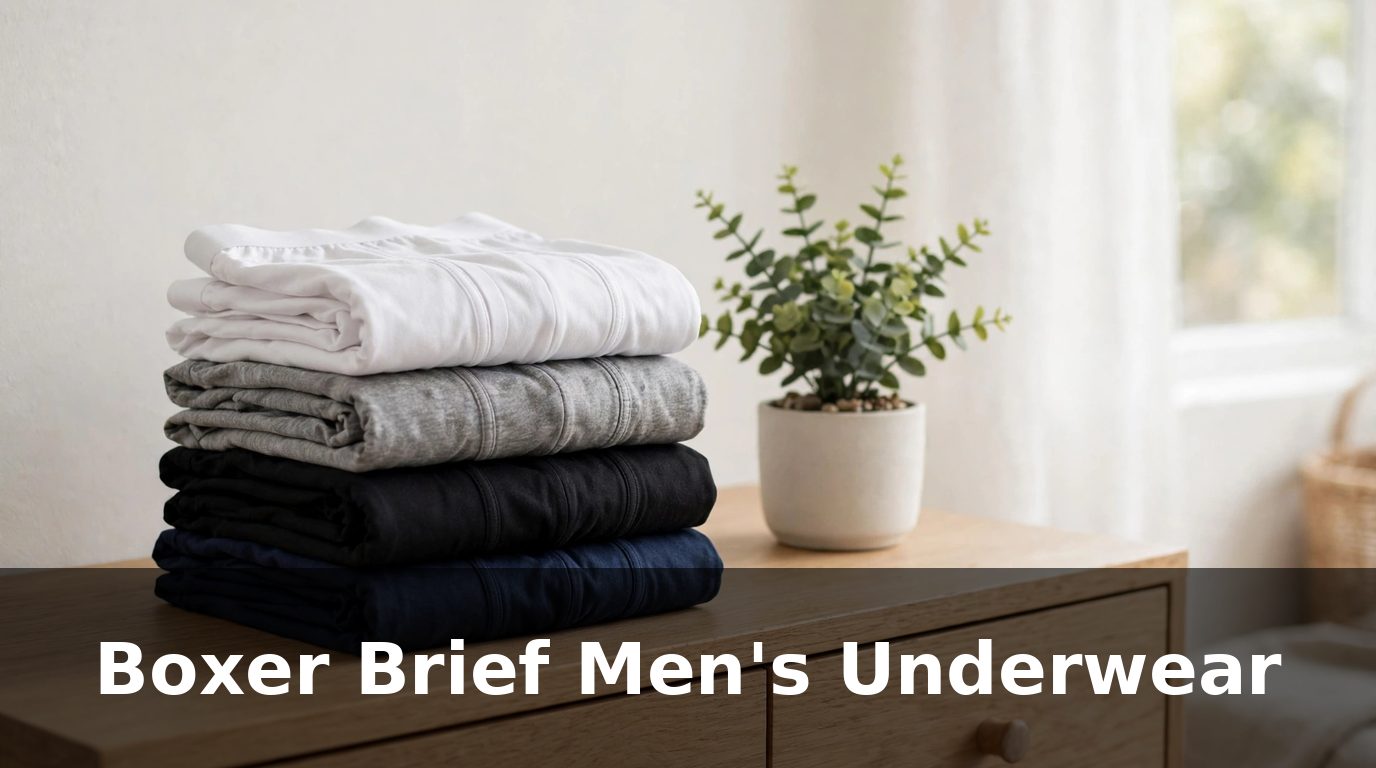
The short answer: boxer brief men’s underwear is the middle ground between boxers and briefs. It gives you the leg coverage of boxers with the snug support of briefs, and for most men it is the most comfortable everyday option. The pair that works best for you comes down to three things — the right fit around the waist and legs, a fabric that suits how you spend your day, and a waistband that stays put without digging in.
If you have ever bought a pack of boxer briefs only to find they ride up, bunch at the thigh, or lose their stretch after a few washes, you are not alone. Small differences in cut, fabric blend and leg length change how a pair feels over a full day. This guide walks through all of it in plain terms, so your next purchase is a confident one.
IN THIS GUIDE
- What Are Boxer Briefs?
- Boxer Briefs vs Boxers vs Briefs
- How Boxer Briefs Should Fit
- Fabrics Explained: Cotton, Modal, Microfibre and Blends
- The Waistband: What to Look For
- Leg Length and the Ride-Up Problem
- Choosing Boxer Briefs for Your Day
- Sizing: How to Get It Right
- Care Tips That Keep Them Comfortable Longer
- Common Mistakes to Avoid
- Frequently Asked Questions
- Conclusion
More Information: When Is the Next Meteor Shower? Peak Dates for 2026
What Is Boxer Brief Men’s Underwear?
Boxer briefs are a style of men’s underwear that combines two older designs. They have legs that extend partway down the thigh, like boxers, and a close, supportive fit through the seat and pouch, like briefs. The result is underwear that stays in place, reduces chafing between the thighs, and works under most trousers, jeans and shorts.
They became popular because they solve a simple problem. Loose boxers can bunch up under slim trousers, and briefs leave the thighs bare, which can mean rubbing on long walks or warm days. Boxer briefs cover the thigh, hold everything in place, and still look neat under fitted clothing. That is why they are now the default choice in many men’s drawers.
Most boxer briefs share the same basic construction: an elastic waistband, a contoured or flat pouch at the front, seams along the legs, and a hem at the bottom of each leg. Beyond that, brands vary the details — the length of the leg, the width of the waistband, the shape of the pouch, and the fabric. Those details are what make one pair feel great and another feel wrong, even in the same size.
Boxer Briefs vs Boxers vs Briefs
The three main styles each have their place. Knowing the difference helps you choose for the day ahead rather than wearing the same style for everything.
| Feature | Boxer Briefs | Boxers | Briefs |
|---|---|---|---|
| Leg coverage | Mid-thigh | Knee or above the knee, loose | None, high-cut leg |
| Support | Snug and supportive | Little to none | Snug and supportive |
| Best under | Slim trousers, jeans, shorts | Loose trousers, loungewear | Tight trousers, gym shorts |
| Chafing protection | Good, thighs covered | Some, but fabric can bunch | None on the thighs |
| Visible lines | Low with a good fit | Can bunch and show | Minimal |
| Everyday comfort | High for most men | High when relaxing | High for active days |
The short answer on which to choose: boxer briefs are the best all-rounder. Boxers suit relaxed days at home. Briefs suit workouts and very fitted trousers. Many men keep all three in the drawer and rotate them by activity, and there is nothing wrong with that.
How Boxer Briefs Should Fit
Fit is the single biggest factor in comfort, and it is also the one people get wrong most often. A good pair should feel like it is barely there. Here is what to check.
The waistband should sit flat against your waist without rolling or digging in. You should be able to slide two fingers under it without much effort, but it should not slide down when you move. If you can see a red mark after wearing them, the waistband is too tight or too narrow for you.
The pouch should hold you comfortably without squeezing. A contoured pouch gives a little extra room at the front and keeps things in place when you sit, stand and walk. A flat front works fine for some men, but if you find yourself adjusting through the day, a contoured pouch is usually the fix.
The legs should sit smoothly against your thighs. They should not squeeze, and the hem should not cut into your skin. At the same time, they should not be so loose that the fabric rides up when you walk. The sweet spot is a gentle grip that moves with you.
Practical tip: try a new style at home for a full day before buying a multi-pack. Sit, walk, climb stairs and bend down. A pair that feels fine standing in front of a mirror can still ride up after an hour of walking.
Fabrics Explained: Cotton, Modal, Microfibre and Blends
Fabric decides how a pair feels against the skin, how it handles sweat, and how long it keeps its shape. Most boxer briefs are made from one of these materials, or a blend of them.
Cotton is the classic choice. It is soft, breathable and easy to wash, and it suits everyday wear in mild weather. Pure cotton absorbs moisture rather than moving it away from the skin, so it can feel damp on very hot days or during exercise. A cotton blend with a little elastane keeps the shape better than pure cotton alone.
Modal is made from beech wood fibre and feels noticeably softer and smoother than cotton. It drapes well, resists shrinking, and holds its colour through many washes. Men who find cotton a little rough often prefer modal. It usually costs a little more, and it is a good pick for all-day comfort.
Microfibre is a synthetic fabric, usually polyester or nylon based. It is light, smooth and quick to dry, and it moves moisture away from the skin. That makes it a strong choice for workouts, travel and hot weather. The trade-off is that it can feel less natural than cotton or modal, and some men find it warmer in a different way, because it does not breathe quite the same.
Blends combine these materials to balance their strengths. Cotton with elastane is the most common blend: the cotton gives softness and breathability, and the elastane — usually a small percentage — gives stretch and shape retention. Modal with elastane is similar but softer. When you read a label, the elastane content matters more than most people realise. Around five percent is enough to keep a pair from sagging.
The short answer on fabric: cotton blends for everyday wear, modal for softness, microfibre for sport and heat. If your current pairs lose their shape quickly, check the label — a low elastane content or pure cotton is often the reason.
The Waistband: What to Look For
The waistband does more work than any other part of the garment. It holds the pair in place all day, so a bad waistband ruins an otherwise good pair.
A good waistband is wide enough to distribute pressure — usually around three to four centimetres — and made from a soft elastic that does not twist or roll. Covered waistbands, where the elastic is wrapped in fabric, tend to feel gentler on the skin than exposed elastic. If a waistband rolls over on itself when you sit, it is either too narrow or the elastic has lost its spring.
Some waistbands carry a printed logo, others are plain. That is a matter of taste. What matters is the feel: run your thumb along the inside before you buy if you can. Rough stitching or a hard edge on the inside will only get more annoying through the day.
Practical tip: if your waistband keeps rolling, try a pair with a wider waistband or a different rise. A mid-rise pair, where the waistband sits at or just below the natural waist, rolls less than a low-rise pair on most body shapes.
Leg Length and the Ride-Up Problem
Ride-up is the most common complaint about boxer briefs, and leg length is usually the cause. Boxer briefs come in several leg lengths, even though shops rarely label them clearly.
Shorter legs, ending just below the crotch, suit men with slimmer thighs and those who wear shorts. Standard legs, ending mid-thigh, suit most men and most trousers. Longer legs, ending just above the knee, suit men with larger thighs and anyone who walks a lot, because the extra fabric stops the hem from creeping upward.
If your pairs ride up, the fix is usually a longer leg or a size with more room in the thigh, not a tighter pair. Tighter legs grip harder at first and then roll upward as you move. A leg that sits smoothly, with the hem flat against the skin, stays where it belongs.
Seams matter here too. Flatlock seams lie flat against the skin and reduce rubbing. A raised seam on the inner thigh can chafe on a long walk, so if you are prone to chafing, look for pairs with flat seams or a seamless leg design.
Choosing Boxer Briefs for Your Day
Different days ask for different underwear. Matching the pair to the day is a small habit that pays off in comfort.
For a normal workday at a desk, a cotton or modal blend with a mid-length leg is hard to beat. It breathes, it stays put when you sit for hours, and it looks smooth under trousers.
For active days — walking, manual work, or a long commute on foot — a longer leg and a moisture-moving fabric help. Microfibre or a modal blend reduces sweat and chafing, and the longer leg keeps the hem in place.
For workouts, choose a dedicated performance pair. Look for microfibre, flat seams, a supportive pouch and a waistband that will not roll during movement. Regular cotton pairs absorb sweat and get heavy, which is uncomfortable during exercise.
For travel, quick-dry microfibre is practical because you can wash a pair in a sink and have it dry overnight. Pack a couple of extras either way; underwear is the cheapest comfort upgrade on a trip.
For sleep, many men prefer loose boxers or nothing at all, and that is fine. If you do wear boxer briefs to bed, choose a soft, loose pair in cotton or modal rather than a tight performance pair.
Sizing: How to Get It Right
Underwear sizing is based on waist measurement, and it varies between brands, so the size on the label is only a starting point. Measure your waist where the waistband will sit, usually at or just below your natural waist, and compare it with the brand’s size guide rather than assuming your trouser size matches.
If you fall between two sizes, the choice depends on the fabric. For a stretchy modal or microfibre pair, the smaller size often works because the fabric gives. For a cotton pair with little stretch, the larger size is usually more comfortable. When in doubt, size up: a slightly loose pair is far more comfortable than a slightly tight one.
Weight changes matter too. If your waist has changed since you last bought underwear, measure again instead of ordering the same size out of habit. A drawer full of the wrong size is a quiet daily annoyance that is easy to fix.
Care Tips That Keep Them Comfortable Longer
Good underwear lasts longer when it is washed with a little care. Wash in cool or warm water rather than hot, and avoid high heat in the dryer. Heat is the main enemy of elastic: it breaks down the stretch in waistbands and leg hems over time.
Turn pairs inside out before washing to protect the outside surface, and skip fabric softener, which can coat synthetic fibres and reduce their ability to move moisture. Line drying is ideal, but a low dryer setting is fine if you are in a hurry.
Replace pairs when the elastic gives up, the fabric thins, or the legs no longer stay in place. As a rough guide, everyday pairs last around a year of regular wear and washing, though that varies with quality and how many pairs you rotate. A bigger rotation means each pair is washed less often and lasts longer.
More Information: Women’s Board Shorts: Styles, Fit and How to Choose
Common Mistakes to Avoid
A few habits cause most underwear discomfort, and all of them are easy to change.
Buying the cheapest multi-pack without checking the fabric is the first. A low price often means thin fabric and weak elastic that gives up within weeks. Spending a little more on a better pair usually works out cheaper over time.
Wearing the same size from every brand is the second. Brands cut differently, so a medium in one brand can feel like a small in another. Check the size guide each time you try a new brand.
Ignoring the leg length is the third. If your pairs ride up, the answer is rarely to pull them down harder; it is a longer leg or a different cut.
Finally, keeping worn-out pairs is a mistake. Underwear with dead elastic does not support properly, and thin fabric can chafe. If a pair has lost its shape, retire it.
Frequently Asked Questions
Are boxer briefs good for everyday wear?
Yes. For most men, boxer briefs are the best everyday choice. They offer support, cover the thighs to reduce chafing, and sit smoothly under trousers and jeans. Choose a cotton or modal blend for daily wear and keep a performance pair for workouts.
Do boxer briefs ride up?
They can, usually when the leg is too short or too tight for your thighs. A longer leg length, a size with more room in the thigh, and flat seams all help. If your current pairs ride up, try a longer-leg style before changing size.
What is the best fabric for boxer briefs?
It depends on the day. Cotton blends are best for everyday wear because they are soft and breathable. Modal is softer still and holds its shape well. Microfibre is best for sport, heat and travel because it dries quickly and moves moisture away from the skin.
How tight should boxer briefs be?
They should feel snug but not tight. The waistband should stay in place without leaving marks, the pouch should support without squeezing, and the legs should grip gently without cutting in. If you are adjusting them through the day, the fit is wrong.
How many pairs of boxer briefs should I own?
Most men are comfortable with ten to fourteen pairs, enough for a week or two between washes with spares. A larger rotation also makes each pair last longer, since it is washed less often.
How often should I replace boxer briefs?
Replace them when the elastic weakens, the fabric thins or holes appear, or the fit changes. With regular wear, a good pair usually lasts around a year, though quality and rotation make a real difference.
Conclusion
Boxer brief men’s underwear earns its place as the default choice for a simple reason: it does the basics well. It supports, it covers the thighs, and it disappears under your clothes. The difference between a pair you forget you are wearing and a pair you fight all day comes down to fit, fabric and leg length — not brand names or price tags.
Start with your waist measurement, pick a fabric that matches your day, and choose a leg length that stays put on your thighs. Try one pair before buying a pack, and retire pairs once the elastic gives up. Get those few things right, and the humble boxer brief becomes one of the easiest comfort upgrades in your wardrobe.
Read Also: Athletic Propulsion Labs Men’s TechLoom Breeze Running Shoes