If you have ever wondered how a supermarket stays stocked with thousands of products every single day, the answer usually involves a company you have never heard of. C&S Wholesale Grocers is one of those companies. It is one of the largest wholesale grocery distributors in the United States, and yet most shoppers will never see its name on a storefront, a product label, or a delivery van in their neighbourhood. That is because C&S does not sell to the public. It sells to the stores that sell to the public.
This guide explains, in plain English, what C&S Wholesale Grocers is, what a wholesale grocer actually does, who its customers are, how grocery distribution works step by step, and why companies like C&S matter to the price and availability of the food on your shelves. Where exact figures change frequently — such as the number of stores served or the size of the workforce — this article describes the scale in general terms rather than quoting numbers that may already be out of date.
What Is C&S Wholesale Grocers?
C&S Wholesale Grocers is an American wholesale grocery distribution company. In simple terms, it buys food and grocery products in very large quantities from manufacturers and producers, stores them in huge distribution warehouses, and then delivers them to supermarkets, grocery stores, and other food retailers, who sell them on to shoppers.
The company is headquartered in the northeastern United States and operates a network of distribution centres across the country. It is widely described as one of the largest grocery wholesalers in the United States, and it has been in the grocery supply business for many decades, growing from a regional supplier into a national-scale distributor. Its customers are mainly independent and regional supermarket operators — the kinds of stores that are not large enough to run their own national distribution networks, but still need a reliable, full-range supply of products every week.
It is important to understand the position C&S occupies in the food supply chain. It sits between the manufacturers who make food products and the retailers who sell them. That middle position is sometimes called the wholesale tier, and it is essential to how modern grocery retail works. Without wholesalers, every supermarket would have to negotiate separately with hundreds or thousands of individual suppliers, arrange its own transport, and manage its own warehousing. Wholesalers consolidate all of that into a single, manageable supply relationship.
What Does a Wholesale Grocer Actually Do?
The job of a wholesale grocer can be broken down into a handful of core functions. Each one solves a practical problem for retailers, and together they explain why wholesalers exist at all.
Buying in Bulk
Manufacturers prefer to sell in large volumes. A cereal company, for example, would rather ship truckloads of product to a few large buyers than send small parcels to thousands of individual shops. C&S buys in bulk from many manufacturers at once, which gives it negotiating power on price and ensures a steady flow of stock. Retailers then benefit from that scale without having to buy in the same quantities themselves.
Warehousing
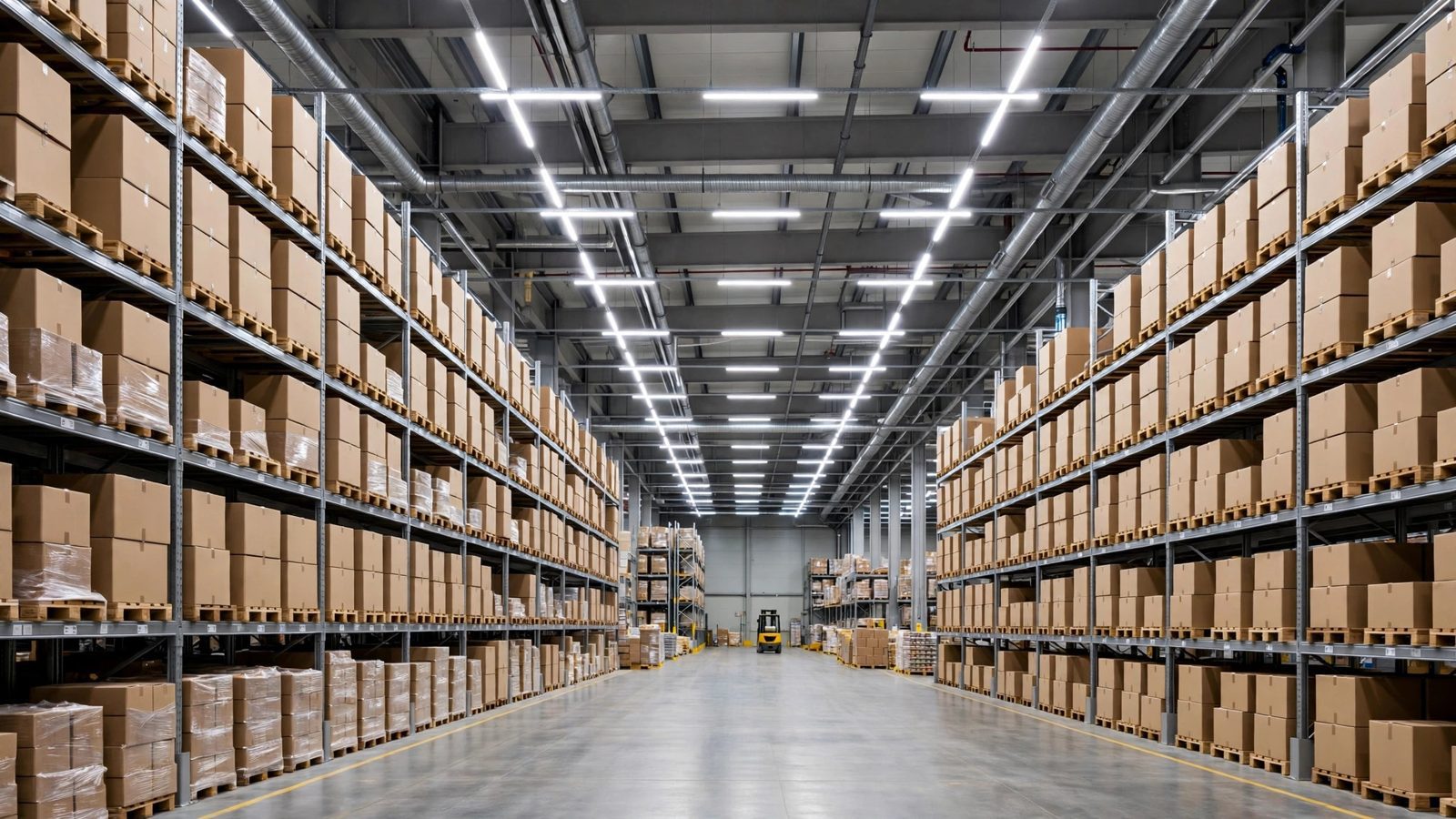
The products C&S buys are stored in distribution centres — enormous warehouses, often covering hundreds of thousands of square feet, with sections for dry goods, chilled products, frozen foods, and fresh produce. These facilities are organised so that products can be located, picked, and loaded quickly, and so that temperature-sensitive goods stay at the right temperature throughout. Modern distribution centres use warehouse management systems to track stock levels, expiry dates, and order locations, which reduces errors and waste.
Order Assembly
When a supermarket places an order, warehouse staff (often assisted by automated systems) pick the requested items from the shelves, pack them onto pallets, and prepare them for loading. A single supermarket order can contain thousands of individual items across dozens of product categories, so accuracy and speed matter enormously. A mistake at this stage — a missing product, a wrong quantity, a damaged case — shows up directly as an empty shelf in the store.
Delivery
The assembled orders are loaded onto trucks and delivered to stores on a regular schedule, often several times a week. Delivery routes are planned to be efficient, and timing matters: fresh and chilled products need to arrive promptly, and stores plan their shelf-stocking and staffing around expected delivery times. Reliable delivery is one of the main things retailers judge a wholesaler on, because a late or incomplete delivery disrupts the whole store.
Additional Services
Beyond moving boxes, large wholesalers often provide services that help smaller retailers compete. These can include help with store layout and merchandising, advice on which products to stock, marketing and promotional support, and technology such as ordering and inventory systems. For an independent supermarket, these services can be as valuable as the products themselves, because they provide expertise that a small business could not easily afford on its own.
Who Does C&S Supply?
C&S serves a broad range of customers across the American grocery industry. The table below summarises the main customer types and what each one typically needs from a wholesaler.
| Customer type | What they need | Why a wholesaler helps |
|---|---|---|
| Independent supermarkets | A full range of products without running their own warehouses | One supplier relationship covers thousands of products |
| Regional grocery chains | Reliable, large-scale supply across multiple stores | Consistent stock and delivery across all locations |
| Small and rural stores | Access to products they could not buy directly in bulk | Wholesaler buying power keeps their shelves stocked |
| Military commissaries and institutional buyers | Regular, dependable supply of grocery staples | Distribution network reaches locations across the country |
| Specialty and ethnic grocers | Specific product ranges alongside everyday staples | Wholesalers can source niche products at scale |
The common thread is scale. None of these customers, on their own, buys enough volume to deal directly with every manufacturer efficiently. The wholesaler aggregates their demand, buys at scale, and distributes the products onward. It is a model that has existed in grocery for well over a century, and while the technology has changed dramatically, the basic logic has not.
How Grocery Distribution Works, Step by Step
To make the process concrete, here is how a typical product — say, a box of pasta — moves from a manufacturer to a supermarket shelf through a wholesaler like C&S.
- Manufacturing. The pasta producer makes the product in bulk and packages it in cases suitable for wholesale distribution.
- Wholesale purchase. C&S orders the product in large quantities, often as part of a regular replenishment cycle based on demand across all its customers.
- Inbound delivery. The manufacturer’s trucks deliver the cases to a C&S distribution centre, where they are checked in and stored.
- Retailer ordering. A supermarket reviews its stock levels and places an order with C&S, typically through an electronic ordering system, specifying exactly which products and quantities it needs.
- Picking and packing. Warehouse staff pick the ordered items from storage, assemble them onto pallets, and wrap and label them for the specific store.
- Outbound delivery. Trucks deliver the pallets to the store, usually on a set schedule, where store staff unload, check, and shelve the products.
- Shelf and sale. The product reaches the shop floor, where customers buy it, and the cycle begins again as the store’s stock levels fall.
Each step involves coordination, timing, and information. If any link breaks — a manufacturer delay, a warehouse error, a transport problem — the effect ripples forward to the store shelf. That is why large wholesalers invest so heavily in logistics, forecasting, and technology: their business is, at heart, a promise of reliability.
Why Wholesalers Matter for Independent Stores
The grocery industry in the United States is dominated by a small number of very large chains, which have their own distribution networks and enormous buying power. For independent supermarkets — family-owned stores, regional chains, and community grocers — competing with those giants would be almost impossible without wholesalers.
A wholesaler gives an independent store access to the same kinds of advantages that a large chain enjoys: bulk pricing, a wide product range, reliable delivery, and professional support services. Without that, an independent store would face higher costs, a narrower range, and more frequent stock problems, and shoppers in smaller towns and rural areas would have fewer choices and higher prices.
This is also why wholesalers matter beyond the grocery trade itself. They help sustain food access in communities that large chains may not serve, they support local employment in both distribution and retail, and they give smaller food producers a route to market — a small manufacturer can reach hundreds of stores through a wholesaler relationship that would be impossible to build store by store.
C&S and the Wider Grocery Industry
C&S operates in an industry that has changed significantly over recent decades, and understanding those changes helps to explain why wholesale grocery companies look the way they do today.
One major change is consolidation. The grocery industry has seen waves of mergers and acquisitions, among both retailers and wholesalers, as companies have sought greater scale to compete on price and efficiency. Large wholesalers have grown by acquiring smaller regional distributors and by taking on the supply contracts of chains that have closed or restructured. This has made the wholesale tier more concentrated, with a small number of very large players serving much of the market.
Another change is technology. Modern distribution relies on sophisticated systems for forecasting demand, managing inventory, routing trucks, and tracking products through the supply chain. Automation in warehouses — from conveyor systems to robotic picking aids — has increased speed and accuracy, while data analytics helps wholesalers predict what stores will need and when. These investments are expensive, which is another reason scale matters: only large operators can afford the systems that make distribution efficient.
A third change is the growing importance of fresh and prepared foods. Shoppers increasingly want fresh produce, ready meals, and specialty products, all of which are harder to distribute than shelf-stable goods because they are perishable and time-sensitive. Wholesalers have had to adapt their cold-chain capabilities, delivery frequency, and handling procedures to meet that demand, and the ability to manage fresh distribution well has become a competitive advantage.
Finally, the industry faces ongoing pressures: labour shortages in warehousing and trucking, rising transport costs, supply chain disruptions, and changing consumer habits, including the growth of online grocery shopping. Wholesalers sit at the centre of these pressures, because they are the link that has to keep working when any part of the chain is strained. The resilience of companies like C&S is therefore not just a business matter — it affects whether shelves stay stocked during difficult periods.
Common Questions People Ask About C&S
Because C&S works behind the scenes, people often encounter the name in contexts that raise questions. Here are the most common ones, answered in general terms.
Can I buy directly from C&S? No, not as an ordinary shopper. C&S is a wholesale distributor, which means its customers are businesses — supermarkets and other retailers — not individual consumers. If you want to buy groceries, you buy them from a retailer that C&S (or another wholesaler) supplies.
Is C&S a supermarket chain? No. C&S does not operate stores under its own name for the public. It supplies stores operated by other companies. Some of the supermarkets it supplies may be independently owned and carry their own branding, which is why shoppers rarely connect the store they visit with the wholesaler behind it.
Does C&S make its own food products? Its core business is distribution, not manufacturing. However, large wholesalers commonly offer private-label or store-brand products — goods made by manufacturers to a retailer’s specification and sold under the retailer’s own brand. These give independent stores a way to offer competitively priced own-brand ranges without developing them from scratch.
Where is C&S based? The company is headquartered in the northeastern United States and operates distribution centres across the country. The exact footprint of its warehouse network changes over time as facilities open, close, or expand, so current details are best checked against the company’s own information.
How big is C&S? It is consistently described as one of the largest wholesale grocery distributors in the United States, serving a large number of stores nationwide. Exact figures for revenue, employees, or stores served fluctuate and are reported differently by different sources, so this article describes its scale in general terms rather than quoting a figure that may already be out of date.
Frequently Asked Questions
What does C&S Wholesale Grocers do?
C&S buys grocery products in bulk from manufacturers, stores them in distribution centres, and delivers them to supermarkets and other food retailers, who then sell them to shoppers. It also provides supporting services such as merchandising help and ordering technology.
Who are C&S Wholesale Grocers’ customers?
Its customers are mainly grocery retailers — independent supermarkets, regional chains, and institutional buyers — rather than individual shoppers. It does not sell directly to the public.
Is C&S Wholesale Grocers the largest grocery wholesaler in the US?
It is one of the largest, and it is regularly described that way in industry coverage. Rankings in the wholesale grocery sector can shift over time as companies merge or change strategy, so it is safest to say it is among the biggest rather than claiming a specific rank.
Can I work for C&S Wholesale Grocers?
C&S employs people across warehousing, transport, logistics, administration, and management, like other large distribution companies. Job openings, locations, and requirements change regularly, so anyone interested should check the company’s own careers information for current opportunities.
Why have I never heard of C&S if it is so large?
Because it operates business-to-business, behind the scenes. Shoppers interact with retailers, not wholesalers, so the wholesaler’s name rarely appears in a consumer context. Its size is visible in the grocery trade, not on the high street.
How does a wholesaler like C&S affect grocery prices?
By buying in bulk and distributing efficiently, a wholesaler helps retailers keep costs down, which supports competitive shelf prices. At the same time, distribution costs — transport, warehousing, labour — are part of the final price of every product, so efficiency in the wholesale tier matters to what shoppers ultimately pay.
Conclusion
C&S Wholesale Grocers is a reminder that the food on supermarket shelves does not get there by accident. Behind every stocked aisle is a chain of buying, warehousing, picking, and delivery, and wholesalers like C&S are the companies that make that chain work at national scale. They give independent and regional stores the buying power and logistical support they need to compete, they keep products flowing to communities large and small, and they absorb much of the complexity of modern food supply so that retailers can focus on serving their customers.
You may never see the C&S name in a shop, and you will probably never buy anything directly from it. But the next time you walk into a well-stocked independent supermarket and find everything you need on the shelves, there is a good chance a wholesaler like C&S had a hand in putting it there.
Read Also: Amici’s East Coast Pizzeria – What to Know (2026 Guide)